
AI for Visual Search: Revolutionizing Online Shopping

Imagine you're browsing online stores and come across a pair of shoes you love but can't quite describe in words. With AI for visual search, you can simply upload an image to find the exact product or similar ones. This technology is not just a novelty; it's enhancing conversion rates and user satisfaction, particularly among younger shoppers. But how exactly does it work, and what are the broader implications for e-commerce? Let's delve into the mechanics behind this transformative tool and explore how it's revolutionizing the way we shop.
Evolution of AI in E-Commerce
AI-driven recommendations have revolutionized e-commerce, fundamentally altering the online shopping experience. This transformation is powered by the integration of artificial intelligence, visual search technology, and machine learning algorithms into e-commerce platforms.
Traditional search methods can be cumbersome, but AI has enhanced product discovery. Visual search technology now allows users to find items by simply uploading an image. The AI analyzes colors, shapes, and styles to deliver highly accurate search results. This eliminates the need for solely text-based searches, making the shopping experience more intuitive and efficient.
Machine learning algorithms are crucial in optimizing the shopping experience. These algorithms continuously refine search results based on user interactions, analyzing vast datasets to ensure personalized experiences. They recognize patterns in user behavior, helping e-commerce platforms like Amazon to achieve 35% of their sales through AI-driven recommendations.
AI also facilitates a deeper understanding of the relationships between products. By evaluating the context, it streamlines the shopping process, reducing the time spent searching and making online shopping more enjoyable and efficient.
Mechanism of AI Visual Search
Visual search technology has revolutionized online product discovery by utilizing AI's advanced image recognition capabilities. When a user uploads an image, AI visual search identifies shapes, colors, and patterns, allowing for product identification without relying on text-based queries. Here's a detailed breakdown of the process:
First, the system performs feature extraction, converting the relevant attributes of the image into numerical representations. This numerical data enables the search technology to compare these features against a vast database of products.
Next, machine learning models come into play. These models continuously refine their algorithms based on user feedback and the selections made. This iterative learning process enhances the accuracy of search results, ensuring users find the most relevant products.
Additionally, the system incorporates contextual understanding to discern user intent. By interpreting the visual complexity of the query, AI visual search provides more tailored and relevant results. This advanced approach not only improves product identification but also personalizes the shopping experience.
Here's a concise overview of the mechanism:
| Step | Action | Outcome |
|---|---|---|
| Image Upload | User uploads an image | Initiates search process |
| Feature Extraction | Converts image attributes to numerical data | Enables feature comparison |
| Machine Learning | Refines algorithms based on user feedback | Enhances result accuracy |
| Contextual Understanding | Interprets visual complexity and user intent | Provides tailored results |
This sophisticated mechanism transforms online shopping, making it more intuitive, efficient, and personalized.
Benefits of AI Visual Search
Harnessing the power of AI visual search offers significant benefits for both consumers and retailers. Using AI technology for visual search can substantially enhance the online shopping experience in several impactful ways. For instance, it enables users to search for products using images, which can be more intuitive and accurate than typing keywords. This means users can find exactly what they're looking for faster and with less effort.
From a retailer's perspective, AI visual search can increase conversion rates by up to 30%, as reported by Forbes. This rise in conversions directly translates to higher sales and revenue. Moreover, younger consumers, particularly Gen-Z and Millennials, show a strong preference for visual search, with 62% favoring this method for product exploration. This makes AI visual search a critical tool for engaging this demographic.
Here are some key benefits:
- Improved product exploration: Using images for searches yields more accurate results, enhancing shopping efficiency.
- Higher conversion rates: Retailers can experience up to a 30% increase in e-commerce conversions.
- Appeal to younger consumers: 62% of Gen-Z and Millennials prefer visual search.
- Revenue growth: Companies like Amazon have reported significant increases in sales from implementing AI visual search.
This combination of improved user experience and increased revenue potential makes AI visual search a valuable asset in the e-commerce industry.
Limitations of Text-Based Search
Text-based searches often fall short due to their reliance on specific keywords, leading to irrelevant results and user frustration. Lacking contextual understanding, these searches struggle to match your intent, making it difficult to find what you need. Additionally, if you don't know the precise keywords, you may spend an excessive amount of time searching in vain.
Keyword Inefficiency Issues
Searching for a product online can be frustrating and often ineffective when relying solely on keywords. Traditional text-based search engines depend heavily on exact words, which can lead to several inefficiency issues. Typing in a term might yield irrelevant products because the search engine struggles with synonyms or varied phrasing. This not only complicates finding what you want but also hampers the visibility and sales of products not indexed under specific terms.
Here's why keyword inefficiency is problematic:
- Synonym Confusion: Different terms for the same product can result in missed opportunities.
- Lack of Context: Traditional search engines often fail to grasp the intent behind your query.
- Descriptive Limitations: Accurately describing what you're looking for can be challenging.
- Frustration and Abandonment: Ineffective searches can lead to user frustration and even cart abandonment.
AI-driven visual search technology addresses these issues by allowing searches with images instead of words. This approach bypasses the limitations of textual descriptions, ensuring more relevant results and enhancing your online shopping experience. Say goodbye to keyword headaches and hello to a more intuitive way to find what you're looking for.
Contextual Understanding Challenges
Traditional text-based searches face significant challenges due to a lack of contextual understanding. When you search for a product using text, the system often struggles to capture the nuances of your intent, leading to search accuracy issues. For example, searching for a "vintage red dress with lace" might return red dresses but miss the vintage and lace elements, making it frustrating to find specific items. Metadata mismatches further complicate product identification, resulting in irrelevant search results.
In contrast, AI technology in visual search excels in contextual understanding. It can interpret the visual aspects of a product, providing a more intuitive and accurate search experience. This technology addresses the limitations of text-based searches by enhancing search accuracy and making it easier to find exactly what you're looking for.
Given that approximately 62% of Gen-Z and Millennial users prefer visual search for product identification, it's clear that traditional text-based methods fall short. AI visual search technology meets the needs of these users by providing a more effective and satisfying search experience.
Descriptive Search Limitations
Descriptive search in traditional text-based methods faces significant limitations due to its heavy reliance on precise keywords, often resulting in irrelevant search results. When customers look for products online, they frequently struggle to match their intent with the exact terms required for accurate searches. This keyword dependency can lead to several issues:
- Poor metadata accuracy: Text-based searches lack contextual understanding, making it difficult to align user intent with product offerings.
- Descriptive challenges: Many products cannot be adequately represented through text alone, hindering effective exploration.
- Irrelevant results: Misleading text descriptions often cause users to find items that don't meet their needs.
- Limited exploration: Traditional searches may overlook visually similar items that users might prefer.
Visual search technology offers a different approach by enabling customers to search using images instead of text. This method eliminates the dependency on precise keywords, enhancing the accuracy and relevance of search results. By leveraging the visual characteristics of items, AI-powered visual search provides a more intuitive and satisfying shopping experience. This technology allows customers to find products that truly match their intent, leading to more accurate and relevant results and ultimately transforming online shopping.
Quick Product Discovery

Quick product discovery is essential in e-commerce, with 60% of shoppers expecting to find their desired items within the first minute. AI-driven visual search allows users to upload an image and receive immediate product recommendations, enhancing their shopping experience. This technology not only boosts user satisfaction but also increases conversion rates and reduces cart abandonment, making it a valuable tool for online retailers.
Enhancing User Experience
In today's fast-paced digital landscape, AI visual search is revolutionizing the way users discover products, making shopping faster and more intuitive. Integrating visual search into e-commerce platforms can significantly enhance your user experience. No more tedious typing—simply use an image to quickly identify products. This AI-driven technology streamlines product identification, ensuring you spend less time searching and more time shopping.
Visual search aligns with the preferences of modern consumers, especially Gen-Z and Millennials, who overwhelmingly prefer image-based searches over text. Imagine snapping a photo of a trendy jacket you see on the street and instantly finding it or similar items online. This rapid and intuitive process is ideal for today's digital shoppers.
Consider these benefits:
- Faster Searches: Locate products in seconds using image-based queries.
- Improved Accuracy: Receive precise results that match your visual input.
- Personalized Experience: Discover visually similar alternatives, reducing cart abandonment.
- Convenience: Eliminate the need to describe what you're looking for; simply show it.
Increasing Conversion Rates
AI-driven visual search significantly enhances conversion rates by making product identification almost instantaneous. This technology refines the shopping experience, enabling users to locate products quickly through image uploads instead of relying on text queries. Imagine snapping a picture of an item you like and finding similar products within seconds—it's that simple.
Studies show that 62% of Gen-Z and Millennial consumers prefer visual search for product identification, underscoring its effectiveness in engaging younger shoppers. With AI-driven visual search, you can find desired products within the first 60 seconds, drastically reducing browsing time and increasing the likelihood of a purchase.
Companies that have adopted visual search report up to a 6x increase in conversion rates, demonstrating the technology's significant impact on sales performance. Personalized recommendations generated through AI-driven visual search not only enhance user experience but also contribute to higher average order values, thereby driving overall revenue growth.
Wordless Search Technology
Wordless Search Technology revolutionizes the online shopping experience by leveraging AI to allow users to find products through image uploads. This advanced AI harnesses visual search capabilities to identify patterns and details in images, thereby enhancing customer interactions in online retail. Instead of typing out detailed descriptions or grappling with keywords, you simply upload a photo, and the technology identifies similar products.
Imagine effortlessly shopping for fashion or home decor items. Wordless Search Technology aligns with your preferences and intentions, enabling a more intuitive product discovery process. This not only streamlines the shopping experience but also:
- Reduces time spent searching for items
- Increases engagement through personalized recommendations
- Improves conversion rates by catering to visual content preferences
- Overcomes language barriers, facilitating a global shopping experience
With Wordless Search, you're not just saving time; you're enjoying a personalized and efficient shopping journey. This innovative approach to visual search is transforming online retail, making it easier than ever to find exactly what you're looking for.
Target Industries

Across various sectors, AI visual search technology is revolutionizing how consumers discover and interact with products. In the fashion industry, this innovation allows users to find clothing items by uploading images, making product identification both seamless and intuitive. The days of endless scrolling are over; you can now match your fashion inspirations with a simple click.
The footwear sector also sees significant advantages. AI visual search enables quick discovery of similar styles and designs, enhancing the e-commerce landscape by making products more accessible and driving sales. Imagine finding the perfect pair of shoes just by snapping a photo.
In the home decor industry, AI visual search facilitates the effortless identification of furniture and accessories that match your aesthetic preferences. This technology streamlines the decision-making process, ensuring your living space looks exactly as you envision it.
Furniture retailers are also leveraging AI visual search for improved product identification. You can visualize how different pieces would look in your space without relying on cumbersome text-based searches, boosting customer engagement and satisfaction.
Here's a quick overview of how AI visual search is transforming these industries:
| Industry | Benefit |
|---|---|
| Fashion | Seamless product identification through image uploads |
| Footwear | Quick discovery of similar styles and designs |
| Home Decor | Easy identification of matching furniture and accessories |
| Furniture | Improved visualization of items in your space |
| E-commerce | Enhanced customer engagement and conversion rates |
AI visual search is undeniably reshaping the way consumers shop, making the experience more intuitive, efficient, and enjoyable.
Booking a Demo
Booking a demo for AI visual search is simple and allows you to see how seamlessly it integrates with your existing systems. You'll explore key features that enhance product identification and gain real-time insights into shopper behavior. This hands-on experience enables you to evaluate the technology's potential impact on your sales and marketing strategies before making any commitments.
Seamless Integration Process
Exploring AI-driven visual search solutions for your business begins with a simple step: booking a demo. This initial action allows you to experience firsthand how visual search technology can revolutionize the shopping experience by enabling customers to search for products effortlessly.
During the demo, you will receive personalized insights tailored to your business needs. The session will showcase how this technology enhances product discovery and integrates seamlessly with your existing e-commerce platform. Here are the key benefits you can expect:
- Personalized Insights: Gain a deep understanding of shopper behavior and the impact of visual search on your business.
- Technology Demonstration: Observe the functionality and capabilities of visual search technology in real-time.
- Seamless Integration: Discover how easily this technology can be incorporated into your current operations without disruption.
- Trial Period: Assess the potential ROI and effectiveness of the solution before making a financial commitment.
Booking a demo is your first step toward leveraging innovative technology to enhance customer engagement. You'll see how this AI solution not only improves product discovery but also ensures a smooth integration process, leading to operational efficiency. Don't miss the opportunity to transform your e-commerce platform and elevate the shopping experience for your customers.
Key Features Highlight
Booking a demo for our AI-driven visual search technology is your gateway to transforming your e-commerce platform through a suite of advanced features. This demo offers a firsthand experience of how sophisticated image recognition and intuitive search capabilities enhance product identification, ensuring customers find exactly what they need, which in turn boosts conversion rates.
You'll gain valuable insights into shopper behavior as the AI demonstrates how it delivers relevant product matches based on user-uploaded images, significantly enhancing customer engagement. Imagine customers effortlessly uploading a picture and instantly finding similar items in your catalog, thus streamlining their shopping experience.
The demo is designed to be straightforward and tailored to your specific industry needs, whether you're in fashion, furniture, or home decor. You'll see the benefits of automated tagging and organization, which streamline product management and improve the overall user experience.
Ultimately, the demo will showcase how visual search technology can revolutionize your online shopping platform, leading to improved customer satisfaction and engagement. Booking a demo is your first step towards a smarter, more efficient e-commerce future.
Implementing AI Visual Search
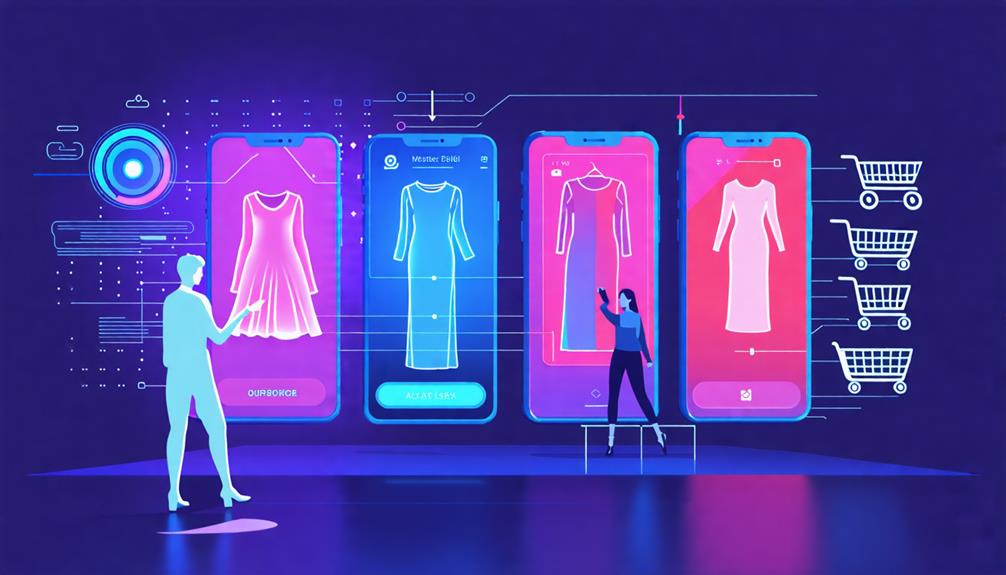
Implementing AI visual search involves several critical steps to ensure accuracy, reliability, and seamless functionality. First, set up essential libraries like OpenCV and TensorFlow, which are vital for image processing and recognition tasks. These technologies form the backbone of your image search capabilities, enabling efficient identification and categorization of products.
Next, train a neural network using a comprehensive product image dataset. This step enhances the AI's ability to recognize and differentiate between various products, ensuring high accuracy and reliability. A diverse dataset significantly improves the AI's performance.
Design the user interface using HTML, CSS, and JavaScript. A well-crafted UI ensures that users can easily upload images and interact with the system. Seamless integration between the front-end and back-end systems is crucial for efficient communication and functionality.
Finally, deploy your application on a web server or cloud platform. This step guarantees broader user access and enhances the overall performance of your AI visual search system.
Here are the key steps to keep in mind:
- Configure essential libraries: OpenCV and TensorFlow.
- Train neural networks with a comprehensive product image dataset.
- Design a user-friendly interface with HTML, CSS, and JavaScript.
- Deploy the application on a web server or cloud platform.
Future Prospects
The future of AI visual search is incredibly promising, particularly as consumer demand for personalized and efficient shopping experiences continues to rise. With AI enhancing content and product recommendations, expect significant improvements in online shopping. Visual search technology is already revolutionizing e-commerce by increasing the accuracy and relevance of search results, leading to higher conversion rates and a more satisfying user experience.
As AI algorithms advance, the precision of visual search results will improve, allowing you to find what you need more quickly. AI will better interpret your intent and context, enhancing your shopping experience. This transformation extends beyond retail to industries like fashion and home decor, offering highly personalized experiences tailored to your tastes and needs.
Looking ahead, future developments will address current challenges such as data privacy and infrastructure requirements. As these issues are resolved, visual search technology will become even more robust and user-friendly, solidifying its role as an essential tool in e-commerce and various other sectors.