AI-Powered Sentiment Analysis: Monitoring Brand Reputation Online

In today's digital age, maintaining a positive brand reputation is crucial. AI-powered sentiment analysis can significantly enhance your business's approach to brand management. By examining extensive online content, this technology allows you to gauge customer emotions in real time, enabling you to address potential issues proactively. But how do you select the right tools, and what key benefits should you prioritize? Let's explore how implementing sentiment analysis can revolutionize your brand management strategy and give you a competitive advantage.
Understanding AI Sentiment Analysis
Understanding AI sentiment analysis is crucial for modern businesses aiming to interpret customer emotions from text data accurately. By utilizing advanced natural language processing (NLP) and machine learning algorithms, AI sentiment analysis classifies emotions as positive, negative, neutral, or mixed. This innovative technology processes extensive data from sources like social media, reviews, and news articles, offering real-time insights into customer perceptions.
For brand reputation management, AI sentiment analysis is transformative. It identifies nuances and contextual meanings with high accuracy. Modern tools continuously improve through machine learning and large datasets, enhancing their reliability. These tools enable the automation of customer feedback analysis, boosting efficiency, scalability, and objectivity compared to traditional manual reviews.
Moreover, AI sentiment analysis supports multilingual capabilities, which is crucial for global businesses operating in diverse markets. This feature allows monitoring of sentiments across different languages. By understanding and leveraging AI sentiment analysis, businesses can manage brand reputation more effectively, respond swiftly to customer sentiment, and maintain a positive image. Adopting this technology is essential in today's fast-paced technological landscape, offering a significant competitive advantage.
Benefits of Sentiment Analysis
AI-powered sentiment analysis provides a range of benefits that can transform how businesses engage with their customers. By rapidly processing large volumes of text data, it offers real-time insights into brand perception and customer feedback, enabling quick, informed decisions to enhance customer engagement.
One significant advantage is the early identification of negative sentiment. By detecting these signals promptly, businesses can proactively manage their brand reputation, addressing potential issues before they escalate. This proactive approach is crucial for maintaining a positive image and fostering customer trust.
Modern sentiment analysis tools utilize advanced natural language processing (NLP) techniques to achieve high accuracy. These tools can interpret emotions and contextual meanings in customer feedback, offering a nuanced understanding of customer sentiments. This level of detail allows businesses to tailor their strategies more effectively.
Continuous monitoring of sentiment trends helps gauge changes in customer satisfaction over time. This ongoing analysis enables the measurement of strategy impacts and the calculation of return on investment (ROI). Moreover, sentiment analysis across multiple languages assists global brands in understanding local customer sentiments, facilitating targeted marketing efforts and enhancing overall brand reputation management.
Choosing the Right Tools

After recognizing the myriad benefits that sentiment analysis brings to the table, it's time to focus on choosing the right tools to effectively harness these advantages. When selecting AI sentiment analysis tools, prioritize those with advanced natural language processing (NLP) capabilities. This ensures nuanced emotional analysis and accurate interpretation of sentiment across diverse languages and contexts, which is vital for comprehensive brand monitoring.
Thorough data collection is another crucial factor. Tools that aggregate data from multiple sources—such as social media, review sites, and customer support—provide a holistic view of brand perception. Moreover, actionable insights are significant for tracking key performance indicators (KPIs) like overall sentiment scores and trends. This helps measure the effectiveness of your brand reputation management strategies.
Consider multilingual support if your brand operates globally. Modern tools that handle multiple languages enhance your understanding of local customer sentiments. Lastly, evaluate the integration capabilities of these tools with your existing brand management strategies and workflows. Seamless integration ensures efficient data utilization and operational effectiveness.
| Feature | Importance | Benefit |
|---|---|---|
| Advanced NLP Capabilities | High | Accurate sentiment analysis |
| Thorough Data Sources | Fundamental | Complete brand perception |
| Actionable Reporting | Significant | Track KPIs and trends |
Choosing wisely ensures you utilize AI sentiment analysis tools to their fullest potential.
Implementing Sentiment Analysis
Implementing sentiment analysis begins with gathering data from diverse sources such as social media, review sites, and customer support channels to provide a comprehensive understanding of brand perception. Comprehensive data inputs are essential to ensure that your AI models deliver accurate and insightful monitoring solutions.
Prior to engaging in sentiment classification, it is crucial to preprocess the collected data. This step involves removing noise and irrelevant information to enhance the accuracy of your sentiment analysis. Cleaner data leads to improved performance of machine learning models, which are trained on labeled data to categorize sentiments as positive, negative, or neutral.
To streamline the process, follow these three key steps:
- Data Collection: Gather inputs from various channels like social media, review sites, and customer support.
- Data Preprocessing: Eliminate noise and irrelevant information to ensure cleaner data.
- Model Training: Utilize labeled data to train your AI for accurate sentiment classification.
After training your models, evaluate their performance using metrics such as accuracy, precision, and recall. This ensures that your monitoring solutions provide reliable real-time insights into your brand's reputation. Continuous monitoring and updating of your sentiment analysis models are essential, as language evolves, necessitating updates to maintain relevance and accuracy in real-time analysis.
Accuracy and Multilingual Capabilities

Once your sentiment analysis models are trained and evaluated, the focus shifts to ensuring their accuracy and expanding their multilingual capabilities. Modern AI-powered sentiment analysis tools achieve accuracy levels exceeding 90%, leveraging advanced natural language processing (NLP) techniques to capture nuances and contextual meanings in text. This high accuracy is essential for reliable brand sentiment insights. These tools continuously learn from new data inputs, adapting and enhancing their accuracy over time, which keeps your insights current and reduces human error in sentiment interpretation.
Additionally, AI-powered sentiment analysis solutions support multiple languages, enabling you to monitor global sentiment and understand local customer perceptions effectively. This is particularly significant for businesses operating in diverse regions. These tools can classify sentiments as positive, negative, or neutral and even identify mixed sentiments, providing a comprehensive understanding of customer emotions.
Here's a quick overview:
| Feature | Benefit |
|---|---|
| Accuracy > 90% | Reliable brand sentiment insights |
| Continuous learning | Improved accuracy over time |
| Multilingual support | Effective global sentiment monitoring |
| Mixed sentiment detection | Comprehensive view of customer emotions |
Leveraging Social Media Insights
You can leverage social media platforms to monitor real-time sentiment and promptly respond to public opinions. By employing AI sentiment analysis tools, you can detect trends and sentiment shifts that may not be immediately apparent. This proactive approach enables you to address customer concerns promptly and refine your engagement strategies effectively.
Real-Time Sentiment Tracking
In today's fast-paced online environment, real-time sentiment tracking through social media is indispensable for brands striving to stay ahead. Utilizing real-time data allows for instant monitoring of brand reputation, enabling responses to emerging issues and trends before they escalate. AI sentiment analysis tools are pivotal in this process, efficiently sifting through vast amounts of social media content to detect sentiment variations by day or specific product features influencing customer opinions.
By leveraging these AI-driven tools, brands can uncover hidden insights from unstructured feedback data, addressing key drivers of customer sentiment that may not be immediately apparent. Social media platforms serve as vital data sources, with AI extracting insights from user-generated content, reviews, and comments to gauge comprehensive brand perception.
Key Benefits of Real-Time Sentiment Tracking:
- Immediate Response: Address customer feedback quickly, enhancing satisfaction and loyalty.
- Proactive Crisis Management: Identify and mitigate negative sentiment before it escalates into a larger public relations issue.
- Data-Driven Decisions: Use sentiment insights to make informed decisions about product improvements and marketing strategies.
Continuous monitoring of social media sentiment keeps brands informed and empowers them to maintain a positive image in a constantly evolving online environment.
Identifying Sentiment Trends
Leveraging the advantages of real-time sentiment tracking, identifying sentiment trends through social media insights provides brands with a comprehensive understanding of consumer behavior over time. AI sentiment analysis tools can quickly process vast amounts of feedback, pinpointing shifts in consumer sentiment and enabling proactive responses to emerging trends.
Analyzing sentiment variations across different platforms reveals specific patterns, such as peak positive or negative reactions linked to marketing campaigns or product launches. Tools like Brand24 and Sprout Social offer real-time insights into audience engagement through sentiment tracking, allowing brands to observe changes in public perception over time. This enhances the ability to manage brand reputation effectively.
AI-driven sentiment analysis delves deeper than surface-level emotions, detecting nuanced feelings that uncover the underlying drivers of sentiment. Whether related to product features or customer service experiences, these insights enable informed decision-making. Continuous monitoring of social media sentiment is crucial for spotting potential crises early. Timely interventions help manage and protect brand reputation more effectively. Ultimately, leveraging social media insights for identifying sentiment trends equips brands with a powerful tool to stay ahead in understanding and meeting the evolving needs of their audience.
Measuring Impact and KPIs
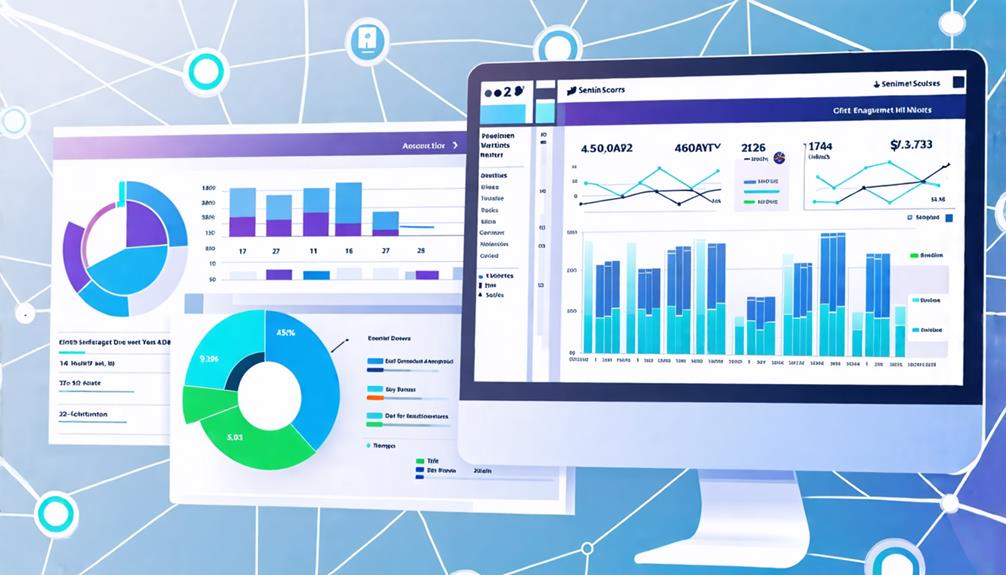
To accurately measure the impact of AI-powered sentiment analysis, focus on tracking sentiment trends, response times to negative feedback, and calculating ROI. Regularly monitor these KPIs to understand how your brand perception evolves and how efficiently customer concerns are addressed. By comparing the costs of AI tools with benefits like increased customer satisfaction, you can effectively gauge your return on investment.
Tracking Sentiment Trends
Tracking sentiment trends is crucial for understanding how your brand is perceived and for making informed decisions. Consistently monitoring sentiment analysis results allows you to gauge your brand reputation accurately and make strategic adjustments as needed. It's not just about knowing what people are saying; it's about understanding how their sentiments evolve over time and what that means for your brand.
To effectively track sentiment trends, focus on key performance indicators (KPIs) such as:
- Overall sentiment score: Provides a snapshot of your brand's general perception.
- Sentiment variations over time: Helps you identify trends and potential issues early.
- Customer engagement metrics: High engagement often correlates with stronger, more positive brand perceptions.
These metrics enable you to measure the impact of your sentiment analysis efforts. For instance, comparing the costs of sentiment analysis tools with improvements in customer satisfaction and brand loyalty can help you calculate your return on investment (ROI). Continuous monitoring also allows you to identify emerging issues and proactively engage with your audience to maintain a positive brand reputation. This ongoing vigilance is key to turning insights into actionable strategies, ensuring your brand remains in good standing.
Response Time Analysis
Effective response time analysis is crucial for upholding a positive brand reputation, particularly when addressing negative sentiment. Measuring how quickly you respond to dissatisfied customers can significantly impact their loyalty and overall perception of your brand. Studies indicate that timely responses can convert up to 70% of dissatisfied customers into loyal ones, making prompt response times a cornerstone of excellent customer service.
AI sentiment analysis tools are invaluable for tracking and reporting your average response times. These insights allow you to set benchmarks and continually enhance your customer service efficiency. Key performance indicators (KPIs) for response time analysis include the average time taken to address negative sentiments. For optimal reputation management, aim to respond within 24 hours.
Monitoring response times not only aids in effectively handling negative sentiment but also boosts overall sentiment scores. Brands that actively engage with customers and manage sentiment shifts see marked improvements in customer loyalty and sales. Additionally, analyzing response time trends helps identify peak periods for negative feedback, enabling better resource allocation and enhanced crisis management strategies.
ROI Calculation Methods
Understanding how to calculate the ROI of AI-powered sentiment analysis tools is crucial for enhancing your brand's strategic planning. To measure ROI, begin by comparing the cost of these tools against tangible benefits such as increased customer satisfaction and reduced negative feedback. This comparison will help you determine their financial impact.
Key performance indicators (KPIs) are instrumental in this process. Track:
- Overall sentiment score
- Percentage change in positive vs. negative sentiment over time
- Response times to negative mentions
These metrics can highlight improvements in brand perception. Monitoring the conversion rates of customer sentiment from negative to positive provides a tangible metric for success. Regularly evaluating changes in sentiment scores can quantify the impact of specific campaigns or interventions, enabling data-driven adjustments to your marketing strategies.
A reported 78% of companies that track sentiment analysis see an improvement in customer engagement. This improvement is vital for measuring the ROI of brand reputation management efforts. By systematically reviewing these KPIs, you can refine your strategic planning and ensure that your investments in sentiment analysis yield significant returns.
Industry Applications
AI-powered sentiment analysis is revolutionizing how businesses understand and respond to customer feedback across various industries. By leveraging AI, companies can quickly identify and address critical areas affecting brand reputation.
For example, in the automotive industry, Widewail analyzed 1.5 million Google reviews from 16,000 dealerships, linking positive sentiments to effective personnel and communication. This provided dealerships with actionable insights to enhance their operations.
Similarly, in the hospitality sector, brands like Marriott utilize sentiment analysis to process feedback from over 7,000 properties. This helps identify themes around cleanliness, staff interactions, and amenities, significantly improving the guest experience. Delta Airlines also uses sentiment analysis to evaluate feedback from reviews, surveys, and social media, allowing them to prioritize operational improvements based on sentiment trends.
| Industry | Application |
|---|---|
| Automotive | Linking positive sentiments to personnel and communication |
| Hospitality | Improving guest experience through feedback analysis |
| E-commerce | Optimizing product listings and informing product development |
In the e-commerce industry, companies like Amazon analyze millions of product reviews using sentiment analysis. This not only optimizes product listings but also informs product development decisions. In healthcare, organizations like the Cleveland Clinic evaluate patient feedback to drive improvements in healthcare delivery, addressing sentiment-driven concerns effectively.
Related posts