
Behavioral Email Targeting: Sending the Right Message at the Right Time

Imagine supercharging your email marketing by knowing precisely when and what to communicate to each customer. Behavioral email targeting enables you to achieve this by utilizing data from user actions such as site visits, cart abandonment, and email interactions. This strategy ensures your messages are timely and relevant, tailored to individual preferences, thereby boosting engagement. But how can you implement this approach effectively, and what sets it apart from traditional email marketing? Let's explore the process and uncover best practices for achieving success.
Understanding Behavioral Email Targeting

Behavioral email targeting involves sending personalized emails based on customers' interactions and behaviors, such as website visits, clicks, and purchases. This strategy leverages data from user actions to tailor email marketing efforts, ensuring that the content is relevant to the audience.
To implement behavioral targeting effectively, it's crucial to track customer actions meticulously. This often necessitates advanced email platforms capable of monitoring online activities and setting up automated campaigns. For example, if a customer frequently visits a particular product page but hasn't made a purchase, you could send them a targeted email highlighting that product, perhaps with a discount.
Automated campaigns are essential in behavioral targeting, allowing you to respond to specific actions—such as abandoned carts or completed purchases—in real time. This enables you to send timely, targeted emails that resonate with your audience.
Despite its proven effectiveness in enhancing engagement and conversion rates, only about 20% of email marketers currently utilize behavioral targeting. By incorporating this strategy, you can ensure that your emails are not only seen but also acted upon, making your email marketing efforts more impactful.
Benefits of Behavioral Email Targeting
Sending personalized content tailored to individual behaviors and preferences results in a noticeable increase in engagement. By targeting emails based on customer actions, you can also optimize timing, thereby boosting conversion rates. This approach not only enhances customer satisfaction but significantly drives the success of your email marketing campaigns.
Personalization Enhances Engagement
In today's competitive market, personalized behavioral emails can significantly enhance your engagement rates and foster customer interactions. By employing targeted personalization, you're addressing your customers' specific needs and preferences, rather than sending generic messages. This approach substantially elevates customer engagement, as 74% of marketers report increased engagement rates through personalization.
Behavioral emails with personalized subject lines are particularly effective, achieving 50% higher open rates. Once opened, these emails often lead to increased click-through rates, which can rise by an average of 14%. Additionally, personalized emails deliver six times higher transaction rates than non-personalized ones, making them a powerful tool for driving sales opportunities.
Moreover, the impact of behavioral targeting on conversions is substantial. Personalized emails can increase conversions by 10%, providing a clear advantage over generic approaches. This targeted personalization not only keeps your audience engaged but also converts their interest into tangible actions. By leveraging behavioral emails, you're not just improving click-through rates; you're fostering deeper customer relationships and creating more opportunities for sales growth. In short, personalization isn't just a strategy—it's essential for maximizing your email marketing efforts.
Timing Boosts Conversion Rates
The timing of your emails can significantly increase conversion rates, potentially by up to 30%. By sending emails based on customer behavior, you ensure that your messages are timely and relevant, which enhances engagement. Using behavioral data to understand customer actions allows you to craft personalized emails that resonate with your audience. This approach, known as behavioral email marketing, focuses on delivering the right message at the right time, leading to improved conversion rates.
Timing is crucial for the success of your email campaigns. By analyzing customer interactions, you can identify the optimal times to send targeted emails. This not only boosts click-through rates but also ensures your audience receives your messages when they are most likely to respond. Whether it's a follow-up after a purchase or a reminder for an abandoned cart, sending emails at the right moment can significantly enhance your campaign's effectiveness.
Key Differences From Traditional Email Marketing
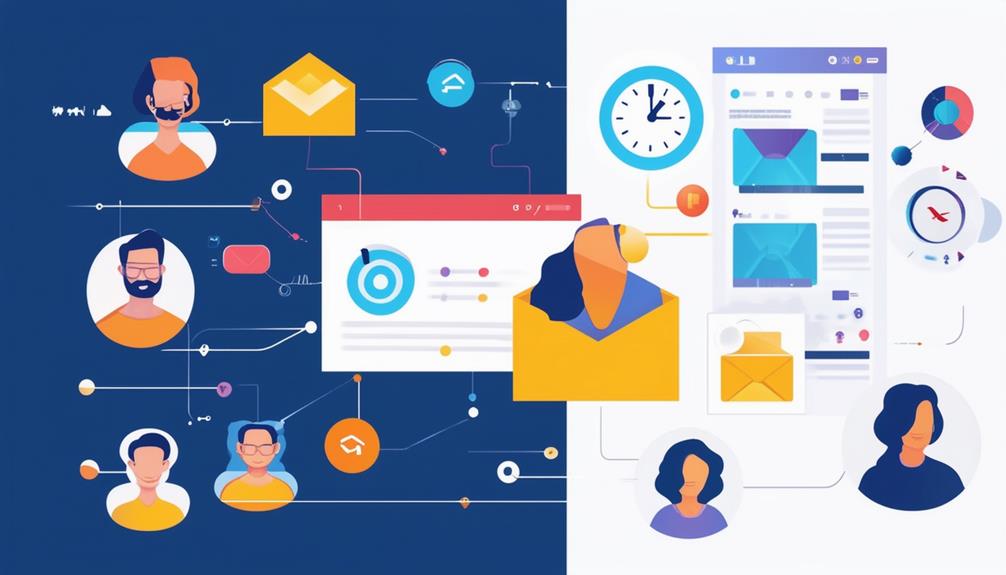
Behavioral email marketing differentiates itself from traditional email marketing through its use of data-driven personalization. It tailors each message based on individual actions and preferences, ensuring more relevant content. This method also allows for real-time engagement, delivering timely messages that resonate with the audience.
Data-Driven Personalization
Data-driven personalization in email marketing leverages customer behaviors and interactions to create highly relevant and timely messages. By utilizing behavioral data for email targeting, you can deliver personalized content that truly resonates with your audience. This approach relies on comprehending customer behavior through detailed interactions, enabling the crafting of messages tailored to individual needs and interests.
The advantages of data-driven personalization are numerous. Behavioral email targeting ensures that your communication is not only timely but also highly relevant, which leads to higher engagement rates. When customers receive messages aligned with their behavior and preferences, they are more likely to open and click through your emails, improving the overall performance of your email campaigns.
Furthermore, this method significantly enhances customer satisfaction. Engaging with customers based on their actions and behaviors demonstrates that you understand and value their preferences. Such tailored communication fosters a deeper connection and loyalty, making your audience feel appreciated. In summary, leveraging data-driven personalization in your email marketing strategy results in higher engagement and increased customer satisfaction.
Real-Time Engagement
Real-time engagement in behavioral email targeting involves sending messages based on immediate customer actions, ensuring your communication is both timely and relevant. Unlike traditional email marketing, which often relies on pre-scheduled messages, real-time engagement leverages customer behaviors to trigger emails instantly. This method ensures your messages align perfectly with the recipient's current context.
By focusing on customer actions and behavioral patterns, you can create personalized email content that resonates deeply with your audience. Triggered emails, sent in response to immediate customer actions, enable you to engage with customers precisely when they are most likely to respond. This dynamic response capability ensures your emails are always synchronized with your customers' activities, leading to higher engagement and conversion rates.
Leveraging data and automation, you can enhance the impact of your messages. Real-time engagement capitalizes on the exact moment of customer interaction, making your communication feel more personalized and effective. By aligning your email strategy with customer behaviors, you're not just sending emails; you're creating meaningful connections that drive results. Essentially, real-time engagement transforms your email marketing from a static, one-size-fits-all approach to a dynamic and responsive strategy.
Steps to Implement Behavioral Email Targeting
To implement behavioral email targeting effectively, start by identifying key customer actions that will trigger your automated campaigns. Behavioral email targeting ensures that your messages reach the right person at the optimal time for maximum engagement. Begin by using advanced email platforms to track specific customer actions such as browsing history, cart abandonment, and previous purchases. These actions act as triggers for sending out personalized content.
By establishing automated email campaigns based on these triggers, you can significantly enhance email engagement and conversion rates. Interestingly, only 20% of email marketers currently utilize behavioral targeting, highlighting the untapped potential for more personalized and effective email marketing strategies.
Here's a quick reference table for key steps:
| Step | Action | Outcome |
|---|---|---|
| Identify Triggers | Track customer actions | Enhanced targeting |
| Use Email Platforms | Set up automated emails | Efficient campaign management |
| Personalize Content | Tailor messages | Improved engagement |
| Monitor Campaigns | Analyze performance | Higher conversion rates |
| Optimize Strategy | Refine based on data | Continuous improvement |
For instance, if a customer abandons their cart, an automated email can be sent to remind them of their pending purchase. Employing behavioral email targeting not only makes your emails more relevant but also boosts your overall marketing effectiveness.
Best Practices for Success

Adopting best practices in behavioral email targeting can significantly enhance your email marketing success. Start by analyzing customer behavior to send the right message at the optimal time. Tailoring your email campaigns based on customer actions ensures that your messages are relevant and engaging, potentially increasing email engagement by up to 75%.
Personalization is essential. Leverage customer data to create personalized emails that align with individual preferences and behaviors. This approach makes your audience feel valued, boosting the likelihood of interaction. Craft compelling subject lines that capture attention to improve open rates and set the stage for successful engagement.
Automated triggers are also crucial. Setting up automated responses to specific customer actions ensures timely communication, thereby enhancing customer engagement. For instance, sending a follow-up email after a purchase or a reminder for an abandoned cart helps keep your brand top-of-mind.
Clearly defining your audience and goals is fundamental for crafting effective targeted messages. Additionally, consistently monitor and analyze your email performance. This ongoing assessment allows you to refine your strategies, ensuring continuous improvement and better results in your behavioral email targeting efforts.
Examples of Behavioral Email Campaigns
Behavioral email campaigns, such as abandoned cart reminders and personalized product recommendations, effectively engage customers and boost revenue. For example, abandoned cart emails achieve an impressive 45% open rate and a 21% click-through rate by reminding customers of items they left behind, encouraging them to complete their purchases.
Welcome series emails are another crucial example, featuring a 58% open rate and a 24% click-through rate. These emails create a positive initial impression with new subscribers, setting the stage for future engagement.
Re-engagement campaigns are essential for customer retention. They target inactive users, reigniting their interest in your brand with compelling content and offers. With a 45% open rate and a 21% click-through rate, these campaigns can significantly improve retention rates.
Personalized product recommendation emails use browsing history or past purchases to offer tailored suggestions, resulting in a 29% higher unique click rate compared to non-personalized emails. These behavioral emails can lead to a 75% increase in email revenue, underscoring their effectiveness.
Common Behavioral Triggers
Many common behavioral triggers can significantly enhance the effectiveness of your email marketing campaigns. By targeting specific customer behaviors, you can send triggered emails that resonate more with your audience. Here are some key behavioral triggers to consider:
- Website Visits: When a customer visits your website, it signals interest. Follow-up emails with personalized recommendations based on their browsing history can boost customer engagement.
- Abandoned Cart: Emails targeting customers who add items to their cart but don't complete the purchase have a 41% higher conversion rate compared to standard promotional emails, making them essential for recovering lost sales.
- Email Opens and Clicks: Monitoring which emails are opened and which links are clicked helps you understand what interests your audience. Triggered emails based on these actions can significantly improve open rates and click-through rates.
- Purchases: After a customer makes a purchase, sending follow-up emails with related product recommendations or requests for reviews can enhance their experience and encourage repeat business.
Using these behavioral triggers effectively allows you to deliver the right message at the right time, improving your conversion rate and strengthening customer engagement.
Enhancing Email Effectiveness
Leveraging behavioral triggers can significantly boost the effectiveness of your email marketing strategy by ensuring each message is timely and relevant. By implementing behavioral email targeting, you send emails based on customer actions, which greatly increases engagement. Personalized content tailored to subscriber interactions makes them more likely to pay attention and act, leading to a 10-20% improvement in conversion rates.
Additionally, relevant emails reduce unsubscribe rates. People value messages that align with their interests and needs, encouraging longer subscription periods. This personalized approach can also drive a 6x higher transaction rate, substantially enhancing your email revenue. Behavioral email targeting means you're not guessing what your customers want; you're responding directly to their actions, making each communication more meaningful.
Effective use of customer interactions allows you to send the right message at the right time, ultimately improving email effectiveness. This strategy can boost your email engagement by up to 75% and increase your email revenue by an impressive 760%. By focusing on the behaviors and preferences of your audience, you ensure that your marketing efforts are both efficient and impactful.
Conclusion
Optimizing behavioral email targeting ensures your messages are both timely and relevant. This strategy not only boosts engagement and conversions but also strengthens customer relationships. By understanding individual behaviors and preferences, you can deliver personalized content that truly resonates. Embrace this data-driven approach, adhere to best practices, and watch your email marketing efforts thrive. Sending the right message at the right time can lead to remarkable results.
Related posts