Creating Personalized Customer Journeys With Marketing Technology
Creating personalized customer experiences is crucial for your business's success. By leveraging marketing technology, you can gather and analyze vast amounts of customer data to offer tailored experiences. AI-driven analytics and marketing automation can help you segment audiences and deliver timely, relevant messages, fostering loyalty, improving customer satisfaction, and driving revenue growth. However, effectively implementing these strategies requires careful planning and consideration of potential challenges, such as data privacy concerns, integration with existing systems, and maintaining data quality.
Digital Customer Empowerment
Digital customer empowerment has revolutionized the consumer landscape, granting you unprecedented control over your buying journey. Utilizing digital technology, you can effortlessly research products and make purchases at your convenience. Notably, approximately 75% of consumers now expect personalized experiences, making it crucial for companies to customize their interactions with you. Personalization enhances your customer experience by leveraging data collected through various digital channels.
Retailers employ big data analytics to gain insights into your behavior, preferences, and needs, enabling them to adapt quickly and offer products and services that resonate with you. Marketing automation is instrumental in this process, allowing companies to engage with you proactively. By automating marketing tasks, retailers can deliver timely and relevant content, thereby increasing customer engagement.
Convenience is another vital factor driving digital customer empowerment. Efficient delivery services ensure that your demands are met swiftly and accurately. Companies that prioritize your convenience stand out in the crowded marketplace. As digital channels continue to evolve, your expectations for a seamless and personalized customer experience grow. Adapting to these changes allows retailers to meet your needs and enhance your overall experience.
Key Capabilities for Customer Journeys
Understanding the key capabilities that drive personalized customer experiences is essential for businesses aiming to meet customer expectations. Companies must utilize automation to streamline navigation through online platforms, enhancing efficiency and reducing friction.
Personalization is crucial, with 75% of consumers expecting tailored experiences. Businesses need to customize interactions based on individual preferences, significantly increasing customer satisfaction and the effectiveness of marketing campaigns.
Contextual interaction is also important. Engaging customers at the right moments ensures communications are relevant, thereby increasing the likelihood of positive outcomes. This approach helps maintain interest and foster deeper connections.
Experience innovation focuses on continuously improving interactions to build loyalty and long-term engagement. Companies prioritizing this are more likely to see repeat business and higher customer satisfaction levels.
Lastly, experience management treats customer interactions as products requiring dedicated oversight. Aligning business goals with customer needs guarantees optimal performance and a seamless experience. Mastering these capabilities enables companies to create highly personalized and satisfying customer experiences.
Organizational Structure for Success
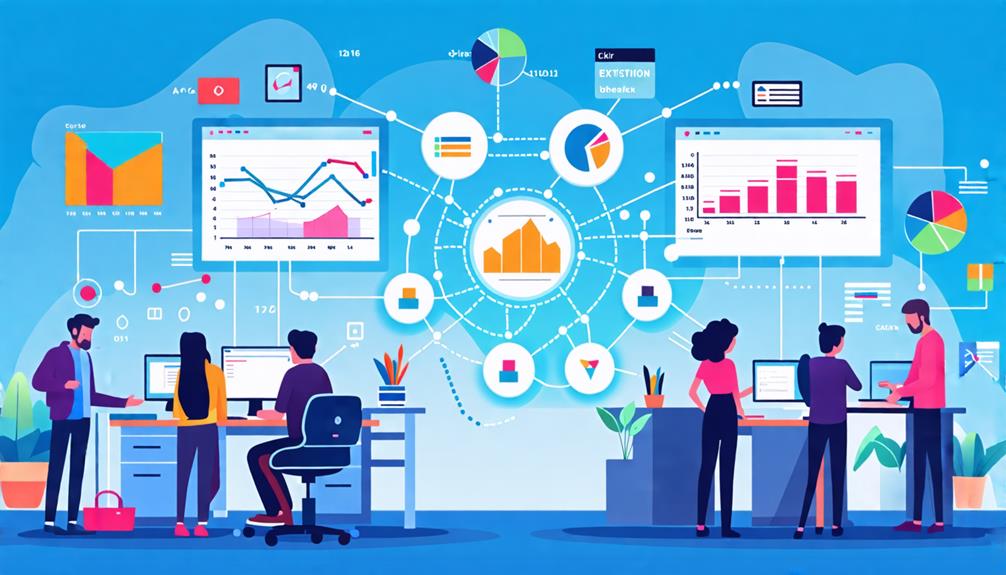
To ensure success in delivering personalized customer experiences, a robust organizational structure is essential. This structure should emphasize cross-functional team collaboration and clear leadership. A Chief Experience Officer (CXO) should oversee these efforts, while experience-focused strategists and Experience Product Managers spearhead the initiatives. Accountability for the return on investment (ROI) and overall business performance is crucial. Continuously measure and refine your strategies to enhance customer satisfaction.
Cross-Functional Team Collaboration
Cross-functional team collaboration is essential and serves as the backbone of successful customer experience development. Effective collaboration enables product managers to lead diverse teams, including designers, developers, data analysts, and marketers, to enhance customer experiences. By working together, these teams can dismantle organizational silos, ensuring that customer path strategies are consistent across all touchpoints.
Product managers play a pivotal role in this process by aligning customer needs with business objectives. They treat customer paths as products, necessitating dedicated oversight and management. Regular communication and collaboration among team members are crucial to avoid the inconsistencies in customer experiences that arise from siloed operations.
The Chief Experience Officer (CXO) ensures that the organization's customer path strategies align with business goals, fostering an environment of continuous improvement. By emphasizing accountability for path ROI and overall business performance, cross-functional teams are motivated to innovate and refine customer engagement strategies continually.
Leadership and Accountability Structure
Building on the foundation of cross-functional team collaboration, a robust leadership and accountability structure serves as the cornerstone for successful customer experience management. To ensure your personalization efforts achieve optimal business outcomes, it is essential to establish clear roles and responsibilities.
A Chief Experience Officer (CXO) orchestrates your customer pathway strategies to align with overarching business goals, fostering improved customer satisfaction. With a CXO in place, your organization can maintain a laser focus on the customer experience.
Here is a structured approach for your team:
- Pathway-Focused Strategists: These professionals bridge organizational objectives with customer needs, ensuring that every department prioritizes the customer experience.
- Pathway Product Manager: Leading cross-functional teams, this role includes designers, developers, data analysts, and marketers who collaborate to treat customer pathways as products.
- Dedicated Oversight: Recognize customer pathways as critical products requiring continuous management and refinement to drive customer loyalty.
- Accountability for ROI: Holding teams accountable for the ROI of customer pathways and overall business performance ensures continuous improvement and innovation.
Transition to Proactive Engagement
Proactive engagement is essential for creating meaningful and personalized customer experiences. By understanding digital customer pathways, you can anticipate customer needs rather than merely reacting to them. This shift is crucial for crafting personalized customer journeys that genuinely resonate. Research shows that 75% of consumers expect personalized experiences, making proactive engagement strategies vital for meeting these expectations.
Engaging customers proactively fosters loyalty and enhances customer retention by delivering compelling, customized experiences. This approach not only meets individual preferences but also strengthens your competitive advantage. Businesses that continuously innovate their customer pathways are more likely to retain customers and increase revenue.
Implementing pathway management as a dedicated product can streamline your transition to proactive engagement. It ensures you effectively respond to customer behaviors and preferences, making your efforts more efficient and impactful. By monitoring and managing these pathways, you can deliver the personalized experiences consumers expect, ultimately leading to higher satisfaction and loyalty.
Proactively engaging with customers is not just a strategy but a necessity for staying competitive in today's market. Don't wait to react—anticipate and meet your customers' needs before they even realize they have them.
Strategic Implementation

To transition effectively from proactive engagement to strategic implementation, consider customer experiences as products requiring dedicated management and oversight. This ensures every customer interaction is optimized for maximum impact. Here's how you can strategically implement personalized marketing:
- Leverage Technology and Analytics: With 75% of consumers expecting personalized experiences, harnessing technology and analytics is crucial. Collect data on customer behavior to create tailored experiences that resonate deeply with your audience.
- Foster Cross-Functional Collaboration: Align your team by ensuring designers, developers, data analysts, and marketers work together. This collaboration guarantees holistic customer pathways, meeting customer needs at every touchpoint.
- Implement Continuous Measurement: Regularly assess the performance and impact of your personalization efforts. Studies show that effective personalization can boost revenues by up to 40%. Continuous measurement helps identify what's working and what needs adjustment.
- Adapt Based on Feedback and Data: Personalization strategies should be flexible. Use customer feedback and data insights to refine and enhance your approaches continually. Regular assessments keep you competitive and aligned with evolving customer expectations.
Importance of Personalization
Amidst a rapidly evolving online environment, the importance of personalization can't be overstated. Personalized content is no longer just a nice-to-have; it's crucial for meeting customer expectations. Did you know that 75% of consumers expect personalized experiences from companies? By leveraging marketing technology, you can create tailored interactions that make your customers feel understood and valued, greatly enhancing their overall experience.
Personalization does more than just meet expectations—it drives engagement and elevates your bottom line. Studies indicate that personalization can increase revenues by up to 40%. When customers receive relevant and meaningful interactions, they're more likely to stay loyal, reducing churn rates and fostering long-term relationships.
Here's a quick look at how personalization impacts different aspects of your business:
| Aspect | Impact of Personalization |
|---|---|
| Customer Expectations | Meets and exceeds expectations |
| Customer Experience | Makes interactions smoother and more meaningful |
| Engagement | Drives higher engagement rates |
| Loyalty | Builds stronger, long-term relationships |
| Revenue | Can enhance revenues by up to 40% |
Continuous evaluation of your personalization strategies is key. Marketing technology allows you to adapt to changing customer needs, ensuring your approach remains effective and your customers are always satisfied.
Challenges in Personalization
Personalization in marketing presents significant challenges. Despite your best intentions, a gap often exists between the personalized experiences you aim to deliver and what your customers actually perceive. This discrepancy underscores several key issues:
- Data Integration and Management: Effective data integration and management are critical. Disorganized and siloed customer data can severely hinder your personalization efforts.
- Meeting Customer Expectations: Aligning personalized experiences with customer expectations is complex. Miscommunication and dissatisfaction often arise when expectations are not met.
- Resource Limitations: Outdated processes and limited resources can impede the implementation of effective personalization strategies, preventing you from meeting the evolving demands of your customers.
- Technology Integration: Poor integration within your technology stack can create bottlenecks in data flow, making the adoption of new technologies essential for personalization a challenging task.
These challenges highlight that creating a seamless personalized customer experience requires overcoming significant hurdles related to data, technology, and resources. Addressing these obstacles is crucial for closing the gap between your personalization efforts and customer perceptions.
Best Practices and Strategies
To enhance personalization and engagement, begin by segmenting your audience according to personas, demographics, and behaviors. Leverage AI-powered tools to anticipate customer needs and deliver personalized content in real-time, thereby boosting conversion rates. Implementing these strategies will enable you to create more relevant and effective marketing campaigns.
Segmenting for Targeted Marketing
Effective segmentation is crucial for targeted marketing, enabling businesses to categorize customers based on personas, demographics, and behavior. This strategy helps tailor marketing efforts to enhance customer engagement and boost conversions. By leveraging marketing automation platforms (MAPs), businesses can streamline the segmentation process, making it easier to analyze customer data and create targeted segments.
To excel in segmenting for targeted marketing, adhere to these best practices:
- Utilize MAPs: Employ advanced marketing automation platforms to analyze behavioral and demographic data, which can identify new segments and lists. This enhances personalized marketing efforts by ensuring the right audience is targeted.
- Regularly Update Segments: Customer behavior and preferences evolve over time. Continuously assess and adjust your segmentation strategies based on customer feedback and analytics to maintain relevance and effectiveness.
- Focus on Personas: Develop detailed customer personas that accurately reflect your target audience's needs and preferences. This aids in crafting resonant messages, thereby improving customer engagement.
- Track and Optimize Conversion Rates: Effective segmentation significantly increases conversion rates. Personalized marketing strategies can yield up to 40% growth in revenue (McKinsey). Regularly monitor performance to optimize for better results.
Leveraging AI for Personalization
Leveraging artificial intelligence (AI) can transform your personalized marketing strategies. By analyzing real-time data, AI enables a deep understanding of customer behavior and preferences, allowing you to deliver content that truly resonates. Predictive analytics can anticipate customer needs, optimizing interactions and potentially increasing revenues by up to 40%.
AI-driven marketing automation platforms (MAPs) allow seamless customer segmentation based on behavior and demographics. This ensures that your personalized marketing efforts are always directed at the right audience. Real-time data analysis facilitated by AI identifies patterns, enabling dynamic adjustments to your marketing campaigns, which enhances customer engagement and conversion rates.
Imagine AI-driven tools that automate content delivery and lead scoring. These tools streamline the personalization process, allowing you to focus on strategic planning rather than execution. Ultimately, AI enhances customer experiences and boosts operational efficiency.
Here's a quick overview of the emotional benefits AI brings to your marketing:
| Benefit | Emotional Impact |
|---|---|
| Real-time data analysis | Confidence in your decisions |
| Predictive analytics | Effortlessly anticipate customer needs |
| Automated segmentation | Simplify your marketing efforts |
| Improved customer experience | Strengthen customer relationships |
AI not only improves the effectiveness of marketing but also ensures you can trust the data and insights it provides, making your marketing efforts more reliable and impactful.
Role of AI and Technology

AI and advanced technology are revolutionizing how businesses create personalized customer experiences. AI-powered solutions streamline this process by analyzing vast amounts of customer data in real-time, identifying patterns and preferences to deliver tailored experiences. With predictive analytics, businesses can anticipate customer needs and behaviors, enabling timely and relevant messaging that enhances engagement.
Here's how AI and technology play a vital role:
- AI-powered Solutions: These tools swiftly process large datasets to understand customers better, facilitating more personalized interactions.
- Predictive Analytics: Leveraging predictive analytics allows businesses to foresee customer actions and craft experiences that resonate, enhancing the overall customer experience.
- Chatbots: AI-driven chatbots provide 24/7 support, offering instant responses and efficiently addressing customer inquiries, significantly improving the customer experience.
- Customer Experience Management: AI automates the routing of inquiries and retrieves relevant information for agents, enabling personalized interactions at scale and ensuring seamless data exchange across multiple platforms.
These technologies collectively ensure that businesses can deliver highly personalized, efficient, and consistent customer experiences, fostering greater trust and loyalty.
Related posts