Integrating Email Marketing With Your CMS

Integrating email marketing with your CMS not only streamlines your workflow but also enhances your ability to deliver personalized content that resonates with your audience. By centralizing data and leveraging APIs, you can create targeted email campaigns based on actual user behavior and preferences. This approach fosters stronger customer loyalty and achieves higher conversion rates. But how do you ensure seamless integration and choose the right tools? Let's explore the critical steps and key considerations that will set you up for success.
Understanding Headless CMS and Email Marketing
Understanding Headless CMS and email marketing is essential for any modern digital strategy. A Headless CMS uses APIs to decouple content management from content delivery, offering flexible and scalable solutions across various digital platforms. This architecture allows you to focus on content creation and management without the need to tailor it for different devices and channels.
Email marketing continues to be a formidable tool, with 44% of marketers identifying it as their most effective channel. With a remarkable ROI of $36 for every dollar spent, it is indispensable in your marketing toolkit. Integrating an email marketing platform with a content management system enables the delivery of personalized content, significantly enhancing customer engagement and loyalty.
Importance of Integration
Integrating email marketing with a CMS isn't just a strategic move—it's transformative for your digital marketing efforts. By unifying your communication strategy through integration, you enhance brand consistency across various channels. Leveraging customer data from your CMS ensures your message remains cohesive, whether on your website or within email marketing platforms.
A seamless integration enables centralized content management, boosting operational efficiency. This allows for the effortless delivery of targeted content to specific audience segments. Imagine tailoring your email campaigns precisely to your customers' interests and behaviors—marketing automation makes this possible.
Personalized content creation becomes simpler with integration, leading to higher engagement rates. Studies consistently show that customized messages significantly improve open and click-through rates. Enhanced interoperability between your CMS and email marketing tools also fosters customer loyalty by enabling targeted product recommendations and automated offers that resonate with your audience.
Ultimately, successful integrations enhance customer experiences, leading to better retention rates and increased brand loyalty. This elevates the ROI for your marketing campaigns, proving that integrating email marketing with your CMS is essential for modern digital marketing success.
Benefits of Integration
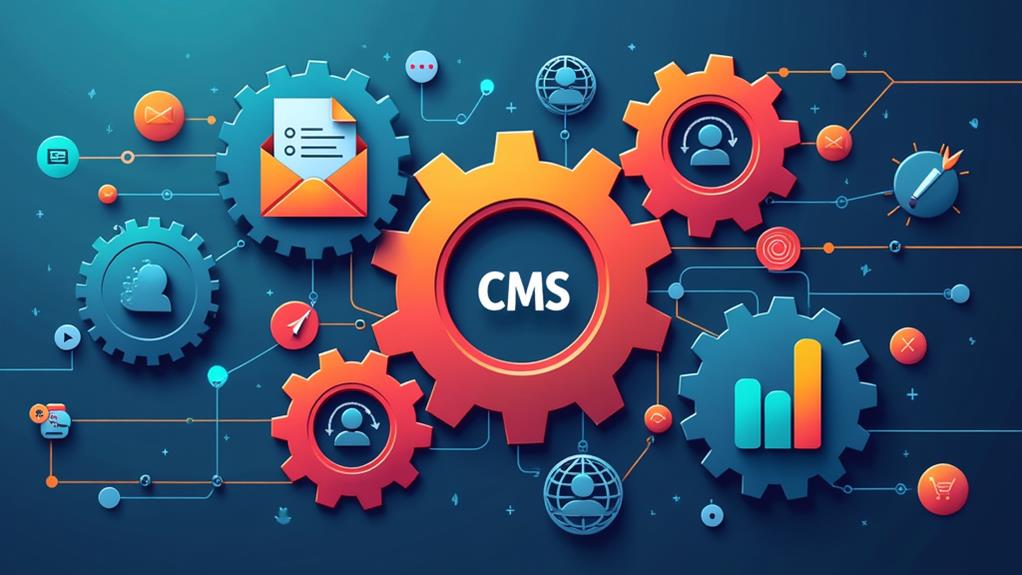
Integrating email marketing with your CMS unlocks a range of benefits that can significantly enhance your digital marketing strategy. Firstly, it boosts brand consistency by providing unified access to customer data, essential for effective omnichannel marketing. This ensures your email campaigns are always in sync with other marketing efforts, creating a seamless customer experience.
Utilizing marketing tools within your CMS allows for personalized content delivery, boosting customer engagement. This personalization leads to higher open and click-through rates, making your email campaigns more effective. A centralized content management system also facilitates targeted product recommendations and automated offers, strengthening customer connections and driving sales.
Integration enhances efficiency as well. For example, companies like Golfbreaks have reported a 90% increase in publishing speed after integrating their email marketing platforms with their CMS. This increased efficiency enables faster campaign launches and quicker responses to market changes.
Better customer experiences foster higher brand loyalty and retention, ultimately improving ROI. On average, for every dollar spent on email marketing, you can expect a return of $36, highlighting the substantial financial benefits of this integration.
Real-World Success Stories
Real-world success stories illustrate the transformative impact of integrating email marketing with a CMS. Consider Extu, which utilized Contentstack to link its headless CMS with email marketing solutions. This integration led to a 53% reduction in the launch time for translated content and a 21% increase in workflow speed, enhancing both efficiency and the effectiveness of marketing campaigns.
Another notable example is Golfbreaks. By integrating its CMS with Salesforce Marketing Cloud, Golfbreaks achieved a 90% increase in publishing speed and a 70% reduction in developer time. This allowed them to deliver more personalized content, significantly boosting customer engagement and satisfaction.
Contentstack's implementations have laid a robust foundation for digital strategies, proving the value of combining email marketing with a CMS. Companies adopting this approach have reported substantial improvements in key performance metrics, such as increased open rates and click-through rates, indicating stronger audience resonance.
These success stories underscore that integrating email marketing with a CMS not only enhances operational efficiency but also improves the overall customer experience, leading to better business outcomes.
Steps for Integration
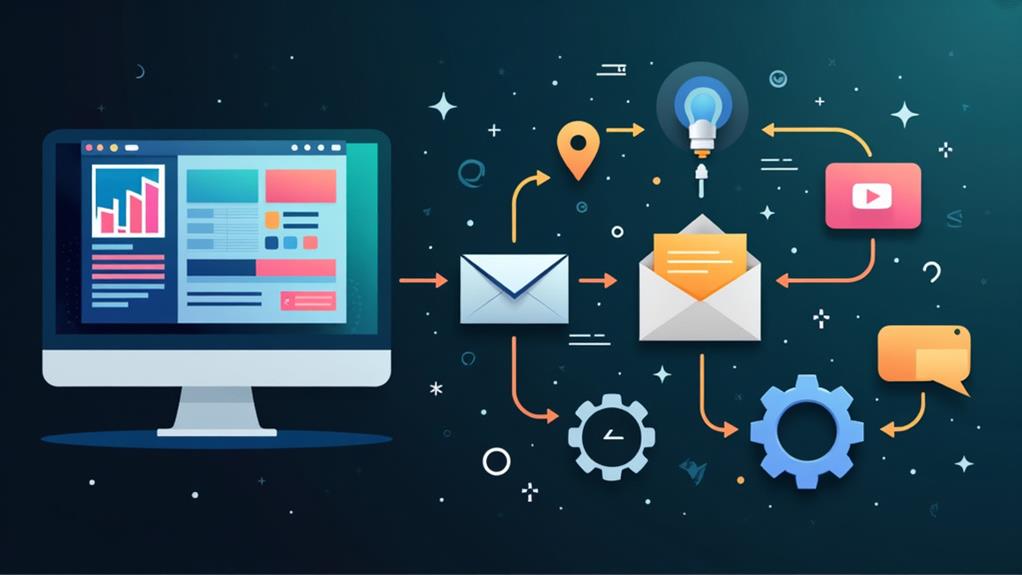
To initiate the integration of email marketing with your CMS, start by identifying your business objectives. Understanding your goals will assist you in selecting the most appropriate CMS and email marketing tools that align with those objectives.
Integration enables seamless connectivity between your systems. Therefore, seek out platforms that offer robust features, excellent customer support, and strong integration capabilities such as APIs or native plugins. Adhering to these criteria ensures a smooth connection between your CMS and email marketing system.
Here's a step-by-step guide to facilitate the integration:
- Select Compatible Platforms: Choose a CMS and an email marketing tool that support integration via APIs or native plugins. This ensures seamless connection and efficient management of your email campaigns.
- Configure APIs: Follow the specific guidelines provided by each platform to set up the integration. Proper API configuration will enable smooth content management and delivery across all channels, ensuring consistency in your email campaigns.
- Conduct Thorough Testing: Test the integration comprehensively to verify that all content flows correctly and that email campaigns function as intended. This step is crucial for maintaining brand consistency and ensuring a successful launch.
Choosing the Right Tools
Selecting the right tools for integrating email marketing with your CMS is crucial for success. Prioritize compatibility with your headless CMS to ensure seamless operation. Opt for email marketing platforms that offer native plugins, APIs, or webhooks, as these features facilitate easy integration and enhance campaign functionality.
Next, evaluate the platform's features such as segmentation, automation, and analytics. These are essential for tailoring your email marketing efforts to your specific goals and audience engagement strategies. Additionally, consider the pricing structures and scalability options. Choose a tool that can grow with your business and adapt to evolving needs.
Finally, review user feedback and case studies. These provide valuable insights into the platform's reliability and the quality of customer support.
Here's a comparison table to assist in evaluating your options:
| Feature | Importance Level |
|---|---|
| Compatibility | High |
| Native Plugins | High |
| APIs/Webhooks | High |
| Segmentation | Medium |
| Automation | Medium |
| Analytics | Medium |
| Pricing | High |
| Scalability | High |
| User Reviews | Medium |
| Case Studies | Medium |
Enhancing Customer Experience

Integrating email marketing with your CMS enables the delivery of personalized content tailored to each customer's specific needs. This integration ensures streamlined communication channels, facilitating easier interactions with your brand and access to relevant information. Consequently, both personalized content and seamless interactions significantly enhance the overall customer experience.
Personalized Content Delivery
Leveraging customer data from your CMS and email marketing tools allows you to deliver personalized content that deeply resonates with your audience. Personalized content delivery involves crafting tailored email campaigns targeted at specific audience segments, significantly boosting engagement rates. By analyzing behavior analytics—such as content consumption and purchase history—you can effectively segment your audience, leading to improved email open rates and click-through rates.
To enhance your personalized content delivery, consider these strategies:
- Automated Workflows: Implement automated workflows that trigger personalized emails based on user actions, such as sending welcome emails to new subscribers. This not only enhances the customer experience but also fosters brand loyalty.
- A/B Testing: Conduct regular A/B testing on various content elements within your email campaigns. This helps identify the most effective messages, resulting in better-targeted communications and higher conversion rates.
- Regular Segment Updates: Continuously update your audience segments with new data to ensure content remains relevant and engaging. This ongoing refinement boosts customer satisfaction and retention.
Streamlined Communication Channels
A unified communication strategy serves as the backbone of a cohesive brand experience, ensuring your audience receives consistent and clear messages across all touchpoints. Streamlined communication channels, supported by integrated email marketing and your CMS, enable you to deliver a uniform brand message, regardless of where your customers engage. This consistency enhances the customer experience by ensuring users receive coherent information whether they're interacting via email, social media, or your website.
With real-time updates to customer data facilitated by your CMS, you can personalize content that aligns with individual preferences and behaviors. This level of personalization significantly increases engagement, as customers feel more connected and valued. By centralizing your content management, you can efficiently manage and distribute relevant information, leading to improved customer satisfaction and higher retention rates.
An omnichannel strategy, reinforced by integrated email marketing, guarantees a seamless experience for your customers. This seamless interaction enhances their overall experience with your brand, boosting satisfaction and loyalty. Additionally, data-driven insights from your integrated systems allow you to refine your communication strategies, leading to more effective outreach and increasing the likelihood of converting leads into loyal customers.