
Interactive Chatbots for E-commerce: Enhancing the Shopping Experience

Imagine browsing an online store and receiving instant, personalized assistance without waiting for a customer service representative. Interactive chatbots in e-commerce offer that seamless experience by guiding you through product selections, answering questions, and providing tailored recommendations based on your preferences. These AI-driven tools not only respond to your queries but also anticipate your needs, enhancing your shopping journey. However, integrating these chatbots effectively requires careful planning and consideration of potential challenges. Let's delve into the intricacies of implementing this transformative technology.
Role of AI Chatbots
AI chatbots are transforming e-commerce by leveraging Natural Language Processing (NLP) and machine learning to enhance customer interactions. These chatbots provide real-time support, offering seamless and personalized shopping experiences. By analyzing customer behavior and past interactions, AI chatbots generate tailored product recommendations, boosting both conversion rates and average order value.
During high-traffic periods, AI chatbots handle multiple inquiries simultaneously, reducing wait times and improving customer satisfaction. They also streamline operations by automating order processing and real-time stock monitoring, ensuring timely updates and smooth transactions.
AI chatbots continuously learn from each interaction, adapting and refining their responses to meet evolving customer expectations. This data-driven approach guarantees that the shopping experience is always improving. E-commerce businesses benefit from this dynamic adaptation, as it enhances user engagement and overall customer experience.
Ultimately, AI chatbots are essential for e-commerce businesses aiming to optimize operations and provide superior shopping experiences. By leveraging NLP and machine learning, they enhance customer satisfaction and make online shopping more enjoyable.
Enhancing Customer Interaction
Enhancing customer interaction is essential for creating a memorable shopping experience. Chatbots play a pivotal role by providing instant responses to customer queries, significantly reducing response times and boosting customer satisfaction. Their ability to handle multiple queries simultaneously ensures prompt service even during peak shopping hours, which can reduce cart abandonment rates by up to 15%.
Leveraging Natural Language Processing (NLP), chatbots engage in natural, conversational interactions that make customers feel understood and valued. This personalized touch can increase customer loyalty and lead to repeat purchases. Additionally, chatbots offer personalized recommendations based on shopping behavior, potentially elevating engagement rates by up to 30%. This means the shopping experience is tailored to individual preferences, making it more enjoyable and efficient.
Furthermore, the multilingual capabilities of chatbots enable businesses to connect with a broader audience. Whether customers speak English, Spanish, or another language, these chatbots cater to diverse linguistic needs, making the shopping experience more accessible and inclusive. By incorporating these advanced features, chatbots significantly enhance customer interaction, ensuring a smoother and more satisfying experience from browsing to checkout.
Boosting Sales and Revenue

Chatbots are revolutionary tools for e-commerce platforms aiming to enhance sales and revenue. By offering personalized recommendations and guided shopping experiences, chatbots can boost conversion rates by up to 30%. They engage customers effectively during their purchasing journey, providing real-time assistance that significantly increases sales. Research indicates that 70% of customers prefer using chatbots for instant answers, thereby reducing cart abandonment rates and enhancing overall customer satisfaction.
AI-driven chatbots excel in upselling and cross-selling, leading to an increase in average order value by as much as 25%. By analyzing user behavior, they suggest relevant products, creating a more personalized shopping experience. Implementing chatbots can result in a revenue boost of up to 15%, thanks to heightened customer engagement and satisfaction.
The global chatbot market is expected to grow at a CAGR of 23.5% until 2028, presenting a substantial opportunity for e-commerce platforms to leverage chatbots for driving sales and revenue growth. Here's a visual summary of how chatbots enhance sales and revenue:
| Feature | Impact on Sales | Customer Benefit |
|---|---|---|
| Personalized Recommendations | 30% increase in conversion rates | Enhanced shopping experience |
| Real-time Assistance | Reduced cart abandonment | Instant support and satisfaction |
| Upselling and Cross-selling | 25% increase in order value | Relevant product suggestions |
Operational Efficiency
Chatbots enhance operational efficiency by automating order processing and providing real-time inventory management. This automation minimizes errors, accelerates transactions, and ensures accurate stock levels. Consequently, resources are allocated more effectively, and costs are significantly reduced.
Automated Order Processing
Automated order processing through chatbots revolutionizes e-commerce by optimizing inventory management and providing real-time stock updates. These chatbots handle tasks such as order confirmations, tracking updates, and shipping notifications, freeing human agents to address more complex customer inquiries. This leads to enhanced overall efficiency. By integrating seamlessly with existing e-commerce platforms, chatbots ensure accurate and swift order processing.
A key advantage is the reduction in operational costs. Automated order processing significantly reduces manual errors, which can cause costly disruptions. Chatbots also boost communication efficiency by providing instant responses about order status and product availability. This speeds up order fulfillment times, thereby increasing customer satisfaction and loyalty.
Businesses utilizing this technology experience fewer issues like overselling or stockouts, thanks to real-time stock updates. This allows for more precise inventory management, reducing the risk of disappointing customers with out-of-stock items. Streamlined processes help control operational costs, enabling more effective resource allocation. Ultimately, automated order processing offers a smoother, more dependable shopping experience for customers.
Real-Time Inventory Management
Leveraging AI-powered chatbots for real-time inventory management revolutionizes how businesses manage stock levels. This technology minimizes the risk of overselling and ensures customers receive accurate availability information. By seamlessly integrating with e-commerce platforms, AI chatbots automate inventory tracking, delivering immediate updates and insights into stock turnover rates. This automation facilitates timely restocking decisions, aligning stock levels with demand trends and decreasing excess inventory costs.
AI chatbots enhance the customer experience by predicting inventory needs based on analyzed customer interactions and preferences. This capability enables businesses to maintain optimal stock levels, directly improving operational efficiency and reducing inventory carrying costs by up to 30%. Instant notifications about low stock or back-in-stock alerts keep customers engaged, driving sales and significantly reducing cart abandonment rates.
Real-time inventory management allows businesses to swiftly adapt to changing market demands, ensuring a seamless shopping experience for customers. Consequently, this not only boosts customer engagement but also enhances the overall shopping experience, creating a more efficient and profitable e-commerce operation.
Challenges and Considerations
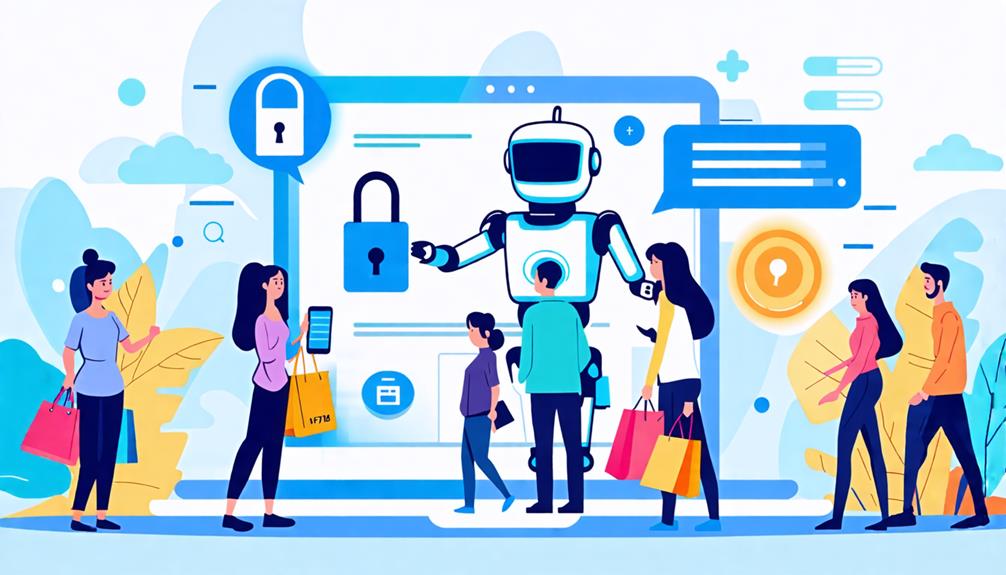
Interactive chatbots hold immense potential for e-commerce but present several challenges and considerations. First and foremost, privacy and security concerns are paramount since chatbots collect extensive customer data. Robust security measures are essential to protect this information and build trust. Additionally, rapidly evolving customer expectations necessitate continuous adaptation. Advanced Natural Language Processing (NLP) capabilities are crucial for accurately understanding diverse inquiries. However, technical limitations, such as difficulties in natural language understanding and integration with existing e-commerce platforms, can hinder effectiveness.
Balancing automation with a human touch is also vital. Addressing misconceptions about chatbots being impersonal is essential. Offering options for human assistance when necessary can significantly enhance the customer experience. Continuous updates and training are necessary to keep chatbots performing optimally.
To summarize, consider the following key points:
- Privacy and Security: Implement robust measures to protect customer information.
- Continuous Updates: Regularly update NLP capabilities to meet evolving customer expectations.
- Human Touch: Provide options for human interaction to counteract perceptions of impersonal service.
Effectively navigating these challenges will ensure that your chatbots contribute positively to the customer experience and the overall success of your e-commerce platform.
Implementation Strategies
Addressing the challenges and considerations of implementing interactive chatbots is just the beginning. A clear implementation strategy is essential for seamlessly integrating these chatbots with your e-commerce platforms. Begin by ensuring that the chatbot aligns perfectly with your existing systems to provide a smooth user experience. Conduct thorough testing before launch to identify potential issues and confirm the chatbot can manage diverse customer interactions effectively.
Training your chatbot with extensive FAQs and common customer queries is crucial for enhancing its accuracy and ability to provide timely assistance, thereby increasing customer satisfaction. Establish key performance indicators (KPIs) such as response time and customer satisfaction scores to measure the chatbot's effectiveness, helping you identify areas needing enhancement.
Continuous monitoring and updating of the chatbot's knowledge base are indispensable to maintaining accuracy and relevance in its responses, further improving user satisfaction. By focusing on these implementation strategies, you will not only enhance the chatbot's performance but also elevate the overall customer experience on your e-commerce platform. Remember, a well-implemented chatbot can significantly improve customer engagement and satisfaction.