Is COBOL Still Used?

Yes, COBOL is definitely still used today. You find it powering critical systems in many industries, especially in finance where it handles complex transactions with precision. COBOL's readability and true decimal data types make it ideal for business computing. Over 29,010 companies, including 90% of Fortune 500 firms, rely on COBOL. Major banks process millions of lines daily, contributing to COBOL's ongoing importance.
Even with modernization efforts and challenges like a dwindling workforce, COBOL remains integral to enterprise technology. There's more to uncover about its role and future adaptations.
History of COBOL
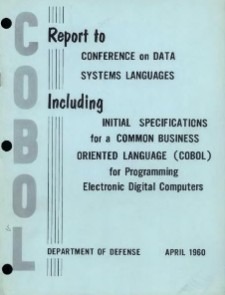
COBOL, or Common Business Oriented Language, emerged in 1959, driven by the U.S. Department of Defense. The aim was to craft a portable programming language specifically for data processing. Influenced by Grace Hopper's FLOW-MATIC, COBOL sought to streamline programming costs and modernize business applications. You might find it fascinating that this language was a product of collaboration, designed to bridge the gap between business and technology.
In its history, COBOL was initially standardized in 1968, starting with COBOL 60. Over the decades, it's undergone several revisions, adapting to technological advancements. The most recent update, ISO/IEC 1989:2023, reflects its ongoing evolution. Even today, COBOL's legacy continues, with an astonishing 775 to 850 billion lines of code still in use. This sheer volume underscores its crucial role in global enterprise systems.
Despite newer languages emerging, COBOL has maintained its relevance, especially in banking and government sectors. It powers important business operations and legacy systems, proving its durability. As you explore COBOL's history, you'll see how it shaped programming, ensuring fundamental systems run smoothly even now.
Key Features of COBOL
When diving into the key features of COBOL, you'll immediately notice its focus on readability and clarity in business applications. The COBOL language is renowned for its self-documenting syntax, using English-like phrases such as "MOVE" and "DISPLAY". This makes it incredibly user-friendly compared to many other programming languages, particularly in the context of business applications. The language's structure into four main divisions—Identification, Environment, Data, and Procedure—facilitates the organized development of business logic.
COBOL's true decimal data types make it a powerhouse for financial calculations, ensuring precision in transactions. This feature is indispensable for industries like banking and insurance, where accuracy is non-negotiable. Furthermore, with over 300 reserved words, COBOL provides a rich vocabulary that improves its functionality and adaptability.
Despite its longevity, COBOL has evolved over time. Newer standards, like COBOL 2002, introduced object-oriented features, allowing it to stay relevant while retaining its core strengths for business applications. With an estimated 775-850 billion lines of COBOL code globally, the language's extensive use underscores its enduring significance and the complexities involved in converting legacy systems to more modern programming languages.
Current Usage in Industries

In the current technology landscape, COBOL remains an fundamental component across numerous sectors, thanks to its reliability and robust functionality. You might be surprised to learn that over 29,010 companies still actively use COBOL, and an impressive 90% of Fortune 500 companies rely on it for their critical operations. COBOL systems support a significant portion of enterprise software, accounting for about 65%, which showcases its pivotal role in maintaining legacy systems.
COBOL excels in business programming, with its flexibility and reliability making it a trusted choice for executing fundamental business functions. Shifting from COBOL can be challenging, but its existing codebase, estimated at 775-850 billion lines globally, continues to underscore its immense integration in business applications. This vast amount of existing code is a reflection of its durability and effectiveness in diverse industries.
Even though some may view it as outdated, the reality is that COBOL systems support remains essential for countless organizations. Its ability to handle complex transactions and processes efficiently guarantees it stays relevant, providing a strong foundation in sectors that require precision and stability. COBOL's presence across industries reflects its enduring value in the modern business world.
COBOL's Role in Banking
A proof of its enduring legacy, COBOL plays an essential role in the banking industry. You might be surprised to learn that as of 2017, about 43% of banking systems still rely on COBOL. This statistic isn't just a number; it underscores COBOL's significant role in financial operations and transaction processing. It's not just about handling money; it's about ensuring accuracy and reliability in every transaction.
Consider these eye-opening facts:
- Daily Transactions: COBOL applications process around $3 trillion in daily commerce, making them indispensable for banking systems worldwide.
- Volume of Code: Major banks maintain hundreds of millions of lines of COBOL code in daily use. This massive volume demonstrates how deeply ingrained COBOL is in their operations.
- Complex Structures: COBOL's ability to handle complex record structures and true decimal data types makes it ideally suited for banking systems that demand precision.
- Cost and Risk: Despite modernization efforts, the high costs and risks associated with rewriting COBOL systems mean many banks choose to stick with their existing COBOL applications.
In essence, COBOL's role in banking isn't just historical; it's an active, essential part of today's financial ecosystem. Additionally, AI enhances transparency in digital marketing transactions, which can be applied in financial sectors to improve transaction verification and reduce fraud risks significantly.
Modernization Efforts

Many might not realize it, but the push for modernization in COBOL applications is gaining momentum. Organizations are increasingly integrating COBOL with cloud platforms like AWS and Azure. This approach improves existing systems while preserving vital legacy functionalities. By modernizing these applications, businesses can enhance their responsiveness to changing demands. Tools like Rocket Visual COBOL allow developers to use modern practices, making it easier to update and maintain systems.
The Open Mainframe Project is actively supporting these modernization efforts. They've launched initiatives to provide resources and guidance for upgrading legacy systems. Such support is invaluable for companies seeking to transform their COBOL applications to more flexible and scalable microservices architectures. This shift reduces reliance on monolithic legacy systems, offering greater agility and efficiency.
To address the skills gap in the workforce, multiple training programs and resources are being developed. These initiatives aim to equip the next generation of developers with the necessary skills to maintain and modernize COBOL applications. By investing in these educational efforts, organizations guarantee they have the talent required to keep their systems up-to-date and competitive in a constantly changing technological landscape.
When selecting a CMS for business, it's crucial to evaluate integration capabilities with existing tools, ensuring seamless workflows and efficient content lifecycle management.
Programmer Demand and Skills Gap
While modernization efforts are making strides in updating COBOL systems, the demand for programmers skilled in this language is rapidly growing. You might wonder why COBOL programmers are in such high demand. The aging workforce, with many developers nearing retirement, has created a significant skills gap. This gap is particularly concerning given that over 43% of banking systems still rely on COBOL. Without enough skilled programmers, maintaining and upgrading these vital systems becomes challenging.
If you're considering a career in tech, here's why learning COBOL could be a strategic move:
- Aging Workforce: Many current COBOL programmers are retiring, creating vacancies that need filling. Organizations are desperate for new talent to step in.
- Vital Systems: Banking and government agencies depend on COBOL expertise to operate efficiently. Your skills could be essential in keeping these systems running smoothly.
- Lack of Training: Universities don't often teach COBOL, intensifying the skills gap. Self-learning or specialized training can make you stand out.
- Lucrative Opportunities: As companies seek COBOL experts, they're offering competitive salaries, making it a financially rewarding skill to have.
Consider diving into COBOL to meet this demand and bridge the skills gap.
Criticisms and Challenges

Criticism of COBOL often centers on its verbosity and inefficiency, making programs unnecessarily complex and hard to maintain. You might find yourself grappling with unwieldy code that demands significant effort to decipher and update. This complexity was particularly highlighted during the Y2K scare, where COBOL's intricate nature contributed to roughly 24% of the total repair costs. Such challenges stem from the language's design, which often requires more lines of code to perform tasks that newer languages handle more efficiently.
One of the biggest challenges with COBOL is dealing with legacy code. Many existing COBOL systems suffer from poor documentation, making it tough for you to maintain or update them. This lack of clarity can lead to costly errors and inefficiencies. The perception of COBOL as outdated also means fewer resources are devoted to training new programmers, exacerbating the shortage of skilled developers familiar with these legacy systems.
Transitioning away from COBOL poses its own challenges. Migrating to modern languages is fraught with risks and high costs, especially when dealing with large-scale applications. This leaves organizations in a bind, struggling to balance the need for modernization with the realities of maintaining crucial legacy systems.
Learning Resources for COBOL
Ever wondered where to start if you want to learn COBOL? You're in luck—there's a wealth of resources out there to guide your expedition. Regardless of if you're a beginner or looking to refresh your skills, online platforms offer a variety of COBOL courses tailored to different experience levels. Udemy, for instance, is a popular choice, providing thorough courses that make learning COBOL accessible and engaging.
To get hands-on experience, consider downloading GnuCOBOL, an open-source implementation that lets you run COBOL programs directly on your machine. It offers a practical environment to experiment with code. Moreover, enhancing your coding experience is easy with Visual Studio Code. By adding COBOL extensions, you can create an intuitive and productive learning environment.
For those who prefer structured learning, "Beginning COBOL for Programmers" by Michael Coughlan delivers clear, fundamental content on COBOL concepts and syntax. If you're more of a visual learner, YouTube is a goldmine. Channels like Derek Banas' programming tutorials break down COBOL programming into manageable segments.
Here are some steps to get started:
- Enroll in an online COBOL course.
- Install GnuCOBOL for practice.
- Use Visual Studio Code with COBOL extensions.
- Watch YouTube tutorials for visual learning.
Future Prospects of COBOL

How does COBOL, a language over six decades old, still hold such a crucial place in modern technology? It's deeply embedded in critical sectors like banking, where 43% of systems rely on it. Despite the surge of modern languages, COBOL supports 65% of enterprise software and handles over $3 trillion in daily commerce. The future prospects of COBOL are robust, given its entrenched role and the high costs of migrating to newer technologies. As a potential COBOL developer, you'd find that the demand for your skills remains strong.
Although many current developers are in their mid-40s to mid-50s, initiatives are underway to modernize training, ensuring a continuous influx of skilled programmers. With an estimated 775-850 billion lines of COBOL code globally, there's a vast landscape of legacy systems needing maintenance and integration with modern platforms. Organizations aren't just holding onto COBOL for nostalgia; they're actively investing in modernizing COBOL applications, integrating them with cloud platforms like AWS and Azure.
This adaptability highlights COBOL's enduring relevance. Open-source CMS solutions can significantly reduce initial costs, providing a wealth of free plugins and themes for seamless integration with modern technologies. So, regardless of whether you're a seasoned developer or just starting, COBOL offers promising career opportunities as it evolves alongside modern technologies.