Smart Out-of-Home Advertising: Using Technology to Reach Consumers
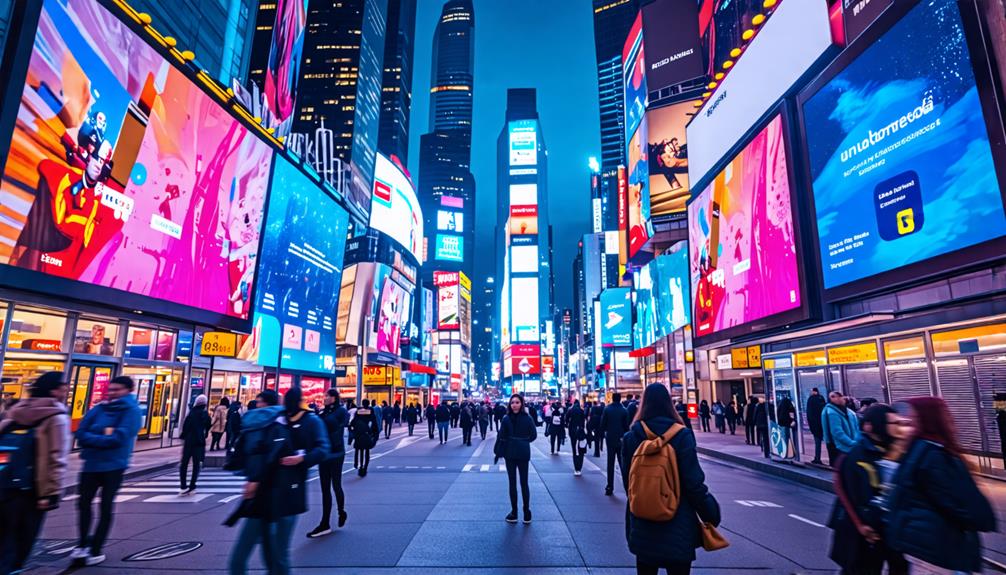
Digital billboards and interactive screens are now a common sight in urban areas, serving more than just aesthetic purposes. These elements are integral to Smart Out-of-Home (DOOH) advertising, which leverages advanced technologies like geolocation and programmatic content to more effectively reach and engage consumers. Picture a billboard that adapts its message based on the time of day or even aligns with your personal interests. This innovative approach is revolutionizing consumer interaction while still prioritizing privacy.
Understanding Digital Out-of-Home (DOOH)
Digital Out-of-Home (DOOH) advertising is a rapidly expanding market, with US ad spend reaching $2.46 billion in 2022 and projected to grow by 16.7% in 2023. DOOH encompasses a variety of formats, including digital billboards, mall kiosks, and gas station screens, all strategically positioned to engage consumers in high-traffic public areas.
Consumers generally have a favorable view of DOOH, with 73% holding a positive perception and 76% taking action after seeing these ads. This makes DOOH more effective than traditional media like TV and online ads. A key factor in this effectiveness is the use of real-time data, enabling dynamic content that is relevant to the moment and location. Geotargeting ensures that the ads are tailored to specific environments, enhancing their impact.
Programmatic buying has revolutionized the DOOH space, allowing advertisers to purchase ad slots with greater flexibility and precision. Coupled with advanced measurement capabilities, this has led 94% of media professionals to plan increased investments in DOOH over the next 18 months. The outcome is more targeted, engaging, and effective advertising that resonates with consumers more than ever before.
Evolution of DOOH Advertising
Over the past decade, the landscape of Out-of-Home (OOH) advertising has transformed dramatically, largely driven by the surge in Digital Out-of-Home (DOOH) technologies. The DOOH sector saw a remarkable increase in U.S. ad spend, reaching $2.46 billion in 2022—a 23.5% year-over-year growth. This trend indicates that DOOH will constitute about one-third of all OOH ad spending by 2024, underscoring its rising importance in the advertising landscape.
Advancements in digital signage have revolutionized audience targeting. By leveraging real-time data and contextual targeting, advertisers can deliver personalized, dynamic content that significantly increases consumer engagement. Programmatic DOOH has also experienced considerable growth, with spending in the U.S. jumping from $180 million in 2020 to $530 million in 2022. This increase highlights the effectiveness of automated advertising processes and improved measurement capabilities.
Consider the impact:
- A 303% increase in audience reach when combined with web and mobile strategies
- Enhanced precision in audience targeting
- Increased consumer engagement through real-time content delivery
- Seamless integration into multi-channel marketing campaigns
The evolution of DOOH is reshaping how advertisers connect with consumers, making it an indispensable part of modern advertising strategies.
Examples of DOOH Formats
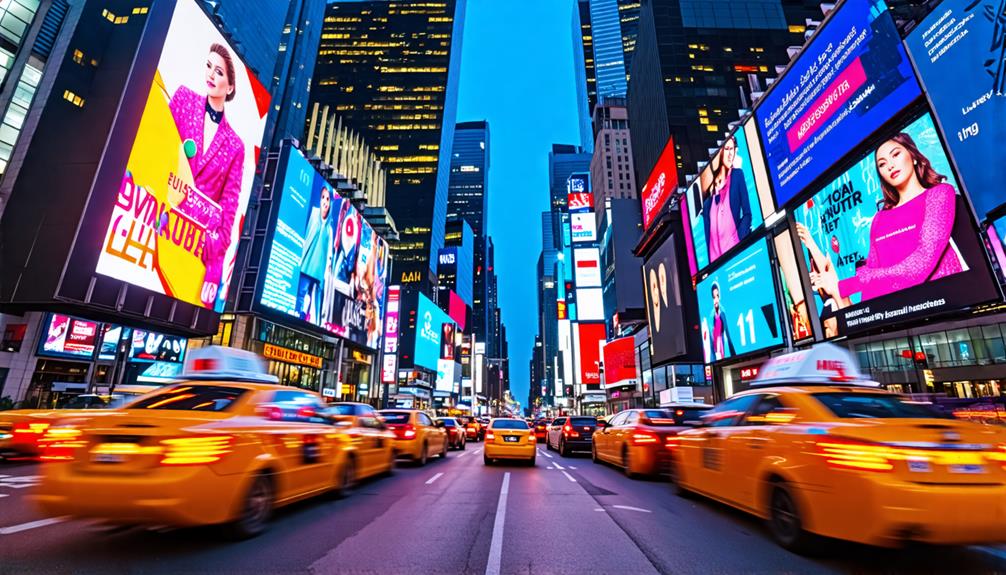
The world of DOOH (Digital Out-Of-Home) advertising offers a variety of engaging formats tailored to different consumer touchpoints. Digital billboards are among the most prominent, strategically located near highways and transit stations to maximize visibility and engagement from passing consumers. These large displays leverage technological advancements to deliver dynamic content that can be updated in real time.
Place-based advertising is another effective DOOH format, involving screens in specific environments like shopping malls, gyms, and gas stations. By targeting consumers in contextually relevant locations, these ads enhance engagement and relevance. In retail settings, point-of-purchase displays are smaller screens positioned in grocery stores and convenience shops. These displays improve visibility close to consumer buying decisions, influencing purchase behavior directly at the point of sale.
Spectacular displays, such as those in Times Square, offer high-impact visuals that significantly raise brand awareness and leave lasting impressions. These grandiose screens create an engaging experience, drawing substantial attention and increasing consumer engagement. With U.S. DOOH ad spend reaching $2.46 billion in 2022, reflecting a 23.5% year-over-year growth, it's evident that diverse DOOH formats are increasingly adopted due to their proven effectiveness and ongoing technological advancements.
Benefits of DOOH Media
With DOOH media, you can achieve enhanced brand visibility and versatile content flexibility. These advertisements generate 63% more impact and can be swiftly updated to reflect current promotions or trends. This ability to quickly adapt your messaging ensures you remain relevant and engaging to your audience.
Enhanced Brand Visibility
Ever wondered how to make your brand stand out in a crowded market? Digital Out-of-Home (DOOH) advertising can amplify your brand visibility like never before. DOOH delivers 63% more impact on consumers compared to traditional formats, positioning it as a powerhouse for enhancing brand awareness. In 2022 alone, US DOOH ad spend reached $2.46 billion, reflecting a 23.5% year-over-year increase, underscoring its effectiveness.
Consumers are engaging with DOOH messaging more than ever, with 62% reporting increased interaction post-pandemic. This heightened engagement translates into multiple daily touchpoints that greatly enhance brand visibility.
DOOH ads aren't just about visibility—they drive action. An impressive 93% of consumers complete a purchase after seeing directional ads, directly increasing store traffic. The use of dynamic content and contextual targeting allows for hyper-targeted messaging, ensuring your ads resonate with the right audience and improving advertising effectiveness.
Consider the following benefits of DOOH:
- Improved brand visibility: Your brand stands out in high-traffic areas.
- Increased consumer engagement: More interactive and appealing ads.
- Higher store traffic: Directional ads guide consumers to your store.
- Effective targeting: Hyper-targeted messaging captures the right audience.
Dynamic Content Flexibility
Imagine being able to update your advertising message every few minutes, keeping the content fresh and relevant for your audience. With the dynamic content capabilities of Digital Out-Of-Home (DOOH) media, you can achieve this seamlessly. Rapid messaging changes ensure your ads remain current and engaging. Additionally, DOOH formats offer weather-responsive advertising, making promotions more pertinent by aligning with real-time conditions.
Geotargeting and contextual targeting further enhance this by displaying ads in the right places at the right times, optimizing visibility during peak consumer moments. For example, showing grocery deals near supermarkets or weather-related products during rainy spells can effectively drive consumer action.
Interactive elements and videos provide unique creative opportunities to captivate your audience. Research indicates that 86% of consumers appreciate grocery deal ads, and 81% find weather-responsive ads appealing. This underscores the high effectiveness of dynamic, contextual messaging in engaging consumers meaningfully.
In essence, the flexibility of DOOH media opens up numerous possibilities for advertisers, making campaigns more responsive, relevant, and ultimately more successful.
Market Trends in DOOH
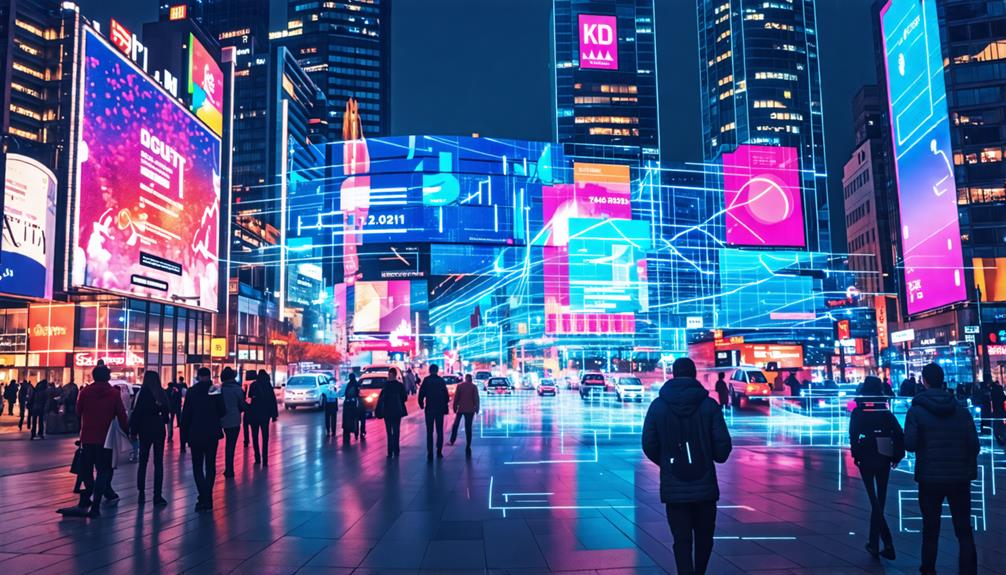
The U.S. Digital Out-of-Home (DOOH) ad spend reached $2.46 billion in 2022, reflecting a 23.5% increase from the previous year, and it is expected to grow by another 16.7% in 2023. This shift towards digital formats underscores the growing importance of DOOH in the advertising landscape. By 2024, DOOH is projected to constitute approximately one-third of all Out-of-Home advertising spending, highlighting its increasing prominence.
Programmatic DOOH spending surged from $180 million in 2020 to $530 million in 2022, demonstrating the crucial role of real-time data integration and enhanced measurement capabilities in effective advertising. This approach allows for the optimization of campaigns, leading to improved consumer engagement and broader audience reach. When combined with web and mobile campaigns, DOOH can boost audience reach by 303% and increase foot traffic by 68% when integrated with social messaging.
- Increased Ad Spend: 94% of media professionals plan to increase their DOOH investments within the next 18 months.
- Market Growth: DOOH is forecasted to account for one-third of all Out-of-Home ad spend by 2024.
- Audience Engagement: Combining DOOH with mobile campaigns significantly amplifies reach.
- Data-Driven: Programmatic DOOH enhances real-time targeting and experiential advertising.
Adopting these market trends is essential for staying competitive in the advertising industry.
Creative Innovations in DOOH
Creative innovations in Digital Out-of-Home (DOOH) advertising significantly enhance consumer engagement and campaign effectiveness. By utilizing dynamic content, you can adapt your messaging to real-time conditions, such as weather or local events, for personalized and relevant communications. This ensures your content remains engaging and captures the audience's attention more effectively.
Interactive elements like QR codes and augmented reality (AR) significantly boost consumer engagement. These features prompt immediate actions, such as in-store purchases or app downloads, transforming passive viewers into active participants. Moment-based triggers further increase relevance by responding to specific consumer behaviors or local events, making your campaigns timely and impactful.
The creative quality of DOOH advertising is crucial, with nearly 50% of campaign effectiveness depending on engaging, visually appealing content. High-quality visuals and compelling designs not only capture attention but also leave a lasting impression. Additionally, integrating real-time data analytics allows for on-the-fly campaign optimization. You can adjust creative elements and messaging based on live data to maximize engagement and ROI.
Privacy and Targeting in DOOH
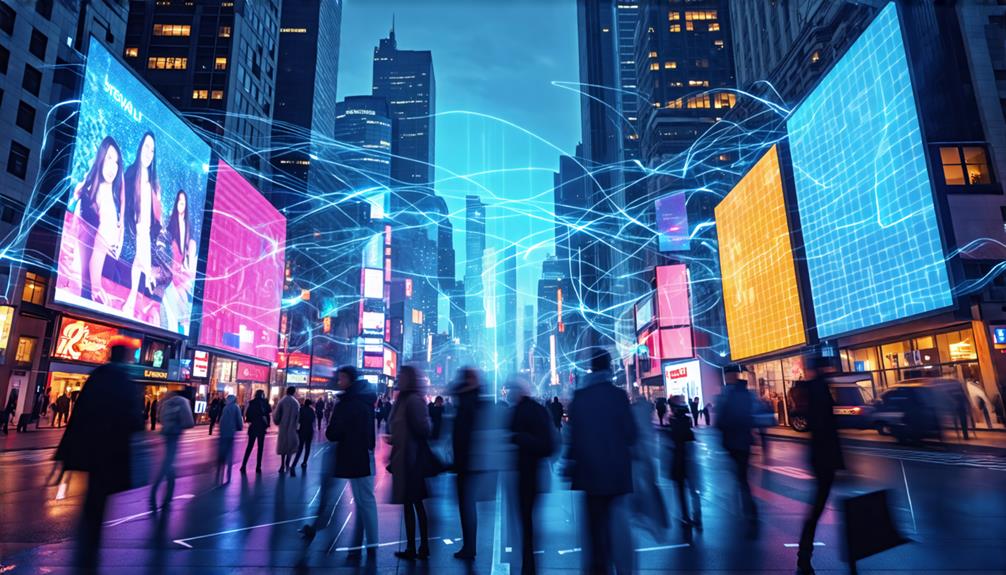
When considering geolocation-based ad targeting in DOOH, privacy concerns may arise. However, DOOH leverages anonymized data to ensure compliance with privacy regulations, thereby eliminating the need for third-party cookies. This method not only respects consumer privacy but also delivers effective and contextually relevant messages.
Geolocation-Based Ad Targeting
In today's dynamic online landscape, geolocation-based ad targeting in Digital Out-of-Home (DOOH) advertising significantly enhances engagement and effectiveness by placing ads where your audience is most likely to see them. Leveraging data analytics and location technology, this approach identifies high-traffic areas and optimizes ad placements. By aligning real-time messaging with consumer behavior, you can achieve a substantial audience reach, increasing engagement by 303% when combined with web and mobile campaigns.
Geolocation-based targeting ensures your ads appear in contextually relevant environments, such as fitness promotions in gyms or dining deals in restaurants. This strategy not only boosts consumer engagement but also raises foot traffic by an average of 68% when paired with social messaging. Moreover, DOOH ads use anonymized geolocation data, addressing privacy concerns and ensuring compliance with privacy regulations. This builds consumer trust and enhances campaign performance.
Key benefits include:
- Improved Engagement: Reach your audience precisely where they are.
- Increased Foot Traffic: Attract more visitors to your locations.
- Privacy Compliance: Foster trust with your audience through responsible data use.
- Enhanced Campaign Performance: Achieve superior results with data-driven insights.
Adopt geolocation-based targeting to maximize the impact of your DOOH ads and meaningfully connect with your audience.
Privacy-Compliant Audience Data
Adopting privacy-compliant audience data in Digital Out-of-Home (DOOH) advertising revolutionizes campaign effectiveness while respecting consumer privacy. By utilizing anonymized data, you can target audiences effectively without depending on third-party cookies or personal information. This aligns with the increasing demand for privacy-respecting targeting methods and enhances brand trust.
Geolocation and contextual targeting allow the delivery of relevant ads based on consumer behavior and environmental factors. For example, using mobile location data, you can observe general consumer patterns, focusing on behaviors rather than sensitive personal information. This not only enhances consumer engagement but also addresses privacy concerns.
| Benefits | Details |
|---|---|
| Privacy Compliance | No third-party cookies or personal information required |
| Consumer Engagement | Relevant ads based on behavior and context |
| Brand Trust | Builds trust through privacy-respecting methods |
| Real-Time Bidding | Flexible ad placements via programmatic DOOH |
| Future Growth | 85% of ad execs anticipate increased DOOH ad spend |
Programmatic DOOH (pDOOH) supports real-time bidding and flexible ad placements while ensuring that all targeting strategies respect consumer privacy preferences. By emphasizing anonymized audience data and contextual targeting, you can develop effective, privacy-compliant campaigns that resonate with your audience.
Related posts