The Importance of Regular CMS Updates
Regularly updating your CMS is crucial for maintaining your site's security, performance, and compliance. By staying current with updates, you protect against security vulnerabilities and benefit from new features that enhance functionality and user experience. Regular updates also ensure compatibility with the latest technologies and adherence to evolving regulations. Ignoring these updates can result in costly downtime and legal complications. Curious about how this impacts your site's efficiency and user engagement?
Enhancing Security
Enhancing security through regular CMS updates is essential for safeguarding your website against advanced hacking attempts and data breaches. Keeping your CMS up to date addresses security vulnerabilities that could otherwise be exploited by cybercriminals. Nearly 60% of successful cyberattacks target outdated software, making it a high-risk factor.
Security patches released by CMS platforms fix newly identified weaknesses, ensuring your website remains protected against evolving cyber threats. Ignoring these updates can leave your site vulnerable, making it an easy target for hackers.
Regular CMS updates also demonstrate your commitment to data protection and compliance with standards like GDPR, which mandates robust security measures for handling personal information. Neglecting these updates can lead to significant reputational damage and financial losses, with the average cost of a data breach exceeding $3.86 million.
Incorporating regular CMS updates into your maintenance routine is a proactive step toward enhancing cybersecurity. Don't let outdated CMS versions compromise your website's security—stay vigilant and keep your software current.
Leveraging New Features
Regular CMS updates are essential not only for bolstering your website's security but also for unlocking a host of new features that can significantly enhance your site's functionality and user experience. With each CMS upgrade, you gain access to advanced content editing tools, enabling you to create and manage content more efficiently and imaginatively. These new features keep you ahead in the fast-paced online landscape.
Updated CMS platforms frequently include enhanced SEO tools, which optimize your website's visibility and keep you competitive in search engine rankings. Utilizing these tools can significantly boost your online presence and attract more visitors.
Additionally, CMS upgrades often improve social media integration, simplifying content sharing and user engagement across multiple platforms. This enhancement enriches the overall user experience. For businesses, regular updates to e-commerce functionalities allow you to offer the latest features, thereby improving online sales and customer satisfaction.
Boosting Performance

Regular updates to your CMS can significantly enhance your website's efficiency and user satisfaction. By ensuring your CMS is up to date, you can take advantage of optimizations that improve loading times, leading to a better user experience and reducing the likelihood of visitors abandoning your site. Slow-loading websites can lose up to 40% of their visitors, making performance improvements crucial.
Updated CMS versions consistently outperform outdated ones in responsiveness, positively affecting Google's Core Web Vitals and search engine rankings. These performance enhancements make your site faster and more stable, reducing operational issues and the frequency of breakdowns. This ensures a smooth and engaging experience for your visitors, encouraging them to interact more with your content.
Here's a quick comparison of the performance benefits from regular CMS updates:
| Benefit | Updated CMS | Outdated CMS |
|---|---|---|
| Loading Times | Faster | Slower |
| User Experience | Improved | Diminished |
| Stability | More Stable | Frequent Issues |
| User Engagement | Increased | Reduced |
Regular CMS updates are essential for maintaining high performance, providing a seamless experience that keeps users engaged and satisfied.
Ensuring Compatibility
Keeping your CMS updated is crucial for ensuring compatibility with the latest web standards and technologies. Regular updates prevent compatibility issues that can arise from using outdated CMS versions, which can negatively impact website functionality and user experience. By maintaining an up-to-date CMS, you ensure seamless integration with the latest versions of browsers and third-party plugins.
Additionally, regular updates provide access to the latest features and performance enhancements, ensuring your website runs smoothly and efficiently. Security updates are also essential, as they protect your site from vulnerabilities that cybercriminals might exploit, thereby enhancing your site's security.
Maintaining a consistent user experience across various devices and browsers is another critical aspect. With mobile traffic constituting over 50% of global web traffic, it's vital to ensure compatibility with modern technologies such as new APIs and security protocols. Regular updates enable your CMS to handle these advancements, minimizing the risk of disruptions.
Meeting Compliance Standards

Ensuring compliance with regulatory standards is crucial, and regular updates to your Content Management System (CMS) are essential in this process. By keeping your CMS up-to-date, you ensure your website complies with regulations such as the General Data Protection Regulation (GDPR) and the Americans with Disabilities Act (ADA), thereby minimizing the risk of legal issues. These updates also enhance security, helping to prevent vulnerabilities that could lead to data breaches and non-compliance problems.
Regulatory Requirements Compliance
Regularly updating your Content Management System (CMS) is essential not only for maintaining optimal website performance but also for ensuring compliance with critical regulatory standards such as the General Data Protection Regulation (GDPR) and the Americans with Disabilities Act (ADA). Adhering to these regulations is crucial for safeguarding data security and ensuring accessibility for all users. Under GDPR, for example, organizations must manage user consent and protect personal data. Non-compliance can lead to substantial fines, potentially as high as €20 million or 4% of the annual global turnover, whichever is greater.
Keeping your CMS up-to-date demonstrates your commitment to adhering to data security and privacy standards mandated by law. Updated CMS versions often include features that facilitate compliance, such as data encryption and user consent management tools. These built-in features alleviate the need for separate implementations, thereby simplifying the process of meeting regulatory requirements.
Furthermore, regular updates ensure that any new regulatory requirements are promptly integrated into your CMS, minimizing legal risks and enhancing your organization's reputation. Compliance not only shields you from financial penalties but also fosters trust with your users by assuring them that their data is secure and their rights are upheld.
Legal Repercussions Avoidance
Regular updates to your Content Management System (CMS) are crucial for ensuring compliance with regulatory requirements and avoiding legal repercussions. Keeping your CMS up to date ensures your website adheres to laws like GDPR and ADA, which mandate stringent security and privacy protocols for user data. Non-compliance, often resulting from an outdated CMS, can lead to severe fines and legal challenges. Organizations are held responsible for data breaches or accessibility issues stemming from non-compliance.
By regularly updating your CMS, you demonstrate a commitment to compliance, enhancing your organization's reputation and building trust with users and regulators. Updated CMS versions are designed to meet evolving regulations, thereby reducing the risk of legal challenges. Additionally, failing to update your CMS can lead to significant operational setbacks. Outdated systems often lack the necessary features to comply with current standards, increasing the risk of non-compliance and associated penalties.
Proactively updating your CMS is not just about security; it is about safeguarding your organization from costly legal repercussions and ensuring alignment with regulatory compliance requirements.
Security Standards Adherence
To comply with security standards and regulatory requirements such as GDPR and ADA, regularly updating your CMS is essential. These regulations mandate stringent security and privacy protocols, and neglecting to update your CMS can leave your business susceptible to data breaches and legal penalties. Keeping your CMS current addresses known vulnerabilities, thereby protecting sensitive user data.
Here are the benefits of regular updates:
| Benefit | Impact | Risk Without Updates |
|---|---|---|
| Improved Security | Protects against data breaches | Increased risk of cyber attacks |
| Compliance Adherence | Meets GDPR and ADA requirements | Legal repercussions and fines |
| User Trust | Enhances reputation for security | Reduced user confidence |
Updating your CMS ensures that security patches are installed to meet compliance requirements, demonstrating your commitment to data protection. This not only mitigates legal risks but also enhances your company's reputation for security and trustworthiness among users.
Failure to update can expose your business to significant threats, including data breaches and non-compliance penalties. Thus, maintaining an updated CMS is a proactive measure for effectively managing both security and regulatory obligations.
Improving Usability
Regular updates to a CMS are crucial for enhancing usability by creating intuitive user interfaces that simplify website management. Features like drag-and-drop content management streamline workflows, making tasks more straightforward for administrators and content creators. These updates boost productivity, allowing your team to focus on generating quality content rather than dealing with outdated systems.
Intuitive User Interfaces
Navigating a content management system (CMS) no longer needs to be a daunting experience, thanks to the emphasis on intuitive user interfaces in modern updates. These contemporary design enhancements make CMS platforms more accessible, incorporating improved usability features that allow users to manage and update website content with minimal technical training.
One of the primary advantages of these updates is streamlined workflows, which reduce complexity and let users concentrate on producing high-quality content rather than wrestling with convoluted processes. Enhanced drag-and-drop functionality simplifies the organization and formatting of website elements, saving both time and effort.
The increased usability of continually updated CMS interfaces translates to higher productivity. Tasks can be completed more quickly and with fewer errors, making the workday more efficient. Additionally, the reduced learning curve enables new team members to adapt swiftly, facilitating smoother onboarding and minimizing workplace disruptions.
These improvements ensure that the CMS not only remains relevant but also interoperable with other systems, fostering a more integrated and trustworthy digital environment.
Streamlined Content Management
Regular CMS updates significantly enhance usability by streamlining content management processes. These updates often incorporate intuitive interfaces, simplifying website management for users of all technical skill levels. Streamlined workflows reduce complexity, enabling content creators to focus on producing compelling content rather than navigating through complicated systems.
Newer CMS versions frequently introduce drag-and-drop features, making it easier for non-technical users to manage content efficiently. This improvement not only boosts productivity but also minimizes the risk of errors, ensuring that your team can deliver content quickly and accurately.
Key benefits of regular CMS updates include:
- Streamlined workflows: Simplify processes, allowing your team to concentrate on content creation.
- Intuitive interfaces: Enhance navigation, reducing the difficulty of managing your site.
- Higher productivity: Improve efficiency and speed up content delivery.
- Lower learning curve: Enable new users to adapt quickly, facilitating a smoother onboarding process.
Maintaining Cost-Efficiency

Regular updates to your Content Management System (CMS) are crucial for maintaining cost-efficiency within any organization. Keeping your CMS platforms up-to-date helps you avoid the high maintenance costs that often accompany outdated systems. Instead of encountering extensive repairs, regular updates allow for incremental improvements, which are far more manageable financially.
Staying current with technological advancements through consistent updates eliminates the need for a complete system overhaul. This approach distributes financial burdens over time, preventing significant upfront expenses that could strain your budget. Additionally, regular updates ensure that your website maintains a modern appearance, meeting user expectations and reducing the need for costly visual redesigns.
Furthermore, adopting a proactive update strategy enables organizations to adapt to technological changes gradually. This gradual adaptation optimizes your investment and ensures smooth operational continuity. Regular updates are not just a best practice; they are a strategic move to maintain cost-efficiency. Therefore, it is essential not to overlook the importance of keeping your CMS platforms updated. This small but fundamental step safeguards your financial health and ensures that your website remains competitive and efficient in the long term.
Reducing Downtime
Maintaining an up-to-date CMS is crucial for minimizing downtime. Regular updates address security vulnerabilities and bugs before they escalate into significant issues requiring extensive fixes, ensuring a seamless online presence.
Here's how regular updates contribute to reducing downtime:
- Security Breaches: Routine updates reduce the risk of security breaches, protecting your site from attacks that could lead to substantial downtime.
- Technical Issues: Swiftly resolving potential compatibility problems with plugins or themes helps prevent broken functionalities and site outages.
- Website Maintenance: Testing updates in a staging environment before applying them to the live site ensures smoother transitions, decreasing the likelihood of downtime during updates.
- Performance Optimizations: Updated CMS versions often include performance enhancements that improve loading speeds, reducing server strain and potential downtime.
Moreover, sites that are consistently updated can recover from technical glitches more rapidly, as the latest patches and fixes are already in place. Keeping your CMS current ensures higher overall availability and reliability, making website maintenance more efficient and effective.
Preparing for Updates
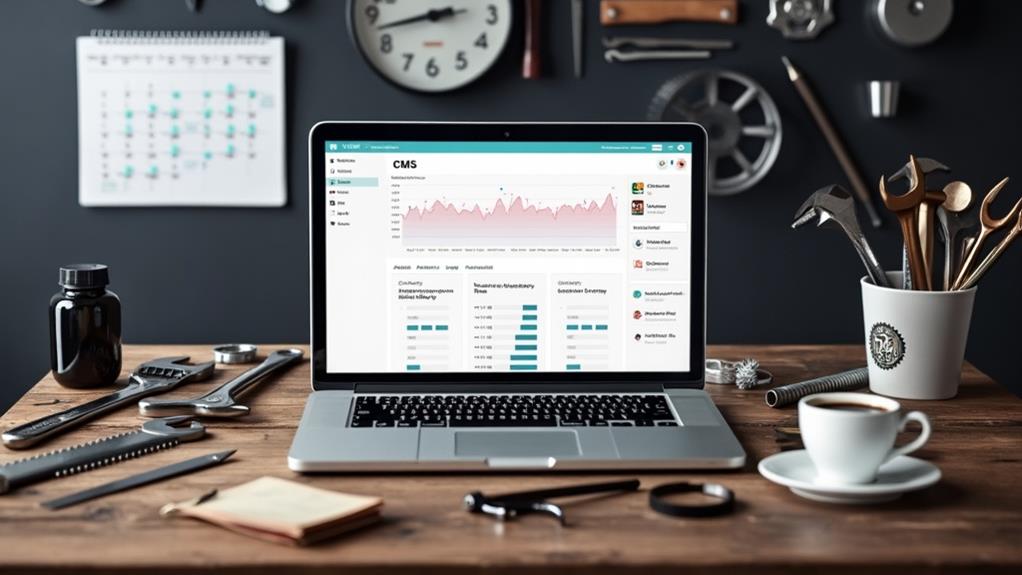
To ensure a smooth and successful CMS update, it's crucial to prepare meticulously in advance. Begin by backing up all website data and files to safeguard against potential data loss. Next, review your current CMS version and update history to identify required changes and facilitate a seamless transition to the new version. This review helps you understand new features and potential impacts on your site.
Verify the compatibility of your themes and plugins with the new CMS version; incompatible elements can lead to functionality issues. Ensuring compatibility is essential before proceeding. Once verified, conduct testing by implementing the update in a staging environment. This controlled setting allows you to identify and resolve any issues before applying changes to your live site.
Post-Update Best Practices
After completing your CMS update, it's crucial to adhere to post-update best practices to ensure your website remains robust and efficient. Here are some essential steps:
- Monitor Performance and Security: Regularly monitor your website's performance and security to swiftly identify and resolve any issues. This proactive approach ensures your site remains reliable and secure for users.
- Schedule Future Updates: Establish a regular update and maintenance schedule. This practice helps maintain your website's health, minimizes potential downtimes, and guarantees a seamless experience for visitors.
- Educate Your Team: Inform your team about new features and functionalities introduced by the CMS update. This knowledge enhances their efficiency in content management and ensures they can fully utilize the CMS's capabilities.
- Review and Revise Content: Reevaluate and update existing content to leverage new CMS capabilities. Improved content can significantly boost user engagement and interaction, keeping your site dynamic and attractive.