
The Role of Open Source in Shaping the Future of Tech

Technology evolves at breakneck speed, but one constant remains—the power of collaboration. At the heart of this evolution lies the open source movement, a philosophy that has redefined the way we think about innovation and accessibility. Open source is more than just a development model; it’s a global mindset that encourages individuals and organizations to share, adapt, and create without barriers.
The Genesis and Evolution of Open Source
While the open-source movement might seem like a modern marvel, it actually began in the late 20th century, transforming how software development happens. You witness a shift from closed development models to community-driven development, where transparency and openness reign.
The open source community thrives on collaborative development, allowing anyone to inspect, modify, and improve source code. This meritocracy fosters innovation, producing renowned projects like Linux and the Apache HTTP Server. These projects demonstrate the power of the open-source movement, accepted by 78% of businesses globally. In the current cloud environments, the development model continues to push boundaries, ensuring that software solutions remain secure and cutting-edge.
By accepting community-driven collaboration, you're part of a transformative phase in technology evolution. Additionally, open-source CMS like Drupal allows free modification and benefits from community contributions.
Key Principles of Open Source Development
The open-source movement's roots in community collaboration naturally lead us to its foundational principles. In open-source development, transparency is key; it lets anyone inspect and contribute to code, fostering trust and accountability. Collaboration among a global community of developers accelerates bug fixes and augments security, resulting in more groundbreaking software solutions.
A meritocracy guarantees contributions are judged by quality and impact, not authority, encouraging continuous improvement. Community-driven governance maintains standards and tackles challenges like security vulnerabilities. Rapid iteration is a hallmark, allowing developers to build on existing codebases and achieve creativity swiftly.
The Impact of Open Source on Software Development

Thanks to the open-source movement, software development has seen a transformative shift in how innovation occurs. Open-source software allows developers to build upon existing codebases, leading to breakthroughs like Kubernetes and TensorFlow.
This collaborative environment fosters rapid development, where innovation happens quickly and effectively. By contributing to open-source projects, you gain crucial skills and community engagement, enhancing your professional growth.
Implementing structured data in your projects can further enhance visibility and indexing, similar to how open-source fosters innovation.
Consider these emotional impacts:
- Empowerment: Open-source technologies let you shape the future by directly influencing software's evolution.
- Unity: You're part of a global community, working together for common goals.
- Trust: The rigorous peer review process guarantees security and reliability, giving you confidence in the software you develop.
Ultimately, open-source drives continuous improvement and shapes the digital economy.
Major Open Source Tools and Frameworks
In the domain of software development, open-source tools and frameworks stand as pillars of innovation and efficiency. When you're working on Java development, Apache Tomcat and the Spring Framework are indispensable for managing projects and building enterprise applications.
Apache Spark plays an essential role in big data processing, offering rapid data analytics and stream processing. For web application development, React and Vue.js provide modular, component-based architectures that improve maintainability. Terraform revolutionizes cloud infrastructure by allowing you to define infrastructure as code, ensuring scalability and consistency.
These open-source tools thrive on community support, with contributions from companies that push the boundaries of innovation. By engaging with these tools, you're part of a dynamic ecosystem driving technological advancement.
Challenges Facing the Open Source Movement
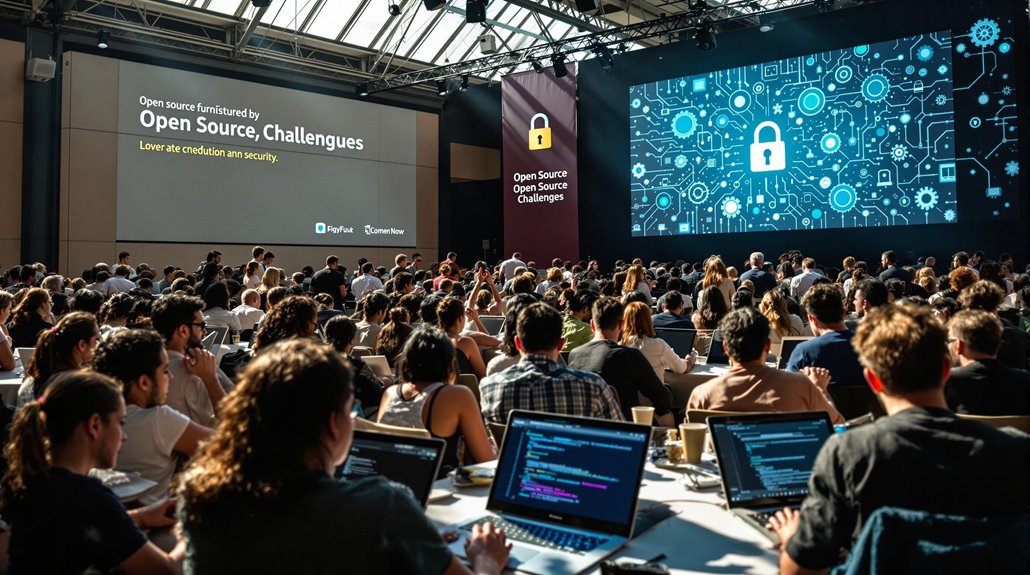
While open-source tools and frameworks drive innovation and efficiency, the movement also faces significant challenges. You might feel the weight of sustainability and funding challenges, especially in projects relying on volunteers or small teams.
This can lead to stagnation or even abandonment. The decentralized nature of open-source projects often results in quality control issues, lacking consistent governance to uphold standards. Consider these emotional impacts:
- Security vulnerabilities: High-profile incidents like Heartbleed reveal the risks and stress the need for robust security practices and effective monitoring and securing of projects. Ignoring regular updates can expose open-source projects to significant risks, as outdated software significantly increases vulnerability to attacks.
- Ethical development: As emerging technologies like AI and blockchain evolve, ensuring inclusive and ethical development is vital.
- Open-source contributions: Your contributions are critical in overcoming these hurdles and steering the movement toward a more secure, sustainable future.
The Role of Open Source in Emerging Technologies
Open-source technologies are at the forefront of transforming how we approach emerging innovations. You can utilize frameworks like TensorFlow and PyTorch to immerse yourself in AI and machine learning without being tied to proprietary constraints. These tools democratize technology, fostering a collaborative community where innovation flourishes.
In the cloud arena, open-source projects like Kubernetes are reshaping how you manage infrastructure, accelerating development with cloud-native solutions. The Internet of Things (IoT) benefits from open-source by offering customizable and scalable options for device integration and data management.
Big data analytics sees a revolution with Apache Spark, enabling real-time processing of massive datasets. Meanwhile, blockchain's future is bright with open-source principles, ensuring transparency and community-driven development in decentralized applications.
The Role of Open Source in Cybersecurity
With rising cyber threats, open source tools are playing a crucial role in fortifying digital defenses. Their transparent nature allows security experts to scrutinize code for vulnerabilities, fostering trust and resilience.
For example, the OpenSSL Project provides encryption protocols that secure millions of websites worldwide. In 2023, following a reported vulnerability, the open source community quickly collaborated to issue a patch, showcasing the speed and efficiency of crowd-sourced problem-solving. This proactive approach has made open source an indispensable ally in the fight against cybercrime.
Open Source Security: Risks and Mitigations

As open-source technologies reshape the landscape of emerging innovations, it's important to address their security implications. You're likely aware of infamous vulnerabilities like Heartbleed, highlighting the need for vigilant open-source security measures.
The transparency of open-source software offers a unique edge, allowing community-driven contributions to detect vulnerabilities proactively. Yet, the decentralized nature can pose challenges in maintaining quality control. To bolster resilience, effective governance structures are vital, ensuring security standards are consistently met.
Consider the emotional impact of these security practices:
- Security Audits: Regular audits reinforce trust by identifying weaknesses before they become threats.
- Transparency: Open access to code fosters community trust and encourages collaboration.
- Proactive Identification: Swiftly addressing vulnerabilities protects both developers and users from potential harm.
Final Thoughts
The open source movement has transcended its origins to become a cornerstone of technological and societal progress. By championing collaboration, transparency, and accessibility, it has unlocked new opportunities across industries, from AI to public services. As we look to the future, open source will continue to redefine innovation, proving that when knowledge is shared, everyone stands to gain.
Related posts