Virtual Reality Training for Sales Teams: Enhancing Skills and Knowledge
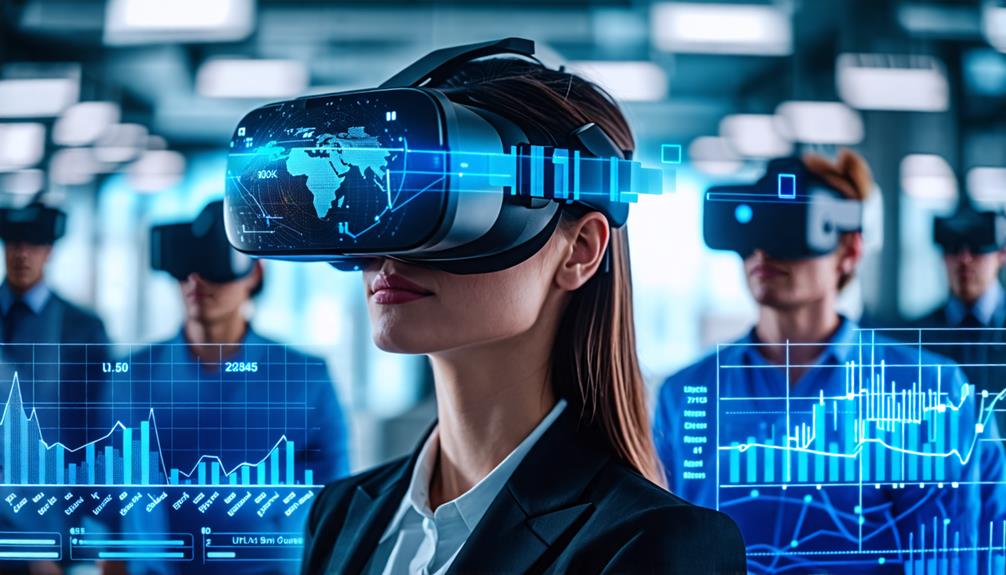
Imagine empowering your sales team to practice pitches and negotiation skills in a risk-free, immersive environment. Virtual Reality (VR) training offers this opportunity, enabling engagement in realistic scenarios tailored to your specific industry. This method not only builds confidence and competence but also provides valuable analytics to track progress and identify areas for improvement. Interested in how VR can elevate your sales team's training and drive better results? Let's explore the advantages and implementation strategies that make this technology transformative.
Understanding VR Sales Training
Understanding VR sales training begins with recognizing how immersive technology can transform the learning experience. VR sales training employs advanced technology to create realistic simulations of sales scenarios, allowing you to practice and refine your skills in a risk-free environment. This method significantly enhances learner engagement and retention, with studies showing over a 20% improvement in practiced skills compared to traditional methods.
In VR sales training, you engage in role-playing with virtual characters, helping you develop essential skills such as negotiation, rapport building, and objection handling. The immersive environment makes these interactions feel authentic, better preparing you for real-world sales situations.
Additionally, VR platforms often integrate analytics, allowing for measurable skills improvement. You can track your development across various training modules, providing clear data on your progress. This approach is both effective and cost-efficient, reducing travel and venue expenses while offering scalable training experiences for distributed teams.
Advantages of VR for Sales Teams
The transformative power of VR technology lies in its ability to create engaging, realistic training environments that greatly benefit sales teams. VR for sales training offers immersive learning experiences that simulate real-world scenarios, enhancing the overall training process. Here's how VR revolutionizes sales training:
- Boost Confidence: Through simulated sales training, team members can practice handling objections and negotiations in a risk-free environment. This builds confidence, leading to improved performance in real customer interactions.
- Trackable Progress: VR platforms provide detailed analytics that monitor skill development, helping to identify areas for improvement. This ensures continuous progress and measurable gains.
- Scalable Solutions: VR technology supports scalable training solutions, making it accessible to geographically dispersed teams. This reduces travel and venue costs, offering a cost-effective way to train large groups.
Moreover, VR facilitates realistic role-playing scenarios, preparing sales professionals to handle diverse buyer personas and objections effectively. The provision of immediate feedback enhances the learning experience, ensuring continuous skill refinement. Embracing VR for sales training is an investment in a forward-thinking, impactful method that delivers tangible results.
Implementing VR in Sales Training
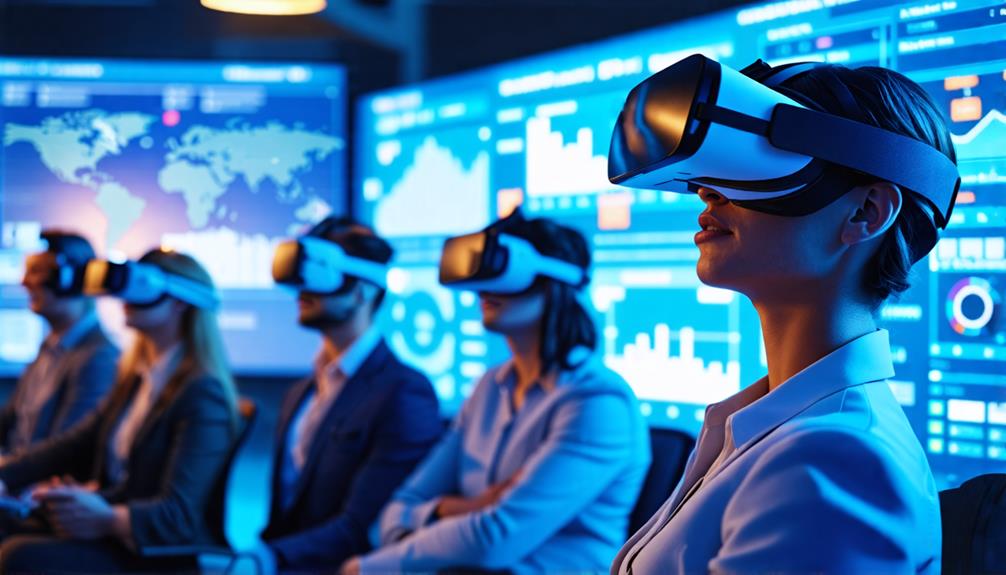
Implementing VR in sales training can seem daunting, but breaking it into manageable steps can facilitate a smoother process.
Implementation Steps
| Step | Action |
|---|---|
| Initial Investment | Purchase VR technology and software, such as Talespin, which offers no-code content authoring and pre-built VR modules. Training facilitators on these tools ensures an effective learning experience. |
| Customization | Develop industry-specific, realistic simulations tailored to your unique sales scenarios and customer interactions. These simulations enhance knowledge retention through hands-on practice in a virtual environment. |
| Pilot Program | Run a pilot program to evaluate improvements in sales skills and overall training effectiveness before a full rollout. Integrate VR training with your existing Learning Management System (LMS) to streamline access and track progress. |
Monitor learner performance using built-in analytics to continually refine and optimize your training programs. By following these steps, you can ensure a seamless implementation of VR in your sales training.
Comparing Training Methods
When comparing training methods, it's evident that VR training excels due to its immersive and engaging nature. Virtual Reality in sales training offers an experience that traditional e-learning cannot replicate. Here's why:
- Customer Interactions: Unlike video conferencing role-play, VR allows for physical engagement in simulated customer interactions. This facilitates practice in negotiation and objection handling within a controlled environment, resulting in over a 20% improvement in sales skills.
- Confidence Building: Traditional methods often fail to replicate real-life sales pressures. VR provides repeated practice opportunities, enhancing confidence and situational awareness, crucial for effectively handling objections.
- Analytics and Scalability: VR training offers measurable insights into skill development, enabling companies to track progress and identify areas for improvement—capabilities less feasible with conventional methods. Additionally, VR's scalable training can deliver consistent experiences across distributed teams, reducing costs related to travel and venues.
Future Trends in VR Training

Looking ahead, VR training for sales teams will become increasingly sophisticated and personalized. Virtual Reality will enable engaging learning experiences tailored to individual needs, driven by advancements in Artificial Intelligence (AI). Personalized training scenarios will adapt based on your performance and skill gaps, ensuring you receive the most effective learning experience possible.
Data analytics will play a crucial role in this evolution. By measuring training effectiveness and sales performance, you will gain insights that allow for continuous updates and refinements in training methodologies. This ensures that your training remains current, aligning with evolving market demands.
The integration of Augmented Reality (AR) and Mixed Reality (MR) will further transform VR training. High-resolution graphics and interactive elements will make your learning experience more captivating and realistic. These technologies will provide a deeper understanding of products and sales techniques by bringing scenarios to life.
Continuous updates in VR training content will be essential. As the market changes, so will your training, keeping you competitive and well-prepared. Embracing these future trends will ensure you remain at the top of your game in sales.
Related posts