
AI for Sentiment Analysis: Understanding Customer Emotions

Are you curious about how businesses can truly understand their customers' emotions? AI for sentiment analysis provides a sophisticated method to interpret textual data, unveiling how individuals feel about products and services. Utilizing techniques like natural language processing and machine learning, companies can obtain deeper insights into customer sentiments. This enables them to refine marketing strategies and enhance customer experiences. But how exactly does this technology function, and what challenges does it encounter?
What Is Sentiment Analysis?

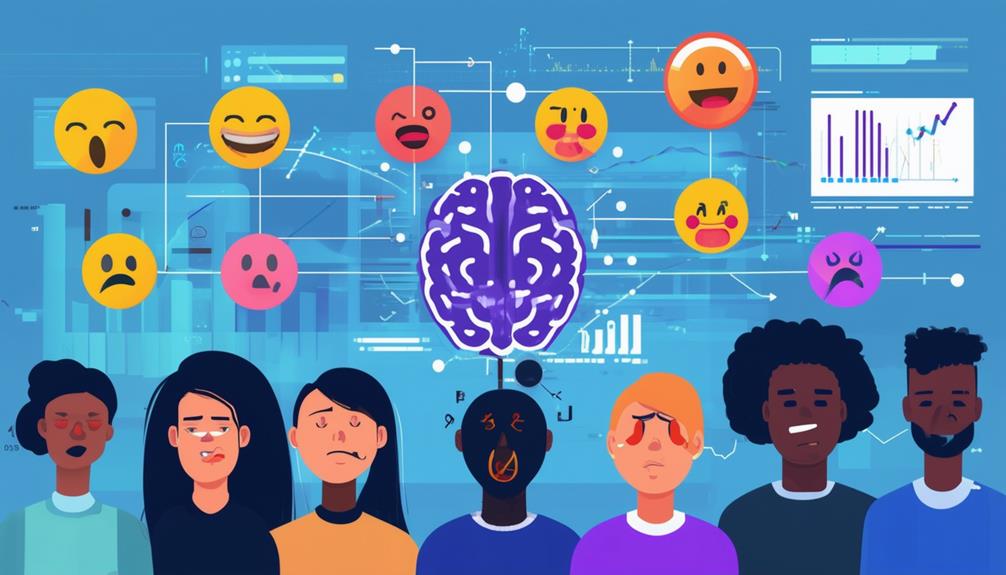
Sentiment analysis examines digital text to uncover emotional tones such as positive, negative, or neutral sentiments. Leveraging natural language processing (NLP) and machine learning, it decodes the emotions embedded in unstructured text data. This powerful tool can offer valuable insights into customer feelings about your product or brand.
By analyzing customer feedback, reviews, and social media posts, sentiment analysis helps you understand the underlying emotions and attitudes. It breaks down the text to pinpoint key emotional indicators. For instance, a positive sentiment might indicate customer satisfaction, while a negative one could suggest dissatisfaction or issues with a product.
These insights enable you to tailor your marketing strategies, enhance your products, and improve the overall customer experience. Sentiment analysis goes beyond identifying emotions; it categorizes them, providing a clear picture of your brand's market reception. By integrating this analysis into your business processes, you can make more informed decisions and ensure that your marketing campaigns effectively resonate with your customers.
Importance of Sentiment Analysis
Understanding customer emotions through sentiment analysis isn't just advantageous—it's transformative for businesses aiming to refine their strategies and enhance customer experiences. By leveraging tools like Natural Language Processing (NLP) and Machine Learning (ML) algorithms, you can extract deep emotional insights into customer perceptions of your products and services.
Sentiment analysis enables you to grasp the underlying emotions, opinions, and intentions of your customers. This insight is crucial for spotting trends and forecasting customer behavior, allowing for more effective marketing strategies. Imagine adjusting your campaigns in real-time based on the emotional feedback from your audience—it's powerful.
Additionally, real-time sentiment tracking allows businesses to respond swiftly to customer feedback. This promptness not only boosts customer satisfaction but also fosters loyalty. When customers feel acknowledged and see their concerns being addressed, their engagement levels increase.
Types of Sentiment Analysis

When exploring types of sentiment analysis, you'll encounter machine learning techniques and lexicon-based approaches. Machine learning models classify sentiment by learning from data, while lexicon-based approaches utilize predefined word lists to determine sentiment. Both methods have unique strengths and are often combined for more comprehensive and accurate analysis.
Machine Learning Techniques
Machine learning techniques such as Naive Bayes, Support Vector Machines (SVM), and neural networks form the foundation of contemporary sentiment analysis. These methods allow for the classification of customer sentiments as positive, negative, or neutral using labeled data.
Naive Bayes is renowned for its simplicity and efficiency, making it a preferred choice for many sentiment classification tasks. Despite its straightforward methodology, it excels at distinguishing between different sentiment categories.
Support Vector Machines (SVM) are particularly well-suited for handling high-dimensional data, which is typical in sentiment analysis. An SVM identifies the optimal boundary that separates different sentiment classes, ensuring high classification accuracy. This capability makes SVMs a potent tool for complex datasets.
Neural networks, particularly deep learning models, have demonstrated significant potential in capturing intricate sentiment patterns. These models can learn and generalize from large volumes of labeled data, enabling them to detect subtle nuances in customer emotions. Their layered architecture allows deep learning models to identify hidden relationships within the data, providing a robust solution for detailed sentiment analysis.
Lexicon-Based Approaches
While machine learning techniques excel in sentiment analysis, lexicon-based approaches offer an efficient alternative for scenarios with limited data or straightforward sentiment classification needs. Lexicon-based sentiment analysis relies on sentiment dictionaries that map words to emotions, making it effective for emotion classification. By assigning sentiment scores to texts based on the presence of positive or negative words from predefined lexicons, this method provides quick and reliable results.
These approaches are particularly useful in applications such as social media monitoring, customer feedback analysis, and brand reputation management. They do not require extensive training data, making them ideal for situations where data is scarce or when rapid sentiment classification is needed.
Here is a comparison to illustrate the differences:
| Criteria | Lexicon-Based Approach | Machine Learning Techniques |
|---|---|---|
| Data Requirement | Limited | Extensive |
| Setup Complexity | Low | High |
| Customization | Limited to predefined lexicons | Highly adaptable |
| Accuracy | Moderate | Higher accuracy with training |
| Use Cases | Social media monitoring, brand reputation | Complex emotion classification, nuanced |
| management, customer feedback analysis | sentiment detection |
While lexicon-based sentiment analysis is efficient and straightforward, combining it with machine learning techniques can enhance accuracy and provide greater depth in sentiment classification.
AI Techniques in Sentiment Analysis
AI techniques in sentiment analysis leverage natural language processing (NLP) and machine learning models to efficiently interpret textual data. By applying these algorithms, businesses can understand customer emotions and classify feedback as positive, negative, or neutral. NLP breaks down and analyzes text data, capturing the essence of customer sentiments.
Machine learning models such as Naive Bayes and Support Vector Machines (SVM) are commonly used for sentiment classification. These models categorize large volumes of data, providing clear insights into overall customer sentiment. Advanced AI techniques, including deep learning, further enhance this process by extracting nuanced emotions from customer feedback with higher accuracy.
These AI-driven tools are essential for businesses looking to understand customer emotions and tailor their marketing strategies effectively. Leveraging advanced sentiment analysis tools offers clearer insights into customer feelings and preferences, enabling data-driven decisions that can significantly impact business outcomes. In essence, AI techniques in sentiment analysis offer the insights needed to better connect with customers.
Challenges in Sentiment Analysis

When conducting sentiment analysis, you may encounter challenges such as language ambiguity and the difficulty of accurately interpreting context. It is crucial to recognize how subtle nuances and varying contexts can shift sentiment. Failing to address these complexities can result in inaccurate analysis.
Ambiguity in Language
Ambiguity in language often complicates sentiment analysis because words can carry multiple meanings. When you factor in sarcasm and irony, the challenge intensifies. Language nuances often mean that the same phrase can convey entirely different sentiments depending on context. This lack of contextual understanding can lead to significant misinterpretations in sentiment analysis. For instance, 'Great, just what I needed' might be seen as positive, but in a sarcastic tone, it's negative.
Linguistic challenges also arise from cultural differences. A phrase that's positive in one culture might be negative in another. This makes it crucial to incorporate cultural context into your models. Misinterpreting these subtleties can skew your sentiment analysis results, making them less reliable.
To tackle these issues, you need creative strategies and robust training datasets. Training your AI with diverse and context-rich datasets can help it better understand the intricacies of language. By incorporating examples of sarcasm, irony, and different cultural expressions, you can improve the model's accuracy. This approach ensures that your sentiment analysis is more reliable and nuanced, addressing the complexities of human language.
Contextual Interpretation Issues
Understanding the nuances of language is only one piece of the puzzle; the myriad challenges of interpreting context-dependent sentiments must also be addressed. Contextual interpretation issues in sentiment analysis present significant obstacles. AI models often struggle to detect sarcasm, irony, and humor, which can lead to potential misclassifications. Understanding sentiments becomes particularly complex when dealing with subjective opinions, implicit meanings, and subtle cues in text data.
Here are three main challenges in contextual interpretation:
- Sarcasm and Irony: These forms of expression can completely reverse the sentiment of a statement. For example, "Great, just what I needed!" can be interpreted as positive or highly negative based on context.
- Cultural Differences: Nuances in language and cultural differences can affect how sentiments are conveyed and interpreted. What is considered humorous or ironic in one culture might not be in another, posing a significant challenge for AI models.
- Implicit Meanings and Subjectivity: Detecting underlying sentiments and subjective opinions requires a deep understanding of context. AI models often miss these implicit cues, resulting in inaccurate sentiment analysis.
Addressing these challenges is essential for improving the accuracy and reliability of sentiment analysis. It is vital to refine AI models to better handle contextual interpretation to achieve this goal.
Applications of Sentiment Analysis
Sentiment analysis enables businesses to enhance products, monitor reputation, and conduct insightful market research by evaluating customer feedback. By thoroughly analyzing customer opinions, businesses can identify trends and predict future needs, aiding in strategic decisions. This analysis provides actionable insights for product improvement, brand reputation enhancement, and increased customer satisfaction and loyalty.
Integrating sentiment analysis into your business strategy facilitates effective reputation management. Promptly addressing negative feedback and celebrating positive reviews helps manage brand perception in real-time. Sentiment analysis also refines market research by revealing customer preferences and pain points, offering a clearer understanding of market demands.
Platforms like Snowflake provide robust tools for effective sentiment analysis, ensuring actionable insights. Enhanced customer service, tailored marketing campaigns, and dynamic product adjustments are some ways sentiment analysis can optimize business operations. Understanding customer emotions fosters a stronger connection with your audience, driving loyalty and satisfaction. Adopting sentiment analysis is not just about understanding the past; it's about creating a proactive, customer-focused future.
Real-World Examples
In the airline industry, companies leverage sentiment analysis on social media to enhance in-flight experiences based on real-time customer feedback. This enables airlines to swiftly identify issues and improve services, ensuring passengers have a positive experience. For instance, airlines monitor tweets and Facebook posts to gauge customer emotions regarding seating comfort, food quality, and flight delays.
E-commerce platforms also gain significantly from sentiment analysis. By examining customer feedback, these platforms can recommend products tailored to individual preferences, thereby boosting sales and customer satisfaction. When you leave reviews on sites like Amazon, businesses utilize sentiment analysis to understand your sentiments and refine their offerings.
Restaurants employ sentiment analysis to enhance menus and services by evaluating online reviews. By understanding emotions expressed in customer feedback, restaurant owners can make data-driven decisions to improve dining experiences. This practical application of sentiment analysis helps maintain a positive brand reputation and attract more patrons.
Summary of Sentiment Analysis Applications
- Airlines: Enhance in-flight experiences by monitoring social media for real-time feedback.
- E-commerce: Tailor product recommendations through analysis of customer sentiments.
- Restaurants: Refine menus and services based on online reviews.
Future Trends in Sentiment Analysis
As sentiment analysis continues to prove its value across various industries, the future promises even more personalized customer experiences driven by advanced AI and NLP technologies. Integration of AI and NLP will enable sophisticated sentiment analysis through voice and visual data, expanding beyond just text. This comprehensive approach will provide a deeper understanding of customer emotions, enhancing customer engagement.
Skellam's Customer Data Platform (CDP) is pivotal in this evolution, offering centralized customer profiles and integrated data sources. This combination ensures a holistic view of customer sentiments, facilitating more tailored customer experiences. With all the data consolidated in one place, you can craft personalized responses that resonate deeply with your customers.
The adoption of sentiment analysis across industries will continue to grow, making emotion-based experiences the new standard. Leveraging these advanced tools will allow you to anticipate customer needs more accurately and engage them more effectively. The future of sentiment analysis lies in creating meaningful connections and driving satisfaction through insights that truly understand and cater to customer emotions.
Conclusion
By leveraging AI for sentiment analysis, you can gain a profound understanding of your customers' emotions and customize your strategies to better meet their needs. This will enhance customer satisfaction, foster loyalty, and drive business success. Embrace these advanced techniques to stay ahead of the competition and build more meaningful connections with your audience. The future of customer experience is here—seize the opportunity to revolutionize how you engage with your customers.
Related posts