CRM Vs CDP: What’S the Difference and Which One Does Your Business Need?

Customer relationships are at the heart of every successful business, and managing data effectively is key to nurturing those connections. Two powerful tools—Customer Relationship Management (CRM) systems and Customer Data Platforms (CDPs)—can help businesses unlock the full potential of their customer data. But while they sound similar, CRM and CDP serve different purposes.
Defining CRM and CDP
Understanding the distinction between CRM and CDP is crucial for leveraging their full potential in your business. A CRM system focuses on managing interactions with customers, assisting sales teams in nurturing leads and improving customer relationships. It centralizes customer data, making it easy to track interactions and tailor customer service.
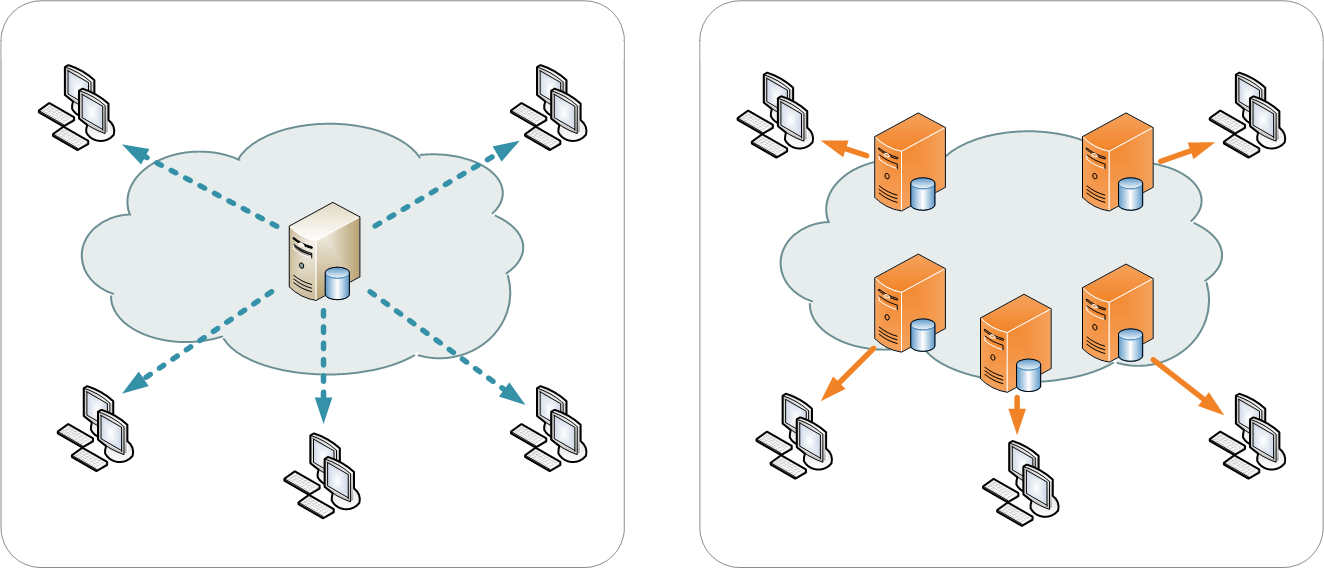
On the other hand, a CDP gathers customer data from multiple sources, creating a unified customer database. This allows you to build extensive customer profiles and develop targeted marketing strategies. CDPs excel in data management, integrating both structured and unstructured data to identify audience segments effectively.
While CRMs prioritize individual interactions, CDPs handle data at scale, efficiently managing millions of users to boost your marketing efforts. CDPs also implement advanced data security and compliance measures to protect sensitive information and ensure adherence to data privacy regulations.
Core Functions of CRM Systems
Although CRM systems are primarily designed to centralize customer and prospect information, their true strength lies in facilitating better management of customer relationships. By organizing customer data and interaction history, CRM platforms empower sales teams to navigate the sales funnel efficiently. You can track leads and log vital communication methods like emails, calls, and meetings, ensuring sales efforts are well-coordinated.
Moreover, CRM systems are invaluable for delivering personalized experiences. They allow marketing and customer service teams to tailor interactions based on thorough customer information. This enables you to improve customer service and elevate overall satisfaction. With Salesforce leading the pack, CRM platforms remain critical in optimizing how your business manages its customer relationships, driving both growth and customer loyalty.
Additionally, CRM systems can integrate with built-in SEO tools, helping you optimize customer engagement strategies and improve visibility.
Key Features of CDPs
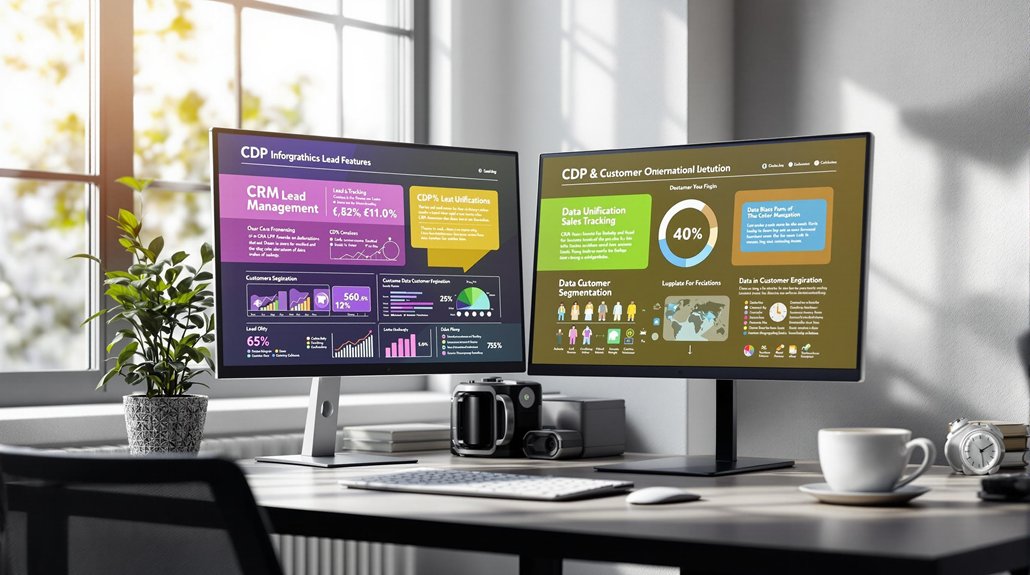
Customer Data Platforms (CDPs) are transforming how businesses handle data by creating unified customer profiles from a variety of sources. They integrate behavioral, transactional, structured, and unstructured customer data, making targeted marketing more effective. CDPs automatically gather primary data through APIs, enabling real-time data processing and analysis across numerous customer interactions.
With advanced segmentation capabilities, CDPs allow you to identify distinct customer segments and deliver hyper-personalized communications. They also support data privacy compliance by incorporating data masking and role-based access controls, safeguarding sensitive information.
The rising demand for sophisticated data management solutions, reflected in the $2.3 billion revenue in 2023, underscores their importance in modern business strategies. A centralized content management system ensures consistent brand messaging while avoiding duplication and confusion.
Differences Between CRM and CDP
In the domain of data management, distinguishing between CRM and CDP is crucial for businesses endeavoring for effective customer engagement. A CRM focuses on managing data from customer interactions and sales processes. It helps sales teams nurture leads and maintain relationships.
In contrast, a CDP aggregates customer data from multiple sources to create a unified view of customer behavior. This allows businesses to manage data from different touchpoints, enabling personalized marketing strategies and insights into customer experiences across multiple channels.
While CRMs rely on manually entered data from direct interactions, CDPs offer real-time analytics, providing an exhaustive understanding of customer behavior. Ultimately, a CDP excels in marketing analytics, whereas a CRM is indispensable for sales and relationship management.
Target Users for CRM and CDP

Sales, marketing, and customer service teams are the primary users of CRMs, focusing on individual customer interactions and maintaining relationships throughout the sales process. For sales teams, CRMs offer detailed communication logs and customer history, enhancing customer relationship management. On the other hand, marketing teams benefit greatly from CDPs.
By providing an extensive view of customer behavior and preferences, CDPs empower marketing teams to craft personalized marketing strategies. This data analysis enables data-driven decision-making, improving customer data management and overall customer experience.
While CRMs support direct customer interactions, CDPs consolidate data across channels, offering insights for strategic marketing initiatives. Your choice between CRM and CDP hinges on whether your emphasis is on direct interactions or wider data consolidation.
Choosing the Right Solution for Your Business
When deciding between a CRM and a CDP for your business, it's vital to evaluate your core needs, regardless of if it's managing customer relationships or consolidating customer data for thorough analysis. CRMs are perfect for sales teams focusing on individual interactions. Meanwhile, CDPs provide marketing teams with a holistic view of customer behavior. Consider these factors:
- Data Infrastructure: Confirm your current systems can support the integration of CRM or CDP.
- Behavioral Insights: CDPs can improve CRM data, offering insights for upselling and identifying churn risks.
- Engagement Strategies: Tailor your approach based on the depth of customer data needed.
- Regulations: Compliance with privacy laws in your region is vital for data management.
Choosing wisely can optimize your team's efficiency and customer engagement.
Final Thoughts
Both CRM and CDP systems are essential tools, but their functionalities and use cases differ significantly. CRMs excel in organizing relationships and empowering sales teams, while CDPs shine in delivering personalized marketing campaigns using unified data. Assess your business needs—whether it’s improving interactions, gaining behavioral insights, or both—and invest in the right platform to maximize efficiency and growth.