
How Do You Use AI to Do a Competitor Analysis?

You can use AI for competitor analysis by employing tools that automate data collection from websites and social media. These tools provide real-time insights into competitors' activities and online presence. Machine learning helps you track changes in marketing efforts, while NLP evaluates public perception to reveal strengths and weaknesses. With predictive analytics, you can spot trends and adjust strategies proactively.
AI also turns complex data into easy-to-understand reports, aiding swift and informed decision-making. Investigate further to reveal more about these powerful capabilities and how they can enhance your competitive strategy.
Understanding AI in Analysis
Leveraging AI in analysis has transformed how businesses approach competitor evaluation. AI-driven competitive analysis tools automate data collection from websites, social media, and news articles, offering real-time insights into competitor activities and strategies. By utilizing machine learning algorithms, you can continuously track changes in competitors' digital footprints, including their online presence and marketing efforts.
Natural Language Processing (NLP) plays an essential role in sentiment analysis, which evaluates public perception of competitors through reviews and social media discussions. This lets you understand how the market views your competitors and adjust your strategies accordingly. Predictive analytics powered by AI can identify emerging market trends and potential risks, enabling you to pivot your strategies proactively before your competition catches on. AI tools also improve data processing by synthesizing complex information into thorough dashboards and visualizations.
These tools provide actionable insights that support quick decision-making and strategic planning. By understanding competitor strategies through these advanced analytics, you gain a competitive edge in the market. The integration of AI offers sustained competitive advantages by enhancing strategic agility and responsiveness. Ultimately, AI in analysis equips you with the tools needed to stay ahead, adapt swiftly, and make informed decisions in a dynamic business landscape.
Benefits of AI Tools
Understanding the transformative power of AI in competitor analysis naturally leads to exploring the tangible benefits these tools bring to the table. AI tools automate the data collection and analysis processes, speeding up the competitive analysis considerably. This means you can gain insights into competitors' strengths and weaknesses much faster than with traditional methods. Automation not only saves time but also improves decision-making by enabling real-time tracking of competitor activities. You can swiftly adjust your strategies to emerging trends and competitor moves, keeping your business agile and responsive.
Predictive analytics is another game-changer. With AI tools, you can identify trends and potential market shifts, allowing you to tailor your offerings and marketing strategies proactively. Additionally, AI-driven sentiment analysis taps into customer feedback, revealing public perception and sentiment towards your competitors. These insights are vital for informed strategic planning and positioning.
AI tools also synthesize vast amounts of data into easy-to-understand reports, making competitive analysis accessible even without deep data science expertise. This democratization of market research empowers you to make informed decisions and craft strategic plans with confidence, leveraging thorough insights to stay ahead in the competitive landscape. By employing natural language processing algorithms, AI can analyze text data to uncover trends and address customer needs effectively.
Key Features to Look For

When choosing an AI tool for competitor analysis, several key features can greatly improve your strategic capabilities. Initially, look for tools that automate the process of data collection and analysis. This allows you to rapidly gain insights into your competitors' strengths and weaknesses without needing to invest a lot of manual effort. Real-time tracking is vital as well, enabling you to continuously monitor competitors' activities across digital platforms like social media and websites.
This keeps you updated on any strategic shifts or new initiatives they might be undertaking. Predictive analytics is another feature to prioritize. It helps you anticipate market trends and make informed strategic decisions to gain a competitive edge. Sentiment analysis, powered by natural language processing, can gauge public perception of your competitors, helping you identify gaps and potential vulnerabilities in their strategies.
Additionally, verify the AI solutions you consider integrate seamlessly with your existing tools. User-friendly interfaces are fundamental for visualizing data and generating reports quickly, so you can focus on strategizing rather than getting bogged down in technical details. By choosing the right tools for competitor analysis, you can effectively navigate the competitive landscape and stay ahead. AI-driven personalization, for instance, can enhance user engagement by offering tailored insights into competitor strategies and market trends.
Top AI Tools Overview
How can you choose the best AI tool for competitor analysis? Start by evaluating AI tools for competitor insights based on your specific needs. Tools like ClickUp and Crayon are excellent for automating competitor research, offering real-time insights into competitors' digital activities and market positioning. This helps you stay ahead in the competitive landscape by analyzing competitors effectively.
If you're looking to improve your outreach strategies, Smartwriter could be your go-to. It tailors messages by analyzing competitors' content, ensuring your communication connects with your target audience. For continuous monitoring and thorough analysis, consider Kompyte and Elicit. These competitive analysis tools allow you to adapt quickly to market changes, providing insights for strategic decision-making.
Predictive analytics from platforms like Obviously AI can forecast market trends, enabling you to refine your strategies based on solid market intelligence. This helps identify opportunities and stay proactive in shifting markets. Many AI tools, such as Cohesive and ChatGPT, integrate seamlessly with existing marketing frameworks, streamlining processes like web scraping and data collection.
Finally, don't forget to check customer reviews to gauge effectiveness. These insights can guide your choice of strategies based on real-user experiences. Utilizing AI ad generators can automate creation of personalized ad messages, enhancing efficiency and performance in advertising campaigns.
Automated Data Collection

Choosing the right AI tool for competitor analysis sets the stage, but the real magic happens with automated data collection. With AI-driven web scraping tools, you can effortlessly gather data from competitors' websites, social media, and news articles. This process provides real-time insights into competitor activities and trends, essential for strategic planning. By leveraging AI technologies, you gain a deeper market understanding through the aggregation of vast amounts of qualitative and quantitative data.
Competitor analysis tools like Determ utilize natural language processing (NLP) to guarantee that the information you collect is relevant and specific. NLP matches keywords to the scraped data, making certain that only pertinent data is captured efficiently. This automated data collection not only saves you time but also improves continuous monitoring, allowing you to stay ahead by quickly adapting to changes in the competitive landscape. AI-powered analytics provide insights into user interactions, enabling optimization of your strategies based on competitor engagement patterns.
With continuous monitoring, you're able to proactively adjust strategies based on immediate shifts in competitor activities. AI technologies summarize these activities and trends, greatly reducing the time required for manual data gathering and analysis. This streamlined process empowers you to make informed decisions quickly, keeping your business strategically aligned in a constantly changing market.
Sentiment Analysis Techniques
Even though competitor analysis can be complex, sentiment analysis techniques offer a streamlined way to understand public perceptions. By leveraging natural language processing (NLP), you can categorize customer sentiments from reviews and social media, allowing you to gauge public sentiment towards your competitors. This approach improves your ability to recognize competitors' weaknesses and strengths. Machine learning models explore deep into the nuances of language, ensuring a more accurate understanding of consumer perceptions about different brands and products.
For brands operating in diverse regions, multilingual support is essential to accurately interpret sentiments across different languages and cultures. Analyzing large volumes of customer feedback becomes more manageable, equipping you with insights that inform strategic decisions and shape marketing campaigns. These insights can greatly impact how you position your products or services against competitors. For instance, if you identify a common negative sentiment about a competitor's product, you can tailor your offerings to address those gaps, improving customer satisfaction.
Moreover, sentiment analysis tools allow you to track shifts in public sentiment over time. This provides valuable feedback on how marketing campaigns or product launches influence consumer perceptions. Implementing these techniques can lead to a 15-20% improvement in customer satisfaction strategies, as you proactively address and mitigate negative sentiments associated with competitors.
Predictive Analytics in Strategy

In the domain of competitive strategy, predictive analytics stands out as a powerful tool that transforms raw data into actionable insights. By leveraging historical data and advanced algorithms, you can forecast future market trends and competitor behaviors, enabling more informed strategic decisions. With predictive analytics, you're not just reacting to changes but anticipating them, giving you a considerable competitive edge.
Analyzing patterns in competitors' past performances and market movements allows you to identify potential opportunities and threats before they materialize. This proactive approach helps you allocate resources more effectively, focusing them where they'll have the most impact. Optimizing your marketing strategies to target emerging customer preferences becomes easier, allowing you to capitalize on market shifts swiftly. Implementing data-driven strategies can lead to a potential ROI boost of 15-20%, further enhancing your competitive positioning.
Incorporating predictive analytics into your strategy means you can perform real-time assessments of customer sentiment and behaviors. This capability allows you to adjust your tactics on the fly, ensuring you maintain a strong competitive position in dynamic markets. As 76% of marketing professionals have found, leveraging these insights greatly improves your ability to anticipate competitor moves. By doing so, you're setting your business up for success with strategies that are both proactive and data-driven.
Continuous Competitor Monitoring
While predictive analytics equips you with the foresight to anticipate market changes, continuous competitor monitoring guarantees you're always in tune with the current landscape. Utilizing AI-driven web scraping tools, you can gather real-time data from competitors' websites, social media, and news articles. This secures a thorough understanding of their activities and allows you to conduct a robust competitive analysis.
AI tools automatically track changes in your competitors' digital footprints, providing instant visibility into emerging trends. Regardless of whether it's website updates or shifts in their marketing strategies, these tools deliver strategic insights that keep you informed. Sentiment analysis powered by AI explores public perception, categorizing customer sentiments from reviews and social media discussions.
This reveals potential weaknesses in your competitors' strategies that you can exploit. Automated data collection improves your comprehension of the market landscape, enabling swift responses to competitor actions. With continuous monitoring, you're not just reacting; you're proactively adjusting your strategy based on immediate changes in the competitive environment. This approach guarantees you stay ahead of your rivals, using AI tools to maintain a competitive edge and make well-informed business decisions.
By leveraging predictive customer analytics, businesses can anticipate customer needs and further enhance strategic planning.
User Feedback and Ratings
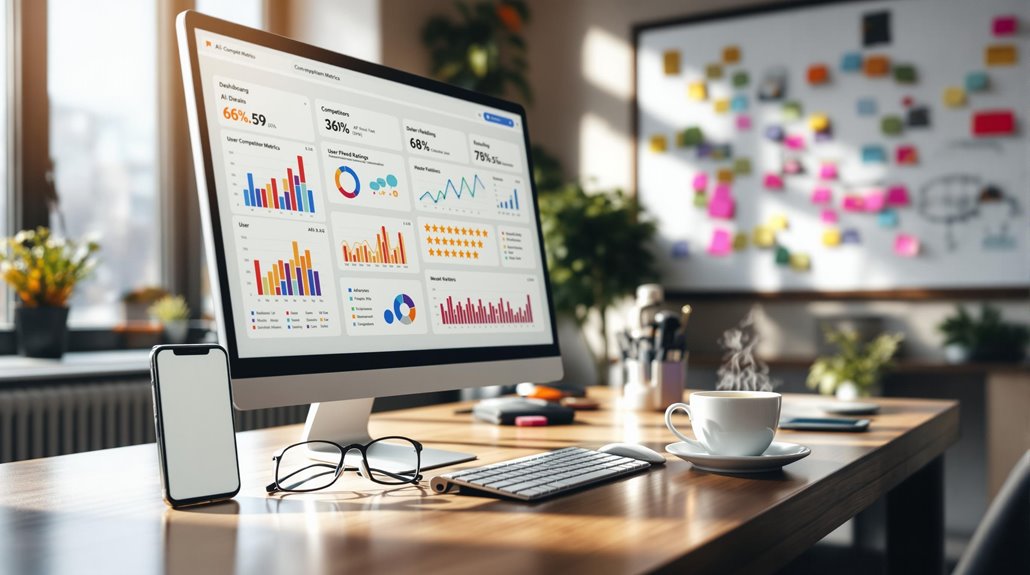
User feedback and ratings play a significant role in evaluating the effectiveness of AI tools for competitor analysis. When you're considering which AI tool to use, platforms like G2 and Capterra offer invaluable insights. High ratings typically indicate robust feature sets and strong usability, helping you narrow down your options. These user experiences show you what real users think about the tools' ease of use and time-saving capabilities, both vital factors when you're making a decision.
User feedback doesn't just highlight the positives; it often points out areas for improvement, guiding AI developers to improve their tools. Mixed reviews can reveal if the AI tool's data accuracy and insights meet your needs for effective competitor analysis. This continuous loop of feedback and refinement guarantees that AI tools evolve to better serve users.
Moreover, user reviews usually discuss the relevance of insights provided, which helps you determine how well the tool can adapt to your specific analysis needs. By leveraging these ratings and reviews, you can make informed decisions and select an AI tool that aligns with your goals, ensuring a more effective and efficient competitor analysis process. Additionally, utilizing analytics tools helps monitor site performance and identify high-performing content areas.
Future of AI in Business
Imagine a future where AI isn't just a part of business strategy but the backbone of it. With AI competitor tools automating competitor analysis and research, businesses are transforming their approach to capturing market share. You'll find that the integration of AI enables real-time tracking of competitor activities, making it easier to adapt to market trends swiftly. This agility allows you to stay ahead, responding proactively rather than reactively.
Predictive analytics is a game-changer in this future, letting you spot market trends before your competitors do. Imagine having the strategic foresight to make decisions based on where the market is heading, not just where it is. AI-driven sentiment analysis tools provide insights into public perception, helping you identify competitors' weaknesses and capitalize on them.
As AI evolves, automated reporting and data visualization become indispensable. These tools will streamline your competitive intelligence efforts, providing clarity and enhancing your decision-making and strategic planning. You won't just be reacting to changes; you'll be anticipating them. Ethical data practices enhance brand reputation and customer loyalty, ensuring that AI-driven strategies align with privacy standards. In this future, AI isn't just a tool—it's the strategic core of your business, guiding you through the complexities of the market landscape.