Tips for Writing SEO-Friendly Blog Posts on WordPress
To write SEO-friendly blog posts on WordPress, begin with thorough keyword research to identify the terms your audience is searching for. However, keyword research is just the starting point. Structuring your content with clear headings and concise paragraphs enhances both readability and user engagement. Additionally, optimizing meta tags and employing internal linking strategies can significantly improve your site's visibility. Interested in integrating these techniques into your workflow? Let's explore how each step can elevate your blogging strategy and boost your site's performance.
Keyword Research
Keyword research is essential for creating SEO-friendly blog posts on WordPress. By conducting comprehensive keyword research before you begin writing, you can identify the relevant search terms and phrases that will enhance your content's visibility on search engines. Start by determining your focus keywords—these are the primary terms you want your blog post to rank for.
Once you have identified your focus keywords, integrate them naturally and strategically throughout your article. Additionally, include related keywords to further optimize your SEO performance. These related keywords help search engines grasp the broader context of your content, making it easier for users to find your blog post.
To simplify this process, use keyword tools like Google Keyword Planner or Ahrefs. These tools can generate a list of relevant keywords and phrases, aiding in the strategic use of keyphrases. By focusing on these targeted terms, you ensure your content aligns with what users are searching for, thereby enhancing your search engine visibility. Remember, the goal is to integrate keyphrases seamlessly so your content remains engaging and informative while being optimized for SEO.
Structuring Your Content
Effectively structuring your content on WordPress can significantly improve your SEO performance. Utilize clear headings, optimize paragraph lengths, and incorporate internal links to make your blog posts more readable and engaging. This approach not only aids your readers in navigating your content but also helps search engines to better understand and index your site.
Use Clear Headings
Clear headings transform your content into an organized and easily navigable structure, enhancing both readability and user experience. When you use headings, you help your readers quickly find the information they need. Well-structured headings improve the readability of your content and make it more engaging. They also assist search engines in comprehending the main topics and keywords in your blog post, which can help attract organic traffic.
How to Use Headings Effectively
Break Down Content into Digestible Sections
- Use headings to divide your text into smaller, more manageable parts.
Incorporate Key Phrases
- Make your headings descriptive and include relevant keywords to enhance SEO.
Enhance User Experience
- Clear headings guide readers through your post, making it easier to follow.
Organize Content Logically
- Make sure your headings flow naturally, reflecting the structure of your main topics.
Optimize Paragraph Length
Once your headings are set, focus on optimizing paragraph length to maintain reader interest and improve content scannability. Aim for paragraphs of 3-4 sentences. Shorter paragraphs enhance readability, making your content more engaging and preventing readers from feeling overwhelmed.
Well-structured paragraphs support SEO optimization by making your content easier to digest and more appealing to search engines. Using connection words to link paragraphs smoothly ensures a natural information flow, guiding readers seamlessly through your content and enhancing their overall experience.
| Key Element | Benefit | Example |
|---|---|---|
| Paragraph Length | Improves readability | 3-4 sentences per paragraph |
| Scannability | Enhances user retention | Short, concise paragraphs |
| Structured Paragraphs | Better information flow | Clear, connected ideas |
| Linking Words | Smooth content progression | Words like 'therefore,' 'however' |
Maintaining optimal paragraph length and effectively using linking words creates engaging content that retains readers' attention. This structured approach not only improves readability but also enhances scannability, positively impacting SEO efforts.
Include Internal Links
Incorporating internal links throughout your blog posts significantly enhances website navigation and reader engagement. By strategically placing internal links, you guide visitors to related content, reducing bounce rates and increasing the time they spend on your site.
Internal links also play a crucial role in SEO by helping search engines understand the context and relevance of your pages. Linking to other pages within your site increases their visibility and encourages visitors to explore more of your content. This not only distributes link equity but also helps establish a logical site structure, facilitating easier crawling and indexing by search engines.
Here are some key benefits of using internal links:
- Enhanced Website Navigation: Helps users easily find related content.
- Elevated User Experience: Keeps visitors engaged and exploring your site.
- Improved Context and Relevance for Search Engines: Assists in understanding your content.
- Augmented Link Equity Distribution: Boosts the SEO performance of linked pages.
Regularly updating and optimizing your internal links keeps your website well-organized and accessible, contributing to better indexing and higher rankings. By focusing on internal linking, you create a more cohesive, user-friendly, and SEO-optimized website.
Enhancing Readability
To enhance the readability of your blog posts, use clear and concise sentences to maintain reader engagement. Break your content into short paragraphs and include subheadings to facilitate easy scanning. This approach helps your audience quickly locate the information they need without feeling overwhelmed.
Clear and Concise Sentences
Creating clear and concise sentences makes your content easier to understand and enjoy. When writing SEO-friendly blog posts on WordPress, readability is crucial. Clear and concise sentences keep readers engaged and prevent information overload. By avoiding complex sentence structures, you improve comprehension, making it easier for your audience to grasp the main ideas.
Here's how to create clear and concise sentences:
- Use simple language: Choose words that are easy to understand and avoid jargon.
- Be direct: Get to the point quickly without unnecessary fluff.
- Keep sentences short: Aim for sentences that are 20 words or fewer.
- Break up long sentences: Divide longer sentences into shorter ones to improve readability.
These strategies aid effective delivery and ensure clarity in your writing. Concise sentences convey your message without confusion, making it more likely that readers will stay engaged. By following these tips, you'll craft blog posts that are both SEO-friendly and enjoyable to read, enhancing reader engagement and comprehension.
Use of Subheadings
Subheadings play a significant role in breaking your content into manageable chunks, making it easier for readers to navigate and absorb information. By using subheadings, you improve the readability of your blog posts, which keeps your audience engaged and helps them find specific details quickly. Subheadings not only enhance the user experience but also play an essential role in crafting SEO-friendly content.
Enhancing SEO with Subheadings
When you include subheadings, you signal to search engines about the structure and relevance of your content. This organization helps search engines understand the hierarchy and key points of your article, increasing your post's visibility in search results. Moreover, integrating relevant keywords into your subheadings can further elevate your SEO efforts, making your content more likely to rank higher.
Improving Readability and User Experience
A well-structured article with clear subheadings ensures a smooth flow of information, guiding readers through your post without overwhelming them. This level of organization is pivotal in maintaining the reader's interest and improving the overall readability of your blog. By prioritizing subheadings, you're not only assisting your audience but also increasing the chances of your content being recognized and favored by search engines.
Short Paragraphs
Short paragraphs enhance readability and engagement for your audience. By breaking your text into manageable chunks, you cater to online readers who often skim rather than read in-depth. This approach not only improves readability but also elevates user experience and engagement.
Usability studies demonstrate that short paragraphs significantly improve comprehension and retention of information. When you use shorter paragraphs in your SEO-friendly blog posts, you make it easier for readers to follow your ideas without getting overwhelmed by large blocks of text. Additionally, search engines favor content that is easy to read, which can positively impact your ranking.
Consider these benefits of short paragraphs:
- Enhanced readability: Breaks up large sections of text, making it easier to read.
- Increased engagement: Keeps readers' attention and encourages them to continue reading.
- Better comprehension: Helps readers understand and remember your key points.
- Improved SEO: Search engines prefer content that prioritizes user experience.
Incorporating short paragraphs into your blog posts will make your content more user-friendly and give you an edge in search engine rankings. Clear and concise writing benefits both your readers and your SEO efforts.
Meta Tags Optimization
Optimizing your meta tags sets the foundation for improved search engine visibility and higher click-through rates on your WordPress blog posts. Meta tags, particularly title tags and meta descriptions, are crucial in how search engines interpret and display your content. Ensure your title tags are under 60 characters and your meta descriptions are below 160 characters to display correctly in search results.
Incorporating relevant keywords into your meta tags is essential for optimization. Keywords help search engines understand your blog post's content, significantly enhancing visibility. A well-crafted title tag and meta description offer a concise summary of your content, making it more appealing for users to click on your link. This directly impacts your click-through rates and can lead to increased organic traffic.
Linking Strategies
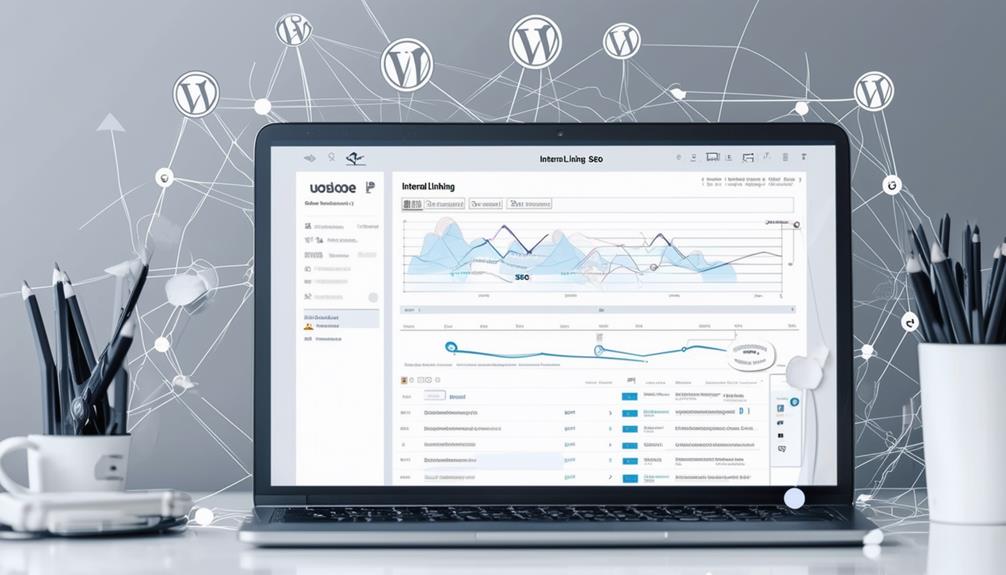
To optimize your SEO efforts, implementing effective linking strategies is essential for improving your WordPress blog's visibility and user experience. Internal linking is a powerful tool that enhances website navigation and helps users find related content easily. This not only improves the user experience but also boosts your SEO rankings.
Building internal links within your content can help structure your site more efficiently, making it easier for search engines to crawl and index your pages. Moreover, don't overlook the significance of external links. Linking to high-quality, relevant websites can strengthen your site's authority and improve your overall SEO performance.
Here's how you can effectively use linking strategies:
- Internal Linking: Establish connections between your blog posts to enhance website navigation and user experience.
- External Linking: Incorporate links to high-quality, relevant websites to elevate your authority and SEO.
- Social Media: Share your blog posts on social media platforms to increase visibility and drive traffic back to your site.
- Regular Monitoring: Keep an eye on your external links to ensure they remain relevant and of high quality.
Regular Updates and Promotion
Regularly updating and actively promoting your blog posts can significantly enhance your SEO and keep your audience engaged. Consistent updates not only keep content fresh for readers but also signal to search engines that your site remains relevant, boosting your SEO ranking. Make it a habit to revisit older posts, add new information, update links, and tweak keywords to maintain their SEO-friendly status.
Promotion is equally important. Share your posts on social media to increase visibility and drive traffic. Engage with relevant online communities or forums to attract a targeted audience interested in your niche. Additionally, seek guest posting opportunities on other blogs or websites. Collaborating with other bloggers can expand your reach and enhance your credibility, thereby improving your SEO standing.
Don't underestimate the power of email marketing. Regularly sharing your blog posts with subscribers can increase engagement and encourage repeat visits. A well-structured email campaign keeps your audience informed about new updates and promotions, fostering a loyal readership. By combining regular updates with robust promotion strategies, your SEO-friendly blog posts will achieve better rankings and a more engaged audience.
Conclusion
By following these tips, you can enhance your SEO performance and attract more readers to your WordPress blog. Start with thorough keyword research to identify relevant terms. Structure your content effectively with clear headings and concise paragraphs to improve readability. Optimize meta tags and utilize smart linking strategies, including both internal and external links. Regularly update and promote your posts to maintain their relevance. Implement these strategies consistently, and you will see growth in your audience and improved search engine rankings.