Using AI for Image Recognition in Marketing
AI for image recognition is revolutionizing marketing strategies today. It's not just about identifying objects in photos; it enables real-time data analysis and personalized customer experiences. Imagine your brand instantly recognizing its logo in user-generated content or tailoring product recommendations with pinpoint accuracy. As AI technology advances, its applications in marketing expand, offering unparalleled opportunities for engagement and conversion. What exactly makes AI image recognition a game-changer for your business?
What Is AI Image Recognition?
AI image recognition involves the use of algorithms to identify patterns in images at the pixel level, enabling the instantaneous recognition of objects across vast image datasets. These algorithms meticulously analyze each pixel to understand and categorize the content within an image. Consequently, AI image recognition technology can identify objects in millions of images with remarkable accuracy.
To achieve this high level of precision, AI image recognition systems undergo extensive training on billions of images. This training allows the algorithms to learn and adapt, continuously enhancing their performance over time. Think of it as a perpetual learning journey for the AI, improving its ability to recognize patterns and objects with each new image it encounters.
For marketers, this technology is transformative. AI's capability to recognize logos and objects in images allows for more effective measurement of brand exposure and marketing campaign performance. It aids in the swift identification of visual trends and patterns, streamlining processes. By leveraging AI image recognition, marketers can reduce reliance on intuition and make more data-driven decisions that resonate with their target audience.
Market Growth and Integration
The AI image recognition market is set for explosive growth, projected to increase from $5 billion in 2024 to $18 billion by 2030, reflecting its widespread adoption across multiple sectors. This technology's transformative impact is particularly evident in marketing, where it enhances strategies by enabling personalized content creation and optimizing campaign performance.
AI systems rapidly analyze visual data, allowing you to identify trends and consumer preferences more efficiently than traditional methods. This technology facilitates real-time monitoring of brand exposure and customer engagement, providing valuable metrics to assess your campaign's effectiveness. Imagine the ability to fine-tune your marketing efforts on the fly, driving better results and higher ROI.
Here's a snapshot of what this growth and integration means for you:
- Personalized Content: Tailor marketing messages to individual consumer profiles.
- Optimized Campaigns: Use data-driven insights to refine strategies and elevate performance.
- Trend Identification: Quickly spot emerging trends and consumer behaviors.
- Brand Monitoring: Track brand exposure and customer engagement in real time.
- Targeted Advertising: Deliver more relevant ads to your target audience, improving customer interactions.
As AI image recognition continues to evolve, it is set to revolutionize marketing practices, making your efforts more effective and customer-focused.
Applications in Retail Operations
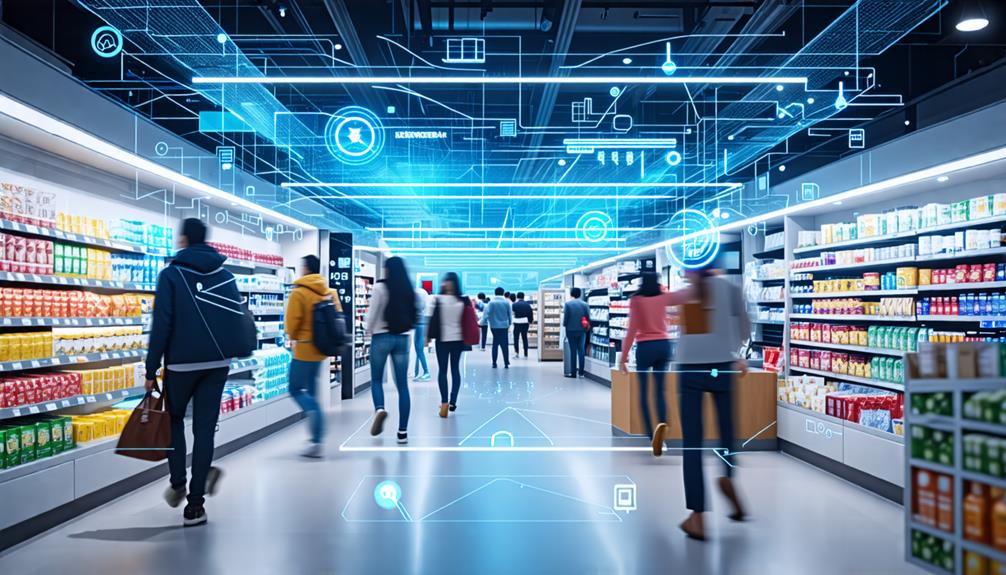
How is AI transforming retail operations? Imagine walking into a store where inventory management is seamless and errors are virtually nonexistent. With AI-driven image recognition software, this vision is becoming a reality. Retailers can now track inventory in real time, drastically reducing mistakes from manual counting. This ensures that your inventory data is always up-to-date, enabling quick, informed decision-making.
AI extends beyond just managing stock levels. It can detect when products are added or removed from shelves, automating the entire process. This means you spend less time on tedious tasks and more on strategic planning. Automated checkout systems powered by AI image recognition software also speed up the checkout process, minimizing wait times and reducing human error.
Stock shortages? Not a problem. AI tools can identify low stock levels immediately, allowing you to respond proactively. This optimization improves operational efficiency and keeps your shelves stocked. By integrating AI into your retail operations, you're not just enhancing efficiency; you're also setting the stage for a better customer experience. All these advancements make your retail operations smoother and more effective, allowing you to focus on what truly matters—growing your business.
Enhancing Customer Experience
AI-driven image recognition offers personalized product recommendations based on your purchase history, enhancing your shopping experience. Smart mirrors in fitting rooms suggest complementary items, increasing both customer satisfaction and store conversion rates. Additionally, scanning barcodes with your mobile device provides instant access to product details, streamlining the shopping process.
Personalized Product Recommendations
Imagine walking into a store where every product recommendation feels tailor-made just for you. That's the power of personalized product recommendations driven by AI image recognition. By analyzing your purchase history and preferences, AI enhances your shopping experience, making it both easier and more enjoyable. Retailers using these intelligent recommendations have seen a significant increase in sales—up to 10-30%—due to the relevance of suggested products.
Consider these scenarios:
- Smart mirrors: They suggest complementary items based on what you're trying on, enhancing your overall shopping experience.
- Mobile apps: Scan a barcode or image and instantly receive targeted product information and recommendations, streamlining your decision-making process.
- Data-driven insights: These insights provide personalized rewards and offers, fostering customer retention and engagement.
- Enhanced loyalty programs: Personalized rewards and offers encourage you to return, building a lasting relationship with the brand.
- Higher conversion rates: The relevance of AI-driven suggestions leads to more purchases and a better overall shopping experience.
AI isn't just about making things easier; it's about making them better, creating a shopping experience uniquely tailored to you.
Immersive Shopping Experiences
AI technology is revolutionizing retail by creating immersive and engaging shopping experiences. Imagine entering a fitting room with AI-powered smart mirrors. These mirrors use image recognition to transform the traditional shopping experience into an interactive journey. They can suggest complementary items based on what you're trying on, making your shopping experience more personalized and exciting.
Mobile integration is also crucial. By scanning a barcode, you can instantly access detailed product information, streamlining your decision-making process and making shopping more convenient. Enhanced customer engagement becomes a reality through these applications of image recognition.
AI also generates personalized offers and recommendations based on your purchase history, tailoring the shopping experience to your tastes and increasing the likelihood of your return. Retailers benefit by using data-driven insights to craft loyalty programs that resonate with you, deepening your connection to the brand and fostering loyalty.
These enhanced shopping experiences lead to higher conversion rates. When presented with personalized and engaging content, you are more likely to make a purchase, benefiting both you and the retailer.
Streamlining Checkout Processes
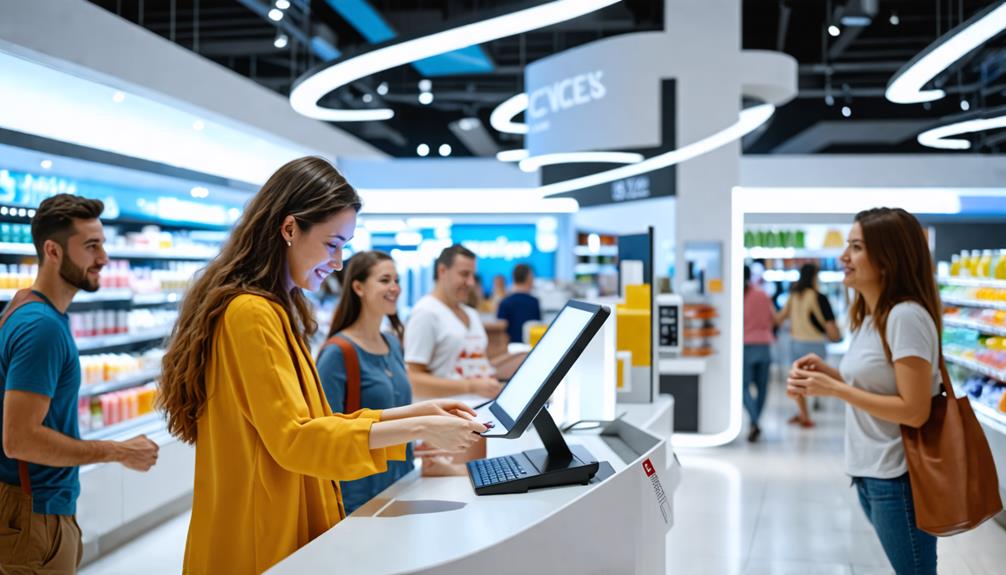
AI can streamline checkout processes by automating item identification and instantly calculating totals, significantly reducing your time at the register. Cashless shopping experiences, such as those offered by Amazon Go, allow you to leave the store without waiting in line. Additionally, AI can automatically recognize you and apply your loyalty rewards, enhancing the overall convenience of your shopping trip.
Automated Item Identification
AI-powered automated item identification systems are revolutionizing the checkout process by enhancing speed and accuracy in retail transactions. By leveraging advanced image recognition technologies, these systems can instantly identify products, reducing customer wait times and improving overall satisfaction.
Beyond accelerating the checkout process, these systems also enhance precision. Automated item identification can cut the average checkout time by up to 30% while maintaining accuracy rates exceeding 95%. This reduces employee errors, ensuring customers receive exactly what they expect every time.
Additionally, cashless shopping experiences, exemplified by Amazon Go stores, are facilitated through automated item identification. These systems enable seamless customer interactions without traditional payment processes. Real-time inventory tracking helps maintain accurate stock levels, reducing stockouts and increasing operational efficiency.
Key benefits include:
- Instant product recognition
- Reduced checkout times
- Minimized employee errors
- Seamless, cashless transactions
- Real-time inventory updates
These improvements not only enhance customer satisfaction but also streamline retail operations.
Instant Total Calculation
Imagine breezing through the checkout line with an AI system that instantly identifies your items and calculates the total, eliminating the need for manual scanning. Using advanced image recognition technology, automated checkout processes are revolutionizing shopping experiences. This system detects each product and its price in real-time, ensuring an accurate total every time.
By leveraging image recognition, retailers can minimize human errors and significantly reduce wait times. Gone are the days of fumbling with barcodes or waiting for a cashier to manually scan each item. Instead, the AI handles everything instantly.
Here's a quick comparison of traditional checkout versus AI-driven checkout:
| Feature | Traditional Checkout | AI-Driven Checkout |
|---|---|---|
| Item Identification | Manual scanning | Image recognition |
| Wait Time | Longer | Significantly shorter |
| Human Error | Higher chance | Minimal chance |
| Customer Data Tracking | Manual entry | Automated and precise |
Automated checkout systems also efficiently track customer data, automating loyalty points and notifying you of available rewards. This makes your checkout experience even more rewarding. Overall, AI-driven automated checkouts streamline the entire process, making it faster, more accurate, and more enjoyable.
Cashless Shopping Experience
With the advent of AI technologies, the concept of a cashless shopping experience is becoming a reality, streamlining checkout processes like never before. Imagine walking into a store, picking up items, and simply walking out without waiting in line. This is made possible through advanced image recognition systems that automatically identify items and calculate your total. Cashless stores like Amazon Go are leading the way, using AI to create seamless shopping experiences.
By leveraging customer data, real-time recognition systems can update loyalty points and rewards instantly. This improves the shopping experience by making it more personalized and efficient. Here's how AI is transforming the checkout process:
- Automated item identification: AI swiftly recognizes and logs each item you pick up, expediting the shopping process.
- Instant total calculation: AI calculates your total in real-time, eliminating the need to wait.
- Real-time loyalty updates: Immediate updates on points and rewards enhance engagement.
- Discount notifications: Receive instant alerts about available discounts, fostering participation in loyalty programs.
- Minimized human error: AI ensures accurate tracking, reducing mistakes associated with manual processes.
These innovations make shopping faster, more accurate, and incredibly convenient. AI is not just a trend; it's reshaping the future of retail.
Visual Trend Recognition
Visual trend recognition leverages AI to simplify the complex task of identifying emerging patterns within a vast array of images. By utilizing advanced algorithms and machine learning, vast amounts of visual data can be processed and analyzed rapidly. This eliminates the need for manual image sorting, as AI efficiently identifies specific patterns, colors, and objects with high accuracy.
The power of AI-driven image processing is transformative. It enables efficient organization and categorization of visual data, providing a robust foundation for content decision-making. This facilitates faster ideation and the development of more relevant marketing strategies, as real-time insights into trending visuals are readily available.
Additionally, AI's ability to detect mood and sentiment through visual elements allows for more tailored and emotionally resonant campaigns. This ensures your marketing efforts are not only timely but also compelling to your target audience.
Logo Recognition in Marketing
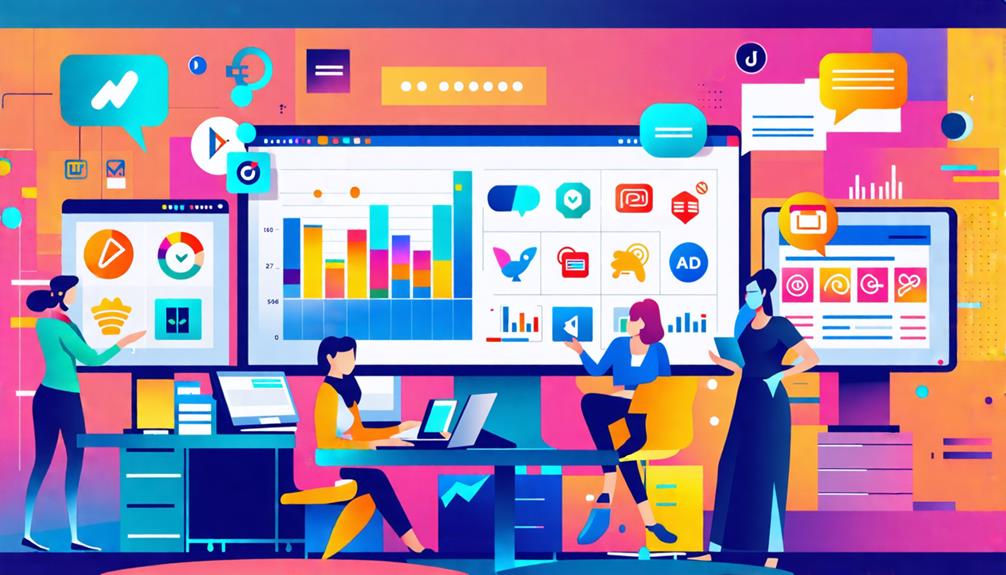
The advent of logo recognition technology has revolutionized how brands measure sponsorship effectiveness, providing unparalleled accuracy in tracking brand exposure across various media platforms. Traditional methods often fell short, particularly on social media. Now, you can quickly assess brand visibility and understand the true impact of your sponsorships.
AI-driven logo recognition enhances influencer marketing strategies by evaluating the performance of your logos in influencer-generated content. This data is crucial for making informed decisions about brand collaborations. Additionally, the technology simplifies previously complex manual processes, resulting in more efficient marketing campaigns.
Consider the benefits of logo recognition technology:
- Enhanced sponsorship measurement: Precisely monitor the frequency and locations of your logo appearances.
- Improved influencer marketing: Identify influencers who offer the best brand visibility.
- Comprehensive media analysis: Detect logo appearances across all media platforms, not just traditional ones.
- Streamlined workflows: Automate the laborious task of logo tracking, freeing up time for strategic planning.
- Insightful consumer data: Analyze user-generated content to understand brand loyalty and perception.
Incorporating logo recognition technology into your marketing toolkit provides a significant edge, ensuring your brand's visibility is optimized and accurately measured.
Interest Recognition for Targeting
In today's data-driven landscape, AI-powered interest recognition is revolutionizing how marketers target their audiences. By leveraging advanced algorithms, businesses can analyze customer data and consumer behaviors to develop highly relevant and engaging content strategies. AI for image and object recognition enables the identification of patterns in how consumers interact with visual content, allowing for precise audience segmentation based on specific interests.
This technology eliminates the guesswork from marketing campaigns. Instead of hypothesizing about audience preferences, marketers can rely on concrete data to ensure their content resonates. Imagine pinpointing which images and objects captivate your audience's attention the most and tailoring your strategy accordingly. AI enables real-time adjustments to marketing efforts based on evolving consumer preferences, significantly boosting engagement and conversion rates.
Interest recognition tools support data-driven decision-making, providing deeper insights into audience preferences. This optimization not only enhances marketing initiatives but also elevates personalized marketing efforts. By truly understanding what interests your audience, you can deliver more targeted and effective campaigns, making your marketing strategy smarter and more efficient.
Benefits for Marketing Strategies

Leveraging AI for image recognition offers substantial benefits for contemporary marketing strategies. By integrating artificial intelligence, you can streamline content ideation and efficiently analyze visual data. This not only saves time but also ensures you stay ahead of trends. With AI processing images viewed by your website visitors, you can deliver targeted ads that resonate more with your audience, leading to higher conversion rates.
Additionally, AI enables precise measurement of brand exposure through logo recognition. This is particularly beneficial for optimizing sponsorships and influencer marketing campaigns. AI-driven visual trend recognition organizes vast amounts of data based on mood, color, and objects, providing actionable insights to refine your content strategies.
Key benefits include:
- Streamlined content ideation: Quickly identify trends through efficient visual data analysis.
- Targeted advertising: Deliver relevant ads using image recognition, boosting conversion rates.
- Brand exposure measurement: Apply logo recognition for accurate sponsorship and influencer marketing metrics.
- Visual trend recognition: Categorize data by mood, color, and objects for actionable insights.
- Data-driven content creation: Develop strategies that resonate by identifying consumer interests through image analysis.
Future of AI in Retail
Get ready to experience retail like never before, thanks to AI image recognition. Personalized shopping experiences tailored to your preferences and data-driven marketing insights will redefine how you shop, making it more intuitive and enjoyable. This technology will understand your needs, offering a seamless and enhanced retail journey.
Personalized Shopping Experiences
Imagine entering a store where every product recommendation seems custom-tailored for you. AI image recognition is revolutionizing retail by analyzing customer data to create personalized shopping experiences. By understanding your purchase history, AI can suggest products you're likely to love, making shopping more engaging and enjoyable.
Here are some ways AI enhances your shopping experience:
- Smart mirrors: Equipped with AI, these mirrors recommend complementary products while you're in the fitting room.
- Mobile integration: Scan barcodes with your phone for instant product information, making your shopping more interactive.
- Custom offers: AI analyzes your shopping habits to offer deals that are just right for you, enhancing customer engagement.
- Dynamic loyalty programs: Retailers use AI-driven insights to create loyalty programs that adapt to your preferences, increasing conversion rates.
- Market growth: The retail sector is projected to reach $38.9 billion by 2025, largely due to the adoption of AI technologies.
With AI, every shopping trip becomes a personalized adventure. Retailers utilize AI image recognition to keep you engaged and returning for more, proving that the future of retail is personalized.
Data-Driven Marketing Insights
AI image recognition is revolutionizing retail by providing data-driven marketing insights that enhance how businesses understand and engage with their customers. By analyzing visual content, AI quickly and efficiently uncovers trends in mood, color, and objects across millions of images. This in-depth analysis allows marketers to identify and leverage consumer interests, leading to personalized marketing strategies that resonate with their target audience.
With AI, vast datasets can be processed effortlessly, improving the ability to recognize consumer interests and tailor marketing efforts accordingly. This ensures campaigns are grounded in actionable insights rather than intuition. Additionally, AI automates the identification of successful content examples, expediting the content ideation process and optimizing marketing campaigns.
Furthermore, integrating AI into retail analytics provides real-time inventory tracking and automated product identification, offering critical insights for data-driven decision-making. These capabilities not only enhance personalization but also evolve loyalty programs, making them more dynamic and responsive to changing consumer preferences and market trends.
Related posts