
Using Real-Time Customer Support Chatbots to Improve Service
You are continually seeking ways to enhance customer service, and real-time support chatbots could be the ideal solution. Utilizing AI and natural language processing, these chatbots address routine inquiries instantly, allowing human agents to focus on more complex issues. Their 24/7 availability ensures customers receive assistance whenever needed, boosting satisfaction and loyalty. Additionally, the efficiency and cost savings are significant benefits. However, to ensure these chatbots provide the personalized and engaging experience your customers expect, further investigation is necessary.
Benefits of AI Chatbots
AI chatbots offer transformative benefits for enhancing customer support, fundamentally changing how businesses interact with their clients. One of the primary advantages is their ability to provide real-time assistance, eliminating wait times and ensuring immediate responses. This feature alone significantly boosts customer satisfaction, with 71% of customers appreciating quick replies.
Utilizing natural language processing (NLP), AI chatbots can efficiently manage routine inquiries, freeing up your support team to tackle more complex issues. This automation enhances operational efficiency and reduces costs, as chatbots can handle numerous interactions simultaneously, negating the need for increased staffing.
Moreover, AI chatbots excel at delivering personalized interactions. By leveraging customer profiling and data, they can tailor responses to meet the expectations of 59% of consumers who value customized experiences. Additionally, chatbots gather valuable customer data and feedback, which can inform business strategies and improve service offerings.
In essence, AI chatbots not only improve customer satisfaction and operational efficiency but also provide actionable insights for better business decision-making.
24/7 Customer Support
Real-time customer support chatbots offer 24/7 assistance, ensuring customers receive help whenever needed. These chatbots are ideal for businesses with a global presence, providing support across various time zones. This continuous availability improves customer satisfaction and ensures smooth operational workflows.
Round-the-Clock Assistance
Imagine never having to wait for customer support again. With real-time customer support chatbots, you receive round-the-clock assistance, ensuring your inquiries are addressed at any hour. These chatbots provide immediate help, making sure you're never left hanging, even during non-business periods. Offering 24/7 support improves customer satisfaction, as 71% of customers believe AI and chatbots speed up responses, enhancing service quality.
Chatbots efficiently manage a large volume of inquiries simultaneously, reducing operational costs by eliminating the need for additional staffing during peak times. They provide consistent availability, ensuring no customer is left unattended, regardless of time zone.
This continuous support allows for prompt issue resolution, avoiding frustration and delays. Integrating chatbots into customer service systems ensures businesses maintain an efficient service model while keeping operational expenses in check. Leveraging 24/7 support through chatbots secures a seamless, high-quality customer experience, fostering stronger customer relationships and loyalty.
Global Accessibility Anytime
Leveraging the benefits of round-the-clock availability, real-time customer support chatbots offer unmatched global accessibility. By operating 24/7, these chatbots ensure immediate assistance regardless of time zone or holidays, eliminating wait times for inquiries. Their multilingual capabilities overcome language barriers, making support accessible to a diverse customer base.
Real-time customer support chatbots can manage high volumes of inquiries simultaneously, allowing your business to efficiently scale support without the need for additional staff during peak times. This ensures consistent service quality across various channels, including your website, social media, and messaging apps.
Additionally, these AI-driven chatbots can analyze customer behavior and preferences to proactively engage users and provide timely assistance. This proactive approach not only enhances the overall customer experience but also increases service satisfaction. By integrating chatbots into your customer service platform, you are offering a seamless, accessible, and efficient service that meets the needs of a global audience.
Personalization and Engagement

Personalization and engagement are pivotal in the success of real-time customer support chatbots. By leveraging Natural Language Processing (NLP), chatbots can understand and respond to individual sentiments and intents, fostering deeper customer interactions.
Customers increasingly expect personalized experiences, making it crucial for chatbots to adapt their messaging based on the customer's journey. By monitoring user activity, chatbots can proactively engage customers, such as notifying them about low stock on items in their carts, enhancing the shopping experience. This proactive engagement not only keeps customers informed but also drives conversion rates by encouraging them to complete their purchases.
Personalized recommendations are another essential feature. Chatbots can suggest products and services that align with customer preferences and behaviors, creating a shopping experience that feels tailored to them. These recommendations lead to higher conversion rates and increased customer loyalty.
Cost-Effectiveness and Efficiency
Implementing AI chatbots can significantly reduce operational costs by automating routine tasks and efficiently handling high volumes of inquiries. This automation ensures high-quality customer support without the need for extensive staffing. By allowing human agents to focus on more complex issues, chatbots improve resource allocation and enhance profitability.
Reduced Operational Expenses
AI chatbots transform customer support by significantly reducing operational costs and boosting efficiency. By automating routine inquiries, AI customer service enables substantial cost savings while maintaining high-quality support. Chatbots handle multiple queries simultaneously, increasing efficiency and allowing resolution of a higher volume of issues without additional resources. This improvement in service capabilities leads to a notable return on investment, averaging 370% over three years, amounting to approximately $23 million in benefits.
Automation of Routine Tasks
Leveraging customer service chatbots to handle high volumes of inquiries can significantly reduce operational costs and improve efficiency. These chatbots excel at automating repetitive tasks, freeing human agents to address complex issues that require personalized attention. This not only enhances overall service quality but also boosts profitability.
Chatbots can streamline customer service processes by dramatically improving response times. According to surveys, 71% of customers report faster replies from AI/chatbots, leading to quicker resolutions for their inquiries. This efficiency is crucial when managing a high volume of requests.
Moreover, 68% of employee experience professionals believe that automation through chatbots can reduce costs. By minimizing the need for a large customer service team to handle basic inquiries, resources can be reallocated more effectively. The return on investment can be substantial, with some businesses reporting benefits of up to $23 million over three years.
Incorporating chatbots into your customer service strategy is a smart move to streamline operations and reduce costs while maintaining high-quality service.
Handling High Inquiry Volumes
Effectively managing high inquiry volumes is essential for maintaining robust customer service operations. Chatbots can handle multiple customer inquiries simultaneously, allowing you to manage high volumes without needing additional staff. By automating routine queries, chatbots significantly reduce operational costs, handling up to 80% of standard inquiries without human intervention.
Chatbots can improve initial resolution times by approximately 17%, thereby enhancing customer satisfaction and reducing the burden on human agents. Their 24/7 availability ensures customers receive immediate responses, eliminating wait times and boosting overall service efficiency.
Key advantages include:
- Simultaneous Handling: Manage numerous customer interactions concurrently.
- Cost Reduction: Lower operational expenses through automation.
- Improved Resolution Times: Faster resolutions enhance customer satisfaction.
- Continuous Availability: Provide instant answers anytime, anywhere.
- Scalability: Efficiently manage peak periods with ease.
Adopting chatbots can lead to a projected 53% increase in efficiency during peak inquiry periods, enabling seamless scaling of your customer support operations. Integrating chatbots not only helps handle high volumes more effectively but also enhances customer satisfaction and streamlines service processes.
Use Cases for Chatbots
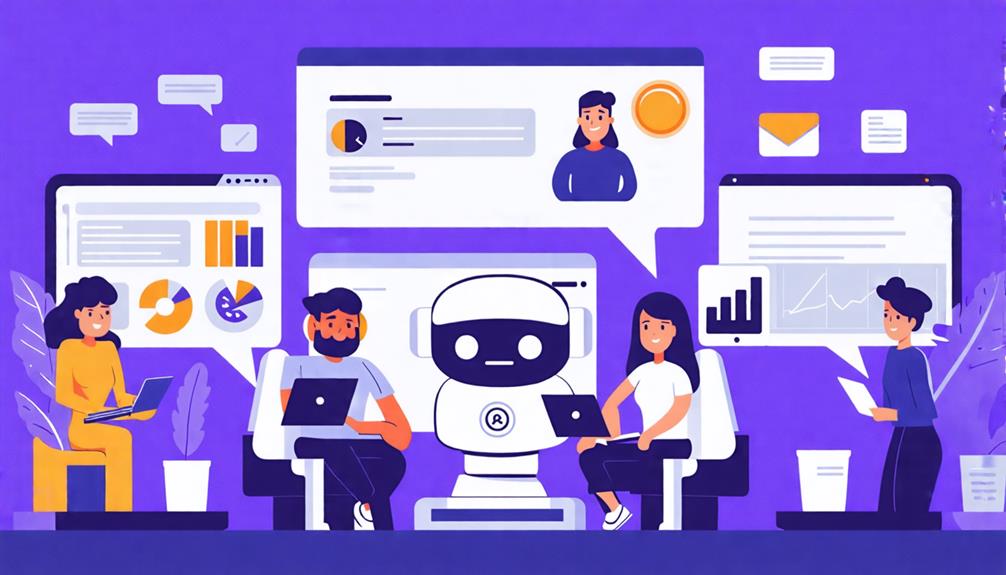
Leveraging chatbots in various business operations offers numerous benefits, making them essential in today's online environment. Chatbots efficiently handle customer inquiries, providing real-time support and utilizing Natural Language Processing (NLP) to understand complex questions. This capability allows chatbots to guide users through issue resolution effectively, ultimately enhancing service quality.
In sales and marketing, chatbots provide personalized suggestions by analyzing customer data. They can recommend products, engage in cross-selling, and upsell, thereby increasing revenue opportunities. For order tracking, chatbots offer real-time updates about order statuses and shipping information. This transparency reduces customer anxiety and builds trust in the purchasing process.
Appointment scheduling is another area where chatbots excel. They manage calendar availability and send reminders, reducing no-show rates and simplifying the scheduling process for both businesses and customers. Additionally, chatbots are invaluable for feedback collection. They conduct quick surveys post-interaction, gathering insights on customer satisfaction. This information is crucial for identifying areas needing improvement and enhancing overall service quality.
Technical Aspects and Challenges
Understanding the technical aspects and challenges of implementing real-time customer support chatbots is essential for their success. Focusing on key areas ensures that your chatbot enhances customer service effectively.
Natural language processing (NLP) is crucial for enabling your chatbot to interpret and understand human language, facilitating context-aware conversations. Integrating the chatbot with customer relationship management (CRM) systems and e-commerce platforms is also critical, as this integration provides access to comprehensive customer data, necessary for delivering personalized responses and enhancing user satisfaction.
Machine learning (ML) is another essential component. It enables your chatbot to learn from past interactions, ensuring it can adapt to evolving customer needs over time. Interactive decision trees can assist in guiding customers through their inquiries, making complex processes more straightforward and organized.
Security measures, including robust data protection protocols and compliance with relevant regulations, are imperative in chatbot implementation. These steps are fundamental to safeguarding customer information and building trust in your service.
- Natural language processing (NLP) for better understanding
- Integration with CRM systems for personalized responses
- Machine learning (ML) to adapt over time
- Interactive decision trees for structured guidance
- Security measures to protect customer data
Future Trends in Chatbots

Looking ahead, the chatbot landscape is set to undergo significant transformations, driven by rapid technological advancements. The industry is projected to grow to $1.25 billion by 2025, underscoring its increasing role in real-time customer support across multiple sectors. Future chatbots will likely feature advanced emotional intelligence, enabling them to recognize and respond empathetically to customer emotions. This capability is expected to elevate customer engagement and satisfaction.
Voice-activated chatbots are on the rise, thanks to improvements in voice recognition technology. These will provide hands-free interactions, making support more accessible and efficient. Additionally, AI-driven predictive analytics will become a core feature, enabling chatbots to anticipate customer needs and inquiries. This proactive approach will enhance service delivery and streamline customer interactions.
Advanced natural language processing (NLP) will make chatbots more intuitive and effective, further boosting their performance. As the industry expands, regulatory compliance and ethical considerations will gain prominence. Ensuring transparent interactions will foster customer trust. By focusing on responsible practices, companies will not only meet regulatory standards but also build stronger relationships with their customers. The future of chatbots promises significant advancements that will revolutionize customer support delivery.