
Virtual Try-On Solutions: Revolutionizing Online Shopping
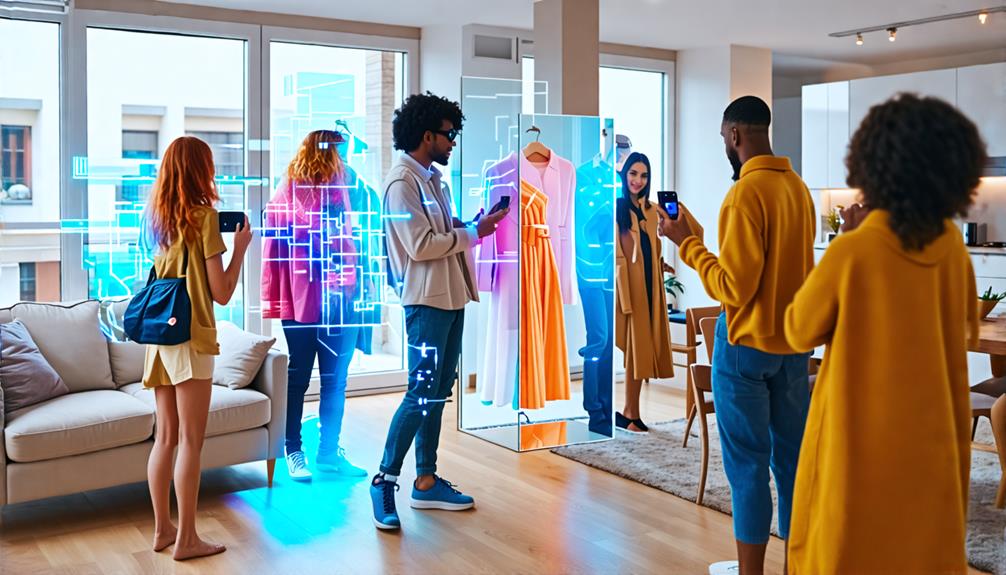
Imagine elevating your online shopping experience with virtual try-on solutions powered by AI, augmented reality, and computer vision. These advanced technologies enable you to visualize how clothes fit and look on you without stepping outside your home. This innovation significantly reduces return rates and boosts conversion rates while offering personalized recommendations for a more satisfying and sustainable shopping experience. But how exactly do these systems operate, and what challenges do they face in implementation? Delving into the details reveals why this technology is reshaping the retail industry.
Overview of Virtual Try-Ons
Virtual try-on solutions are revolutionizing the online shopping experience through the use of advanced technologies like AI, AR, and computer vision. These tools enable customers to visualize how clothing fits without the need for a physical try-on, significantly enhancing the online shopping process. By analyzing body dimensions through image capture, the technology delivers realistic virtual fittings with accurate garment movement and fit simulations.
Augmented reality (AR) offers a personalized shopping experience that boosts customer satisfaction. These solutions help reduce return rates by 64%, addressing issues like misleading descriptions and fit expectations. This reduction in returns is crucial for both customers and retailers, leading to a more seamless shopping experience and fewer hassles with returns.
The adoption of virtual try-on solutions has also led to conversion rate improvements of up to 300%, underscoring their potential to increase sales and customer engagement. The fashion industry benefits particularly from these technologies, as they provide an accurate fit and a more interactive shopping experience. As e-commerce continues to grow, virtual try-on technology is expected to expand significantly, offering new opportunities for both customers and retailers.
Importance in Retail
In retail, virtual try-on solutions are essential for providing efficient and convenient shopping experiences, particularly as online shopping has increased significantly post-pandemic. These solutions notably reduce return rates by 64%, addressing issues with misleading product descriptions. This improvement not only enhances the shopping experience but also boosts customer satisfaction and loyalty.
Efficient Shopping Experience
Imagine browsing an online store and instantly seeing how a dress or a pair of shoes will look on you without ever leaving your home. Thanks to virtual try-on technology, you can now enjoy a seamless and efficient shopping experience that was once unimaginable. This augmented reality (AR) feature not only enhances customer satisfaction but also significantly boosts engagement by allowing you to visualize how clothing fits in real-time.
Virtual try-ons have been shown to lead to higher conversion rates, with studies indicating a remarkable 94% increase. This means that once you see how great that outfit looks on you, you're much more likely to proceed with the purchase. Furthermore, your shopping experiences become more personalized, as the technology gathers valuable data on your preferences, making future interactions even more tailored to your tastes.
Reduced Product Returns
Beyond enhancing the shopping experience, virtual try-on solutions play a crucial role in reducing product returns, a significant challenge in the retail industry. By providing precise size and fit information, virtual try-ons mitigate common issues such as misleading product descriptions and inaccurate fit expectations. This reduction in return rates—by up to 64%—significantly lowers the costs associated with returns, which can range from 20% to 70% of the original purchase price.
Utilizing virtual fitting rooms increases the likelihood of customer satisfaction with purchases. This heightened satisfaction results in a 94% increase in conversion rates, making customers less likely to return products. Retailers benefit from this technology through enhanced customer satisfaction and loyalty, leading to positive word-of-mouth and repeat purchases.
Additionally, virtual try-on solutions contribute to sustainable retail practices by reducing the environmental impact associated with product returns and excess inventory. By minimizing the volume of returns, retailers save money and contribute to a more sustainable shopping experience.
| Impact | Traditional Shopping | With Virtual Try-On |
|---|---|---|
| Return Rates | High | Significantly Reduced |
| Customer Satisfaction | Moderate | High |
| Environmental Impact | High | Reduced |
Embrace this technology to make your shopping smarter and greener!
Core Technologies

To understand how virtual try-on solutions work, you need to know about the core technologies that enable them. Augmented reality (AR) and computer vision analyze body dimensions for accurate garment fitting. AI-driven personalization ensures the virtual clothes adjust realistically to your body shape, creating a seamless and engaging experience.
Augmented Reality Integration
Augmented Reality (AR) integration is revolutionizing the retail experience by seamlessly embedding digital objects into the physical world through device cameras in real-time. This advanced technology enables online shoppers to visualize clothing and accessories in a virtual fitting room, offering an interactive and personalized shopping experience. You can adjust the size, style, and position of virtual items, which enhances customer satisfaction and engagement.
Retailers utilizing AR for virtual try-ons have reported significant improvements. Conversion rates have increased substantially, with some experiencing up to a 300% rise in online sales. This boost is attributed to the confidence AR provides, allowing you to see precisely how items will look on you before purchasing. Additionally, AR's virtual try-on feature significantly reduces return rates, addressing a critical concern in the retail industry.
Leading companies like ASOS and Warby Parker are leveraging AR technology in their virtual fitting rooms, setting new industry standards. With the global AR market projected to reach $77 billion, the demand for AR in retail and e-commerce is undeniable. AR integration is not merely a trend; it is a transformative force in the retail sector.
Computer Vision Capabilities
Computer vision technology is pivotal in virtual try-on solutions, accurately analyzing body dimensions through images or live video feeds. This advanced capability enables a realistic fitting experience, enhancing online shopping's enjoyment and reliability. By employing sophisticated image processing techniques, computer vision identifies key body points and measurements, ensuring garments adapt perfectly to an individual's unique shape.
Advanced algorithms in computer vision facilitate real-time mapping of clothing items onto your image, improving realism and simulating garment movement. This helps you visualize how the clothes will look and feel in real life, resulting in a more personalized shopping experience that boosts confidence in purchasing decisions.
High-quality computer vision capabilities are essential for increasing consumer confidence and satisfaction. By providing precise body dimensions and realistic garment fit, these technologies address a significant challenge in online shopping: uncertainty about size and fit. Knowing that clothes will fit well and look good encourages more purchases.
Integrating computer vision into virtual try-on solutions revolutionizes the online shopping experience, offering personalization and higher consumer trust.
AI-Driven Personalization
AI-driven personalization in virtual try-on solutions transforms online shopping by utilizing machine learning algorithms to analyze user data. These algorithms enhance sizing accuracy and tailor product recommendations based on your unique preferences and body measurements. When you use a virtual try-on, AI systems, trained on extensive datasets, adjust clothing items to fit your specific body dimensions in real-time, providing a precise idea of how the garment will look and feel.
This technology significantly boosts customer engagement by offering a more personalized shopping experience. The virtual try-on not only helps you select the right size but also provides personalized recommendations that match your style. This level of customization leads to a notable 40-50% increase in conversion rates, as you feel more confident in your purchase decisions with accurate fit information.
Additionally, the data-driven insights from your interactions enable retailers to optimize their inventory management and marketing strategies. By understanding consumer demands more effectively, businesses can ensure they have the right products available, enhancing your overall shopping experience. Continuous learning from user interactions means these AI systems improve over time, refining recommendations and further increasing your satisfaction.
Virtual Try-On Process
Ever wondered how the virtual try-on process works? Let's break it down step-by-step to ensure you understand each phase clearly and accurately.
The process starts with you capturing an image or video using your device's camera. Advanced AI algorithms then analyze key body points and dimensions from this image to guarantee an accurate size and fit tailored to your body shape.
Next, the clothing items are digitally rendered onto your image. This digital rendering incorporates realistic textures, shadows, and lighting to create a highly immersive experience. You can interactively view the virtual clothing from multiple angles, giving you a comprehensive look at how the clothes fit and style before making a purchase.
Here's a quick overview of the steps involved:
| Step | Description | Purpose |
|---|---|---|
| Image Capture | Take a picture or video using your device's camera. | Provide a base for analysis |
| AI Analysis | Advanced AI algorithms analyze body dimensions from the image. | Ensure accurate size and fit |
| Digital Rendering | Clothing items are digitally placed on your image with realistic details. | Create an immersive experience |
| Interactive Viewing | View the virtual clothing from multiple angles. | Assess fit and style comprehensively |
This process significantly reduces the likelihood of returns by providing clearer fit expectations, ultimately enhancing customer satisfaction. By leveraging virtual try-on technology, you are closer to finding the perfect outfit with confidence and ease.
Types of Try-On Solutions
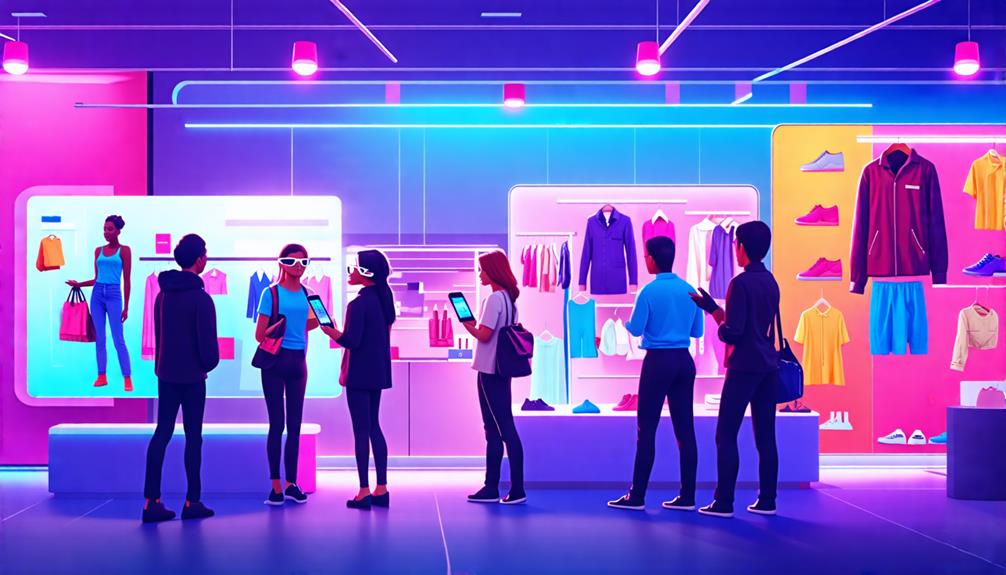
In regard to virtual try-on solutions, several advanced technologies are revolutionizing the shopping experience.
Augmented Reality (AR)
AR enables real-time visualization of clothing and accessories using your device's camera, seamlessly integrating virtual items into your physical environment. This not only enhances virtual try-on experiences but also caters to customer preferences for a seamless user interface.
Virtual Reality (VR)
VR offers a fully immersive shopping experience. With a VR headset, you can explore a 360-degree virtual store and try on products in a simulated environment. This interactive approach ensures a detailed fit assessment, making your shopping experience more accurate and enjoyable.
Mixed Reality (MR)
MR merges the best aspects of AR and VR, allowing virtual objects to coexist and interact with the real world. This creates an engaging and interactive user experience that significantly enhances your shopping journey.
Additional Technologies
3D Modeling and Simulation: Provides precise digital replicas of products for thorough examination.
User Data Capture: Employs cameras and sensors to personalize virtual try-ons.
Fit Assessment: Ensures that virtual try-ons accurately reflect your unique body shape.
These technologies are transforming online shopping by making the experience more interactive, personalized, and accurate.
Benefits for Consumers
By leveraging advanced virtual try-on technologies, consumers experience significant enhancements in their online shopping journeys. Virtual try-ons allow you to visualize how garments will look and fit before making a purchase, greatly reducing anxiety related to uncertain sizing and fit. This leads to a notable decrease in returns—up to 64% less—resulting in a more satisfying shopping experience and a streamlined process.
Additionally, virtual try-ons facilitate personalized shopping experiences by tailoring recommendations to your unique preferences, thus boosting consumer confidence. This increased confidence translates into higher conversion rates, with e-commerce platforms witnessing up to a 300% increase. The improved visualization and interactive features, including augmented reality, make shopping more engaging, enhancing user interaction by 200%.
| Benefit | Impact | Result |
|---|---|---|
| Reduced returns | 64% fewer returns due to better fit | More satisfying shopping experience |
| Higher conversion rates | Up to 300% increase | Increased consumer confidence |
| Improved visualization | 200% increase in user engagement | More interactive shopping |
Virtual try-ons also enable you to curate wardrobes effortlessly by digitally trying on outfits, saving time and expanding your options beyond physical store inventories. This revolutionizes your online shopping, making it more efficient and enjoyable.
Benefits for Retailers
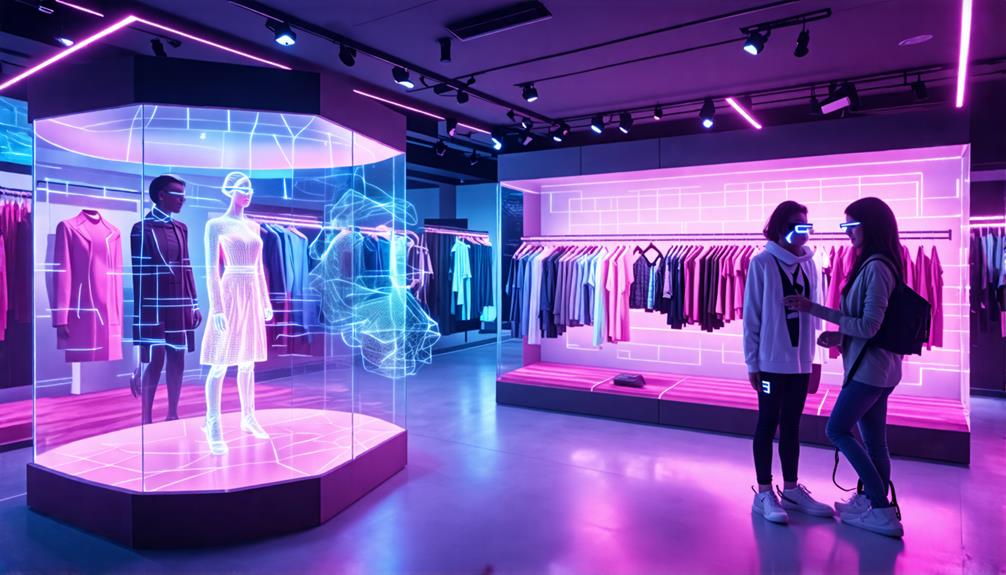
Virtual try-on technology significantly enhances the shopping experience for consumers and offers substantial benefits for retailers. By integrating this advanced solution into your online shopping platform, you can reduce return rates by up to 64%, which not only boosts customer satisfaction but also fosters loyalty. This increased confidence in purchases can drive conversion rate growth by up to 300%, directly impacting sales positively.
For retailers, the benefits are numerous:
Enhanced customer engagement: Interactive and personalized shopping experiences keep customers on your site longer, making them more invested in their purchase decisions.
Improved inventory management: Gain valuable insights into customer preferences and fit issues, optimizing stock levels and reducing overproduction.
Competitive advantage: Differentiate your brand in a crowded market by offering cutting-edge solutions that improve user experiences and increase sales.
For example, John Lewis has linked over 30% of fashion rental sales to Zyler's virtual try-on tool, showcasing the tangible benefits of adopting this technology. Embracing virtual try-on tools positions you to compete more effectively, ensuring your brand remains at the forefront of the online shopping revolution.
Future Trends
As virtual try-on technology evolves, several emerging trends promise to shape the future of retail. The global market for augmented reality (AR) and virtual reality (VR) is projected to reach $77 billion, fueling advancements in virtual try-on solutions. With ongoing improvements in augmented reality and artificial intelligence, significant enhancements in the customer experience during online shopping are expected.
By 2024, AI-driven personalization will increase the accuracy of size and fit recommendations by 50%, making virtual dressing room experiences more precise. This heightened personalization aims to reduce return rates by up to 64%, as customers make more confident purchasing decisions. The beauty industry, in particular, will see a 40% increase in virtual try-on usage, expanding beyond traditional fashion applications.
Social media integration is another exciting trend. Platforms like Instagram and TikTok will incorporate virtual try-on features, driving consumer engagement and influencing buying behavior. These integrations will make online shopping more interactive and enjoyable, encouraging users to share their virtual dressing room experiences with friends.
Implementation Challenges
Implementing virtual try-on solutions presents several significant challenges that retailers must navigate to ensure success. Initially, technical challenges arise, particularly in guaranteeing accuracy and personalization. Accurate body measurements and fit are essential, and ongoing updates are necessary to maintain a high-quality user experience. Subpar systems can lead to frustration and negative shopping experiences, reducing consumer trust and confidence in purchases.
Privacy concerns also play a critical role. Retailers must adopt transparent data collection and user consent policies to build consumer trust. Without clear communication, users may be hesitant to share personal information, hindering the adoption of these technologies.
Additionally, a digital divide limits access to virtual try-on solutions. Not all consumers have the necessary technology or internet connectivity, which can create disparities in user experiences.
To address these challenges, consider the following actions:
Invest in high-quality technology and infrastructure to guarantee seamless and accurate user experiences.
Develop transparent privacy policies to build and maintain consumer trust.
Provide training and upskilling for existing staff in AR/VR content creation and data analytics.
Related posts