What Are the Benefits of an Image CDN?

You can utilize an Image CDN to enhance your website's performance and improve user experience. By optimizing images and loading them faster, you'll lower bounce rates and boost SEO rankings. Image CDNs also make images smaller, cutting bandwidth costs by reducing data use. This means you'll enjoy lower operational expenses while maintaining high-quality visuals. Security's excellent too, with features to protect your content like encryption and regular updates.
Focusing on these aspects empowers you to prioritize your core business operations. Want to truly maximize your website's efficiency and safety? There's more to investigate beyond these key benefits.
Enhanced Website Performance
In relation to improving website performance, utilizing an Image CDN is a game changer. By concentrating on image optimization, you can greatly enhance your site's load time. Using next-gen formats like WebP, Image CDNs reduce the file size of images on your website by up to 40% compared to traditional JPEGs. This compression not only results in faster loading but also improves the general user experience by ensuring images load in under 3.8 seconds. This speed is vital because visitors are more likely to stay on a site that loads quickly.
The real magic happens with CDN speeds, which elevate your website's Time To Initial Byte (TTIB). By serving images from the nearest edge server to the user, Image CDNs minimize latency, increasing loading speeds. Optimizing these images can account for over 50% of your webpage's weight, directly influencing site speed and performance metrics.
As a result, faster loading images can considerably decrease bounce rates. Remember, even a 1-second delay can lead to a 7% reduction in conversions. By embracing image compression through an Image CDN, you're not just speeding up your site; you're also retaining more visitors and improving conversions. To further enhance performance, consider using a CDN service for efficient image delivery and improved user experience.
Faster Load Times
Revving up your website's speed is vital, and an Image CDN can help you achieve faster load times. By implementing image optimization, your images are automatically resized and reformatted to guarantee they're delivered swiftly to your users. This results in a noticeable increase to your web performance.
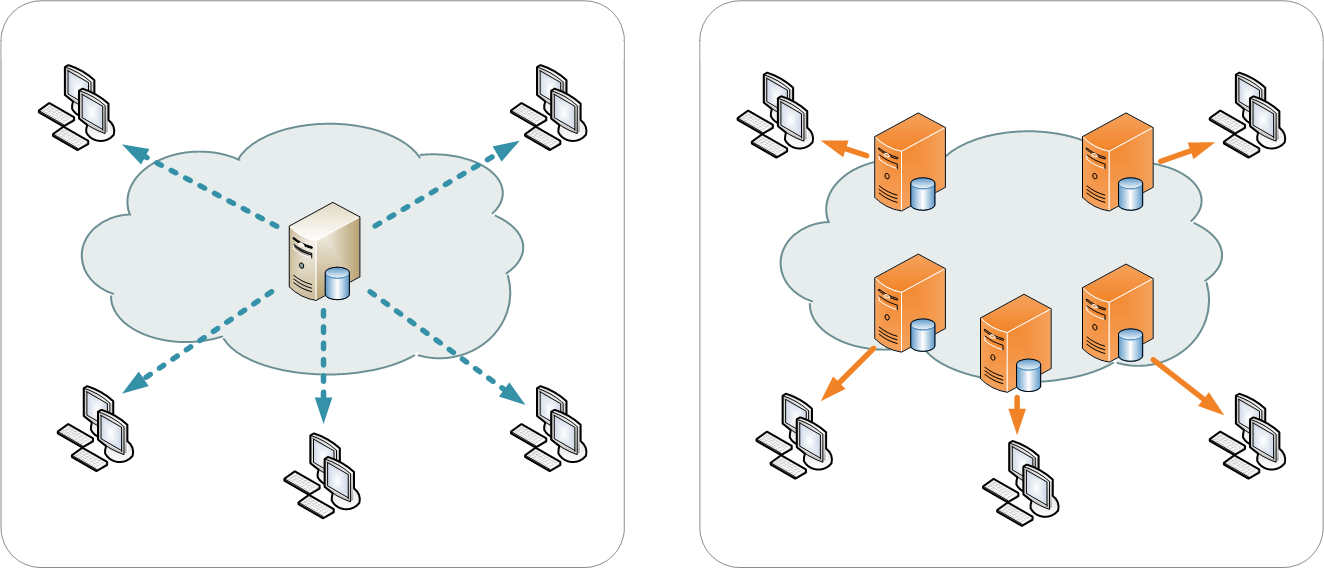
One key advantage of an image CDN is its use of edge servers. These strategically located servers reduce latency by serving images from the closest server to the user, cutting load times by up to 50%. Additionally, by employing next-gen image formats like WebP, an image CDN can shrink image sizes by 40% compared to traditional JPEGs. This means your site loads quicker, which translates to a better user experience.
Faster load times are vital because they directly influence bounce rates. Users are 70% more likely to stay on your site if it loads within five seconds. An image CDN not only improves total web performance but also enhances key metrics such as Time to Initial Byte (TTFB) by as much as 30%. By addressing these elements, you guarantee your website remains efficient and engaging, keeping users on your site longer and reducing the likelihood they'll leave prematurely.
Additionally, CDNs significantly reduce page load times by fetching data from the node closest to the user, ensuring quicker access to content and enhancing site performance.
Improved SEO Rankings

An Image CDN can greatly improve your website's SEO rankings by increasing site speed and optimizing image delivery. When you use an image CDN, you're making sure that your images load swiftly, which is vital for both user experience and search engine algorithms. Faster loading times mean your site can achieve a higher Google PageSpeed score, a key factor in improved SEO rankings.
By utilizing image optimization techniques, an image CDN reduces your page weight, allowing for quicker loading times that search engines favor. Implementing responsive images through an image CDN guarantees that visitors receive images tailored to their devices, enhancing user engagement and satisfaction. This not only improves user experience but also plays a substantial role in boosting your SEO performance. As studies have shown, even a one-second delay in loading time can slash conversions by 7%, highlighting how essential speed is for maintaining competitive SEO.
Optimized images contribute to efficient crawling and indexing by search engines, further supporting improved SEO rankings. Efficiently delivering optimized images through an image CDN makes certain that your site remains fast and competitive, ultimately fostering better search engine visibility and higher conversions. Implementing lazy loading techniques can further enhance initial page load times by delaying the loading of off-screen images.
Reduced Bounce Rates
Quick-loading websites captivate visitors and keep them engaged, which is why reducing bounce rates is fundamental for online success. An Image CDN plays a pivotal role in achieving this by optimizing image sizes and formats, leading to fast-loading images. When images load quickly, page load times decrease considerably, enhancing the overall user experience.
This is especially significant for e-commerce sites, where reduced bounce rates can directly influence conversion rates, sometimes by over 10%. Image CDNs work by delivering images tailored to the user's device specifications, ensuring ideal visual quality. This approach makes sure that users receive the best possible experience regardless of their device, further reducing bounce rates.
A delay of even one second in page loading can spike bounce rates by up to 90%, so image optimization is imperative in keeping visitors on your site. Regular performance audits help identify new issues and maintain optimal performance, making it essential for maintaining the benefits provided by an Image CDN.
Increased User Engagement

Everyone loves a fast-loading website, and that's where an Image CDN comes into play. By delivering optimized images quickly, a CDN greatly enhances load speed, which is essential for improving user engagement. When images load quickly and efficiently, bounce rates can drop by up to 32%, encouraging users to stay longer and investigate more of your content. This increased engagement is critical, as Google notes that even a 0.1 second improvement in load time can result in a 9% rise in user interaction.
Image CDNs also guarantee that responsive images are tailored to fit any device, improving the general user experience. This adaptability can lead to a 10.1% increase in conversion rates, especially for industries like travel. High image quality is another key factor, as 83% of consumers say product photos heavily influence their purchasing decisions. By delivering high-quality, optimized images, CDNs ensure your content looks appealing, enhancing users' perception and engagement.
With 47% of users expecting pages to load in under two seconds, the improved load speeds and visual quality from a CDN meet these expectations, boosting satisfaction and ultimately driving better user engagement. Additionally, implementing browser caching can further optimize load times by storing frequently accessed files locally, which enhances the overall user experience by reducing wait times for repeat visitors.
Lower Bandwidth Costs
Leveraging an Image CDN can considerably lower your bandwidth costs by optimizing image sizes through compression and transformation. By decreasing the amount of data transferred, you can greatly save on expenses. For instance, companies like Shogun have reported an impressive 86% reduction in image bandwidth costs, translating to over $200,000 in savings each year.
This is achieved by minimizing image payloads, meaning less data needs to be transferred over the network. Switching to next-gen image formats such as WebP and AVIF can reduce file sizes by up to 40% compared to traditional formats like JPEG. This shift not only improves cost efficiency but also boosts loading times for your users. Image CDNs also employ caching strategies that allow frequently requested images to be served without repeatedly pulling from the origin server.
This reduces bandwidth usage and further lowers costs. Utilizing a CDN consists of distributed web servers for efficient content delivery, enhancing website performance and optimizing bandwidth usage. Moreover, the pay-as-you-go pricing model offered by many CDNs gives you the flexibility to manage your expenses based on actual use. This approach guarantees you're only paying for what you need, promoting long-term savings and efficient spending. Embracing these strategies can dramatically cut down on your bandwidth expenses.
Greater Content Security

Image CDNs act as a digital shield, enhancing the security of your content in several robust ways. By implementing SSL/TLS encryption, an image CDN guarantees that data transmitted between users and your website remains secure, which is crucial for protecting sensitive information. This encryption plays a considerable role in maintaining content security, especially when handling user-generated content. With effective access control features, you can manage permissions and regulate content uploads, thereby enhancing security measures.
A web application firewall (WAF), often provided by image CDNs, adds another layer of defense by preventing hacking attempts and guarding against numerous cyber threats. This considerably bolsters your site's overall security. Image CDNs also obscure the IP address of your origin server, reducing its exposure and protecting it from potential DDoS attacks, which can cripple your site.
Regular security updates from CDN providers guarantee that your website is always safeguarded against new vulnerabilities. These updates keep your defenses up-to-date, providing you peace of mind that your content security measures are dependable and robust. With an image CDN, you can focus on your business, knowing your content is well-protected. Implementing strong password policies is crucial for reducing unauthorized access, further enhancing the site's security.