What Are the Four Types of Sponsorship?

There are four main types of sponsorship you can use to improve your event's success: financial, in-kind, media, and promotional. Financial sponsorship involves receiving monetary contributions to cover event expenses like venues and marketing. In-kind sponsorship provides tangible goods or services that elevate your event while cutting costs.
Media sponsorship increases visibility through different channels such as TV, radio, or digital platforms. Finally, promotional sponsorship taps into influencers or community figures to engage their followers and raise awareness. Each type offers unique advantages and strategic benefits that can create a successful event if used wisely. You'll uncover more insights ahead.
Financial Sponsorship
In the domain of event planning, financial sponsorship stands as a cornerstone for success. When you secure financial sponsorship, you receive direct monetary contributions that help cover vital expenses like venue rentals, performer fees, and marketing costs. This financial increase considerably improves your total budget, enabling you to hire popular performers and invest in cutting-edge event designs, which ultimately raises the attendee experience. Sponsors are not merely donors; they seek substantial promotional benefits.
Your event marketing materials become a platform for brand visibility, featuring logos and mentions that align with their business goals. This exposure is a key component of the sponsorship landscape, as companies view their sponsorship as an investment. They anticipate a return on investment through increased brand awareness and improved consumer engagement both during and after the event. The impact of financial sponsorship can be profound, transforming the scale and quality of your event. Regardless of whether you're planning a local gathering with a modest budget or a major event exceeding $1 million, financial contributions can make a considerable impact.
By leveraging these funds strategically, you create a win-win situation that benefits both your event and your sponsors. Moreover, integrating financial sponsorship with a centralized content management approach ensures consistent brand messaging and maximizes promotional benefits throughout the event's lifecycle.
In-Kind Sponsorship
Unlike financial sponsorship, in-kind sponsorship offers tangible contributions that can greatly improve your event. When brands provide a donation of goods or services instead of cash, you gain vital resources that elevate your event's quality and reduce operational costs. For instance, if a company supplies food and beverages, technology, or event space, it can greatly ease your budget constraints. This approach is particularly beneficial for smaller events that may face challenges in securing financial sponsors but still want to deliver a memorable experience.
In-kind sponsorships also present a unique opportunity for brands to showcase their products and services directly to potential customers, building brand awareness and encouraging engagement. When attendees use or see these products in a real-world setting, it sparks interest and fosters connections. To guarantee a successful partnership, clear communication is essential. Both you and your sponsor should understand the value exchange involved, making sure everyone benefits.
This transparency helps maintain a positive relationship and sets the stage for future collaborations. By focusing on the mutual benefits, in-kind sponsorships can become a powerful tool, turning limited resources into a win-win situation for both parties. Incorporating gamification techniques into event activities can further enhance engagement, motivating participants to interact and explore what the sponsors have to offer.
Media Sponsorship
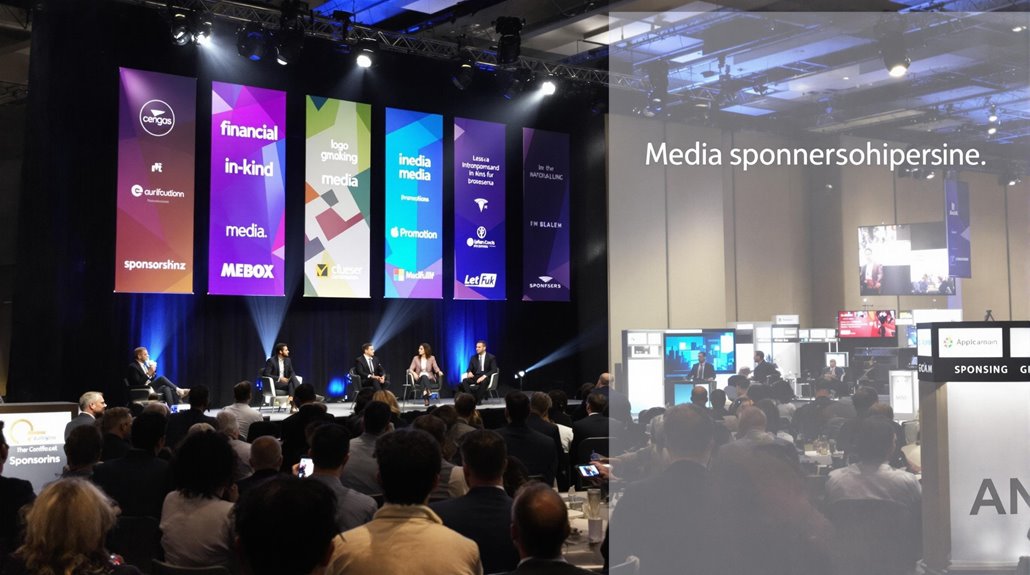
As you investigate different types of sponsorship, media sponsorship offers a dynamic way to improve your event's visibility. By leveraging diverse media channels like television, radio, and digital platforms, you can considerably increase the promotional value of your event. Media sponsorship typically includes sponsored segments and branded content, providing cross-promotional opportunities that optimize audience reach and engagement.
When you collaborate with media sponsors, you'll tap into their established audience base and credibility, drawing attention and participation. This approach doesn't just elevate the promotional value; it also improves brand visibility and public relations. Media coverage amplifies your brand messaging, ensuring your presence is felt before, during, and after the event.
Additionally, gamified marketing content can be integrated into media sponsorship strategies to boost engagement and conversion rates significantly. Consider these benefits of media sponsorship:
- Increased Audience Reach: Connect with a broad range of potential attendees through varied media channels.
- Targeted Demographics: Focus your efforts on reaching specific groups that align with your brand and event goals.
- Higher Return on Investment (ROI): Drive ticket sales and elevate brand recognition, ensuring your investment pays off.
Promotional Sponsorship
Harness the power of promotional sponsorship by partnering with influencers or community figures who actively champion your event to their followers. This form of sponsorship focuses on raising awareness and engagement by leveraging the social media presence of influencers. With 81% of consumers more likely to purchase products they encounter on these platforms, integrating your brand into their content can greatly amplify visibility.
By collaborating with influencers, brands directly tap into new demographics, expanding their market reach and fostering connections with potential customers. Promotional sponsorships are not just about visibility, though. They involve creating tailored campaigns that resonate with both the influencer's audience and the event's theme.
This alignment guarantees that your brand's message is both authentic and impactful. Clear communication is key here; it is crucial to outline the benefits for both parties, making the partnership mutually beneficial. Moreover, while media coverage is significant, the direct engagement from influencers often leads to a more personalized interaction with your audience. This kind of sponsorship helps your brand stand out in a crowded market by reaching consumers in an organic and relatable way.
Adopt promotional sponsorship to improve your brand's presence and connect authentically with your target audience. By collaborating with gaming YouTubers and Twitch streamers, brands can effectively enhance game visibility and engagement.
Benefits of Sponsorship
Through sponsorship, brands can greatly improve their visibility and recognition. By aligning with values that resonate with consumers, you can markedly elevate your brand's reputation. In fact, 76% of consumers view companies more favorably when they support relevant causes. This not only increases your visibility but also strengthens your corporate identity and community support. Sponsorship provides crucial financial support and resources for event organizers. This support enables higher quality offerings and improves attendee experiences with better food, prizes, and entertainment.
As a result, you'll likely see heightened attendance and engagement, contributing to positive perceptions of both the event and your brand. Empowering influencers to express their unique vision can enhance the authenticity of sponsored content, aligning with the brand's values and resonating with the audience. Sponsorship fosters networking opportunities for both sponsors and attendees, paving the way for new partnerships and business ventures.
Supporting community events or causes demonstrates your commitment to social responsibility, strengthening relationships with consumers who value such efforts. Improved event experiences through sponsorship lead to greater brand recognition and a lasting positive image.
Choosing the Right Sponsor
While sponsorship offers numerous benefits, selecting the right sponsor is key to maximizing these advantages. As event organizers, you need to understand the four main types of sponsorship: financial, in-kind, media, and promotional. Financial sponsors provide vital monetary support, helping cover expenses like venue rentals. In-kind sponsors offer goods or services, reducing your direct costs. Meanwhile, media sponsors amplify your event's visibility through traditional and digital channels, and promotional sponsors engage influencers to improve awareness among potential customers. When choosing a sponsor, consider both your target audience and the sponsor's.
Aligning these can elevate brand reputation and guarantee the partnership connects with attendees. Audience demographics play a significant role in this alignment, so explore data to understand who the event attracts. Strategic planning is fundamental here; analyze competitors' sponsorships to uncover potential connections and refine your approach. Crafting successful sponsorship deals requires evaluating how a sponsor's values align with your event. This alignment guarantees a seamless collaboration, increasing the event's impact.
By carefully reviewing these factors, you can select sponsors that not only support your event financially or in-kind but also expand its reach and reputation. For instance, integrating beacon technology could enhance your sponsorship strategy by offering personalized promotions during the event.
Crafting a Sponsorship Pitch

Creating a successful sponsorship pitch involves clearly showcasing the unique value propositions your event offers. To capture the attention of potential sponsors, align your sponsorships with the event's goals and audience demographics. Show them how your event can meet their objectives by tailoring the pitch to their specific interests.
Emphasize past successes by incorporating data like attendance numbers and engagement metrics, highlighting the potential return on investment. Dynamic email content can play a pivotal role in your sponsorship pitch by enhancing personalization and optimizing engagement with potential sponsors. To make your pitch stand out, consider the following:
- Visual elements: Use infographics and branding examples to present your ideas in a dynamic, engaging way.
- Sponsorship tiers: Clearly outline different sponsorship packages to help sponsors understand their options and the value of each investment level.
- Audience demographics: Provide insights into who will attend, demonstrating how the partnership aligns with their target market.
Tailoring the pitch is vital for success. Address the unique needs of each potential sponsor, showing them why your event is the perfect fit. Highlight the tangible benefits they'll gain by aligning with your event. Remember, an effective pitch is concise and focused, quickly conveying why your event deserves their sponsorship.