What Does It Mean to Be Voice Enabled?
Being voice enabled means you can control devices using just your voice, making gadgets responsive to spoken commands. With technologies like Amazon Alexa and Google Assistant, you handle tasks hands-free, from adjusting thermostats to setting reminders. Voice recognition technology converts your words into text, using algorithms to interpret them, backed by machine learning for accuracy. While the tech achieves around 95% accuracy, background noise can affect performance. Voice-enabled devices also improve accessibility, especially for those with disabilities.
However, privacy concerns and AI bias are crucial to take into account. There's more to uncover about this advancing technology's impact on your life.
Understanding Voice-Enabled Technology
While you're steering through the modern environment, understanding voice-enabled technology becomes crucial. It's all about devices that respond to spoken commands, allowing you to interact hands-free. This makes your life simpler, regardless of whether you're at home or in the office. With voice assistants like Amazon Alexa and Google Assistant, you can manage tasks effortlessly. They're not just confined to smart speakers; they're embedded in smartphones and numerous gadgets, ensuring convenience is always at your fingertips.
The accuracy of voice recognition has seen remarkable improvements, with average rates now around 95% for clear speech. However, performance can dip in noisy spaces. Despite this, the demand for voice-enabled devices is surging, and the market is projected to hit $27 billion by 2026. This growth underscores how much we rely on voice technology in our daily routines.
Voice assistants use artificial intelligence to understand and execute your commands. They're constantly evolving, enhancing user experiences, and expanding functionalities. By embracing voice-enabled technology, you're not only keeping pace with innovation but also making your life more efficient and connected in an increasingly online environment.
How Voice Recognition Works
Voice recognition technology is a captivating field that transforms spoken language into text using intricate algorithms that analyze sound waves and patterns. When you speak, this technology captures your voice and begins the voice processing expedition by breaking down your speech into smaller sound units. It employs acoustic models to identify these phonetic sounds and map them to words.
To make sense of these words, the technology uses language models, which predict the likelihood of word sequences based on context. This step is essential because it helps in understanding not just isolated words but the intended meaning behind them. By leveraging machine learning models, voice recognition systems continually improve their accuracy. They learn from vast datasets comprising recorded voice samples and their transcriptions, refining their ability to recognize speech nuances.
Natural Language Processing (NLP) plays a significant role in this process, enabling systems to interpret the meaning behind words and respond accurately to your commands. Thanks to recent advancements in deep learning, these systems have achieved impressive accuracy rates, often reaching 95% for clear speech in controlled settings. This ongoing evolution in voice processing technology continues to bridge the gap between human communication and machine understanding.
Popular Voice-Activated Devices
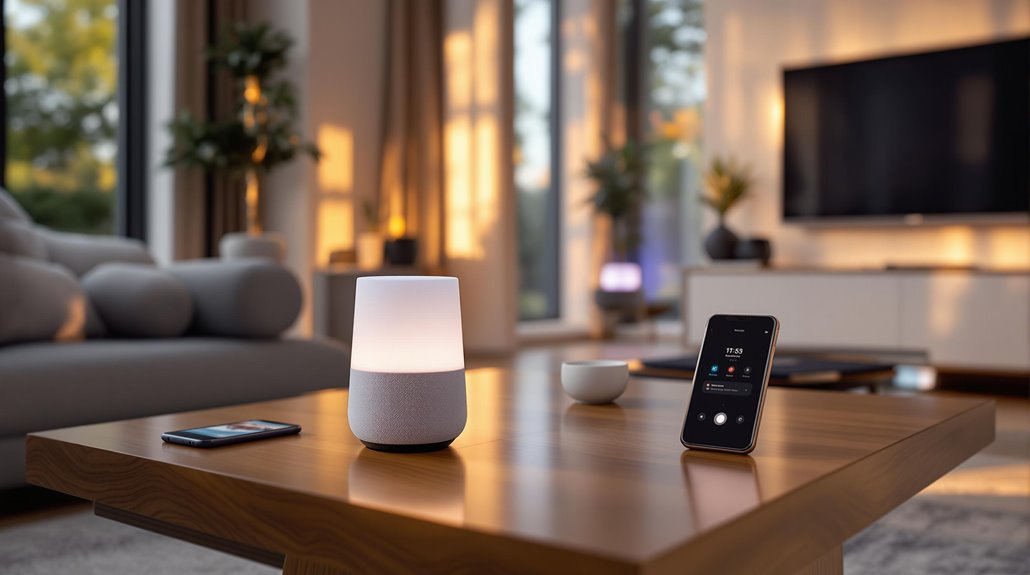
Step into the world of popular voice-activated devices, where convenience meets cutting-edge technology. Imagine controlling your home environment with just your voice. Smart speakers like Amazon Echo and Google Home have become household staples, found in about 50% of U.S. homes. With voice control, you can play music, set reminders, or even check the weather without lifting a finger. These smart speakers are powered by virtual assistants such as Amazon Alexa and Google Assistant, dominating the market with seamless integration into smartphones and home systems.
But it doesn't stop at speakers. Smart displays like the Google Nest Hub improve your experience by combining voice activation with visual feedback, making tasks like cooking or video calling more interactive. You can ask questions and see the answers displayed right in front of you. Personalized content delivery can significantly enhance user engagement with these devices, offering tailored experiences that keep users coming back for more.
Voice-activated appliances are also gaining popularity. Picture adjusting your smart refrigerator or thermostat using simple voice commands. These devices are becoming increasingly common, making home management a breeze.
The global market for voice-enabled devices is projected to reach $27 billion by 2026, indicating rapid consumer adoption and ongoing technological advancements. Immerse yourself in this world, and experience the future of voice control.
Benefits of Voice Accessibility
In the current world, voice accessibility stands out as a powerful tool, enhancing independence and quality of life for many. If you or someone you know deals with disabilities, voice control offers significant improvements in daily experiences. With 40% of disabled users reporting positive impacts, these technologies enable greater autonomy and ease in managing everyday tasks.
You'll find that for elderly individuals or those with mobility challenges, voice control eliminates the need for physical exertion, allowing them to navigate technology without manual input. Voice-activated systems shine in facilitating communication for neurodivergent individuals too. They provide an interactive method that aligns perfectly with varied needs, ensuring everyone can connect with their devices effortlessly. Post-pandemic, there's been a noticeable shift towards hands-free solutions in public spaces.
This change not only caters to health and hygiene concerns but also underscores the growing reliance on voice accessibility. Moreover, voice accessibility can benefit from AI-powered search by improving the accuracy and efficiency of voice command recognition, thereby enhancing user experience. Ultimately, voice control helps break down barriers, promoting inclusivity and engagement with technology for a broader audience. By integrating these features, you're not just simplifying interactions but also supporting a more inclusive digital environment where everyone can participate fully and independently.
Privacy and Security Concerns
Voice-enabled technology's rapid integration into daily life raises significant privacy and security concerns. Many devices often record conversations without your explicit awareness, leading to unauthorized data collection and potential privacy breaches. Shockingly, 70% of users aren't aware of how their data is being utilized, which makes understanding data usage policies and regularly updating your privacy settings essential. Security experts warn that voice assistants can be vulnerable to hacking and unauthorized access.
To protect yourself, implement strong security measures like two-factor authentication. This extra step can safeguard against potential cyber espionage and data vulnerabilities from devices that are always listening. It's imperative to remain vigilant about these risks to guarantee your personal information isn't compromised. Another significant concern is the risk posed by third parties. Voice data collected by your devices can be shared with advertisers and data brokers, often leading to targeted advertising without your consent.
Being cautious and informed about these practices can help you maintain control over your data. By actively managing your device settings and staying informed about privacy and security issues, you can better protect your information in this increasingly voice-enabled world. The projected global market for voice AI is expected to reach $26.9 billion by 2024, reflecting its growing influence in both technology and daily life.
Voice Technology in Daily Life
Integrating voice technology into daily life has transformed how we interact with our devices. With 50% of U.S. households owning a smart speaker, you probably know someone who's experienced the convenience firsthand. Voice control lets you manage tasks hands-free, regardless of it being setting reminders or controlling your smart home lights. Imagine walking into your kitchen and simply saying, "Turn on the lights"—it's that easy.
Voice commerce is also on the rise, with about 20% of consumers using voice commands for shopping. You can add items to your cart, check prices, or reorder necessities without lifting a finger. This trend underscores a shift in how we approach e-commerce, making it more accessible and efficient.
For those with disabilities, voice-activated systems can be a game-changer. About 40% of disabled users report that voice control has improved their daily lives, fostering greater independence. The technology's accuracy has reached 95% for clear speech, enhancing your interaction and satisfaction.
Incorporating voice-activated interfaces into everyday devices is part of a larger trend toward greater personalization and convenience in user interactions.
Future of Voice Interactions
As we look to the future of voice interactions, expect rapid growth driven by advancements in AI and increasing user adoption. The market is projected to soar to an estimated $27 billion by 2026. With these advancements, voice control becomes an integral part of daily life, seamlessly integrating with IoT devices. Imagine a world where your home automation and security systems respond instantly to your commands, creating a unified and intuitive user experience.
You'll find that multilingual support in voice assistants will cater to more diverse user bases, making technology accessible across multiple regions. In commercial spaces, the adoption of voice control is set to rise. Businesses will utilize this technology to improve customer interactions and streamline operations. Voice recognition accuracy and responsiveness will continue to improve, making systems more intuitive and user-friendly. Here's what to look forward to:
- Seamless Integration: Voice control will improve home automation and IoT compatibility.
- Global Accessibility: Multilingual support expands, increasing accessibility.
- Commercial Adoption: Businesses use voice control to enhance customer service.
As voice interactions become a preferred communication method, the possibilities seem limitless. Welcome these changes, and watch as your environment transforms. Smart speakers have become common household items, enhancing ad delivery and user engagement in ways we couldn't have imagined before.
Addressing AI Bias Issues
Bias in artificial intelligence is a pressing concern, especially in the domain of voice recognition systems. If you've ever noticed your voice assistant struggling with your accent or dialect, you're witnessing AI bias in action. Studies show that these systems often have a 35% higher error rate for non-native speakers, which can be incredibly frustrating. This isn't just about miscommunication; it's about how these biases can perpetuate discrimination and exclusion.
You might also notice that voice assistants often default to female voices, frequently assigned to more subservient roles. This reflects societal stereotypes and raises ethical questions about gender representation in technology. It's not just about how the AI sounds, but what it implies about roles and expectations.
Racial disparities in voice recognition are also significant. The National Institute of Standards and Technology (NIST) found that black speakers face a 2.5 times higher misrecognition rate than white speakers. This discrepancy can erode trust in these technologies among marginalized communities.
Addressing AI bias involves diversifying training datasets and improving algorithmic transparency. Organizations are advocating for accountability and ethical standards to guarantee that voice-activated technologies serve everyone equitably.
Enhancing User Experience
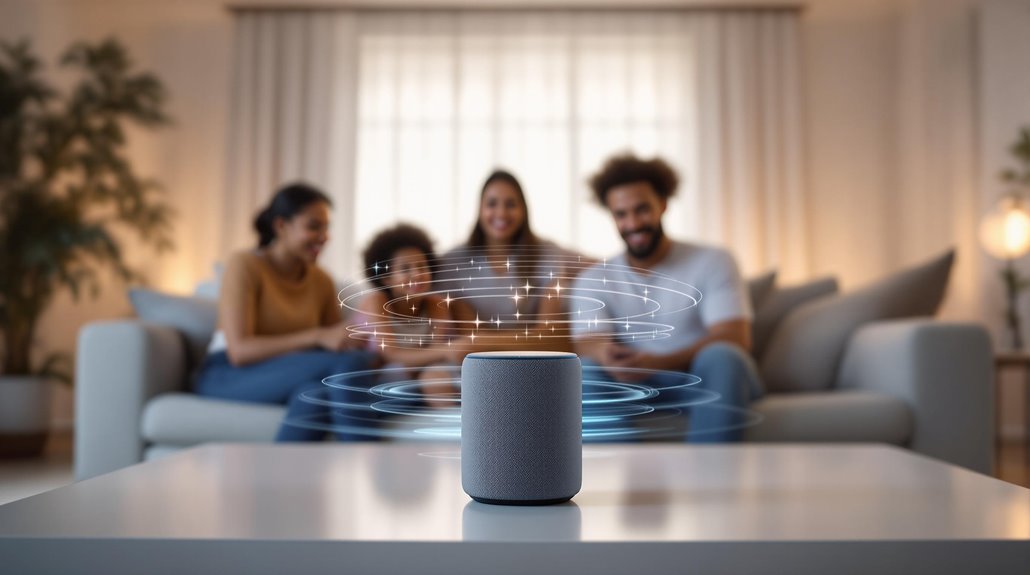
While you're juggling multiple tasks, voice-enabled devices can transform your daily routine by providing a hands-free operation that boosts multitasking capabilities. Imagine cooking dinner while setting reminders or adjusting the thermostat without lifting a finger. Voice control lets you manage these tasks effortlessly, making your day smoother and more efficient. With the rise of smart home devices, half of U.S. households now own at least one smart speaker, creating a seamless and intuitive user experience.
Voice assistants like Siri, Alexa, and Google Assistant have become indispensable, with a 30% increase in usage year-over-year. This surge underscores the growing reliance on voice commands for everyday tasks. Improved voice recognition accuracy, now at 95% for clear speech, reduces misunderstandings and errors, greatly improving your satisfaction during interactions. Additionally, multilingual assistance provided by voice-enabled devices ensures communication in preferred languages, breaking down barriers for diverse users.
Moreover, voice-activated technology isn't just for convenience; it deeply impacts accessibility. Research shows 40% of disabled users report improved daily life due to voice control's accessibility benefits. Here's how voice-enabled devices improve your user experience:
- Hands-free multitasking: Manage tasks while driving or cooking.
- Seamless smart home integration: Control your environment effortlessly.
- Increased accessibility: Empower those with disabilities.