What Is an Example of a Beacon Technology?
Imagine walking into a Macy's store and getting a personalized notification on your phone—you've just experienced signaling technology. Macy's uses Bluetooth Low Energy (BLE) signals to improve shopping by sending location-based promotions to users via the store's app. These signals transmit unique identifiers to your phone, enabling tailored experiences without GPS limitations. They excel at indoor tracking, offering a more accurate position than traditional methods. Retailers like CVS Health and Neiman Marcus also utilize this to engage customers with timely updates and exclusive offers.
There's much more behind these small yet powerful devices.
Understanding Beacon Technology
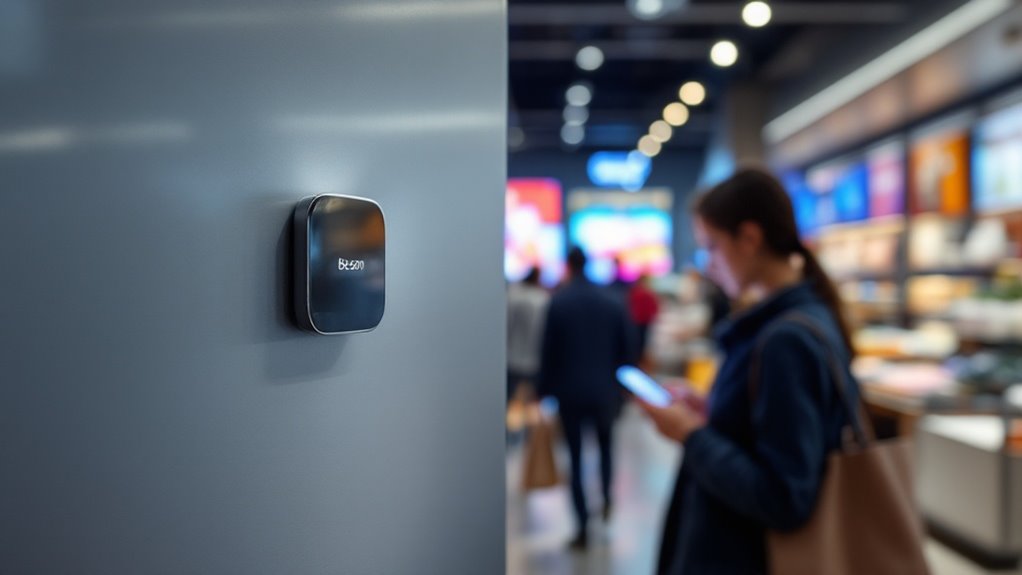
When you're investigating signal technology, it is essential to grasp that it relies on Bluetooth Low Energy (BLE) to connect devices. This cutting-edge technology allows smart devices to communicate by transmitting unique identifiers, which are picked up by nearby devices within designated areas. In retail environments, signal technology is a game-changer, enabling stores to send personalized promotions and notifications directly to customers' smartphones as they move through the store.
By leveraging location-based marketing, retailers improve customer engagement by delivering timely, relevant content based on proximity. For instance, as you walk past a signal in a store, it could trigger a notification about a special discount, encouraging you to examine more products. This targeted interaction fosters a seamless shopping experience, making customers feel valued and informed. Signal technology's precision surpasses that of traditional GPS and WiFi, offering superior data on customer movement and engagement.
As a proximity technology, it's not only about sending promotions but also about understanding customer behavior within physical spaces. This insight helps businesses refine their strategies, optimize layouts, and ultimately, elevate sales. With signal technology, you're not just shopping; you're experiencing a personalized expedition in modern retail. Beacon technology also allows retailers to integrate with IoT devices for automated shopping experiences, further enhancing customer engagement.
How Beacons Operate
Signal technology's transformative impact in retail hinges on understanding how markers operate. Signal technology uses Bluetooth Low Energy (BLE) to transmit unique identifiers to nearby smartphones. When your device comes within proximity of a signal, it detects the signal and interacts with mobile apps that are designed to recognize these identifiers. Each signal broadcasts its identifier repeatedly, ensuring that compatible apps can trigger location-specific functions seamlessly.
For signal technology to work effectively, you need a store's or brand's app installed on your smartphone. This app acts as the interface that receives notifications from the signal and delivers relevant information based on your location. The range of signal signals can vary greatly, extending from a few centimeters to over 50 meters, depending on factors like the signal's power and the environment.
Signals excel in indoor location tracking, providing positional accuracy that surpasses GPS and Wi-Fi. They're particularly effective in delivering precise notifications and enhancing your shopping experience by offering tailored promotions or assistance when you're in specific store areas. This proximity-based interaction enriches user engagement, making signals a valuable asset in retail and beyond.
Beacon Use Cases
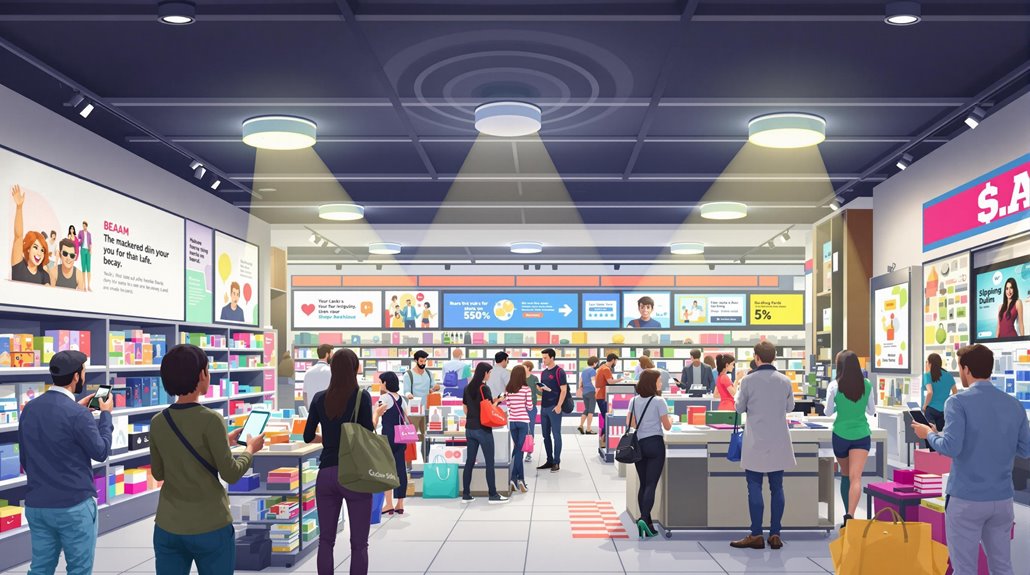
Lighthouses have altered how businesses engage with customers by offering a range of groundbreaking use cases. Beacon technology has transformed customer experiences, providing retailers with creative ways to meet customer needs. For instance, beacons are instrumental in retail promotions, allowing stores like Macy's to send in-store notifications about discounts and offers directly to your smartphone as you approach specific products. This form of Proximity Marketing improves your shopping engagement by ensuring you're always informed about the best deals.
Imagine walking into Neiman Marcus and receiving alerts about exciting in-store events. These precise notifications increase foot traffic and enrich your shopping experience. Meanwhile, Target uses beacon technology for location services, guiding you through the store with ease. By creating shopping lists and receiving real-time location updates, you find what you need more efficiently, saving time and effort.
Even in sports venues, beacon use cases shine. Major League Baseball utilizes them to engage fans by sending alerts about food discounts and merchandise offers, enriching your game-day experience. In addition, retailers like CVS Health use beacons for customer attribution, improving your in-store experience with timely, relevant offers. Altogether, these diverse applications demonstrate beacon technology's transformative impact on customer experiences. Moreover, the integration of interactive chatbots for e-commerce can further enhance customer engagement by providing real-time assistance and personalized shopping experiences.
Retail Applications of Beacons
In the lively world of retail, signals are transforming the shopping experience by seamlessly blending technology with customer engagement. Beacon technology plays a crucial role in this evolution, offering diverse retail applications that revolutionize how you interact with stores. Imagine maneuvering through a massive store with ease, thanks to Target's GPS-like functionality. Their app uses beacons to provide real-time location updates, helping you find items quickly and create efficient shopping lists.
Walmart takes this a step further by facilitating smooth store navigation. With beacon technology, you can locate products effortlessly while receiving relevant promotions directly on your device. This not only improves your in-store experience but also makes your shopping expedition more enjoyable.
CVS Health's beacons deliver personalized notifications, with 72% of shoppers acknowledging an enhanced in-store experience. As you move through the aisles, these notifications guide you and keep you informed about services and offers tailored to your needs.
Neiman Marcus utilizes iBeacon technology to increase foot traffic during events. By notifying you of in-store happenings and providing directions, they make sure you're always where the action is, amplifying your comprehensive engagement with the brand.
Incorporating beacon technology aligns with the importance and expectations of personalization, with 75% of consumers desiring tailored interactions that enhance satisfaction and loyalty.
Macy's Beacon Implementation

How does Macy's improve your shopping experience with signal technology? By incorporating beacon technology, Macy's has transformed the way you shop. With over 4,000 beacons installed in its stores, Macy's elevates customer engagement through tailored, location-based notifications sent directly to your smartphone via the Macy's app. This cutting-edge approach guarantees you don't miss out on exclusive deals and promotions while you're browsing the aisles.
As you navigate the store, the Macy's app taps into beacon technology to recognize your precise location, sending in-store messaging that's relevant to your shopping experience. Regardless of whether it's reminding you of products you previously liked or guiding you to a new collection, these personalized alerts improve your shopping experience by delivering real-time information. You'll spend less time searching for items and more time enjoying the thrill of exploration.
Macy's system not only makes shopping more efficient but also more engaging. The targeted in-store messaging based on your preferences and location has shown to greatly influence shopper behavior, encouraging further purchases. With Macy's beacon implementation, your in-store experience becomes seamless and distinctly tailored to your needs, assuring you leave satisfied.
Benefits in Retail
Signal technology revolutionizes the retail experience by transforming the way stores interact with customers. With signal technology, retailers can send personalized promotions straight to your smartphone as you approach or browse specific sections of the store. This increases the likelihood of impulse purchases by offering timely discounts that catch your attention when you're most ready to buy. Retailers like Macy's have seen improved foot traffic and higher conversion rates thanks to these targeted in-store notifications.
Moreover, signals improve customer engagement by simplifying store navigation, reducing the frustration and time spent searching for products. You'll find that your entire shopping experience becomes smoother and more enjoyable. As you move through the store, signals guide you, ensuring you find what you're looking for without hassle.
Retailers also benefit from gathering valuable insights into customer behavior. By understanding your shopping patterns, they can develop more effective marketing campaigns tailored to your preferences. A study shows that 61% of shoppers are influenced by in-store tracking for discounts, proving the effectiveness of signals in driving sales. This data empowers retailers to create personalized promotions that resonate with you, improving your shopping experience while increasing their sales. By incorporating gamification techniques like reward systems, retailers can further enhance customer engagement and loyalty.
Real-Life Examples
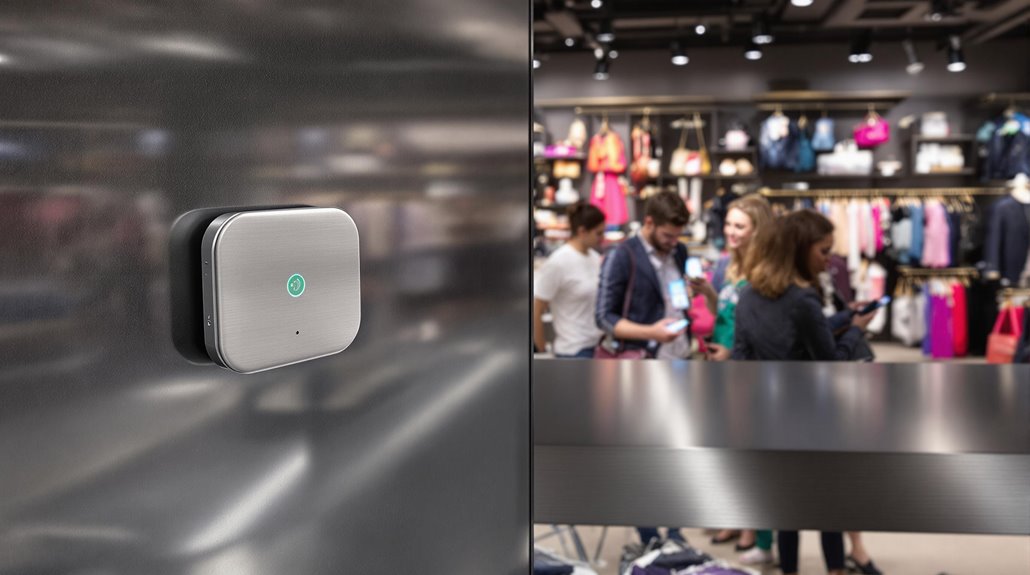
When exploring real-life examples of signal technology, Macy's stands out by installing 4,000 signals across its stores to send customers in-store deal alerts and improve engagement with location-based notifications. This strategic use of beacon technology improves the shopping experience by directly communicating relevant offers to you as you shop.
Let's look at other creative uses of beacon technology:
- Amazon Go: Imagine walking into a store where you don't need to queue at the checkout. Amazon Go uses beacon technology to detect items you take from shelves, letting you shop seamlessly without a traditional checkout.
- Target: By integrating GPS-connected features, Target's app helps you find your way around the store. You can track item locations and receive tailored recommendations based on proximity to signals.
- CVS Health: With beacon technology, CVS provides real-time service notifications, greatly improving your shopping experience. In fact, 72% of shoppers report a better experience due to these notifications.
- Neiman Marcus: Neiman Marcus improves customer engagement by using iBeacon technology to notify you of exclusive in-store events and provide directions, ensuring you don't miss out on exciting happenings during your visit.
Each of these examples highlights the power of beacon technology in transforming retail experiences. Geofencing marketing is another strategy that utilizes technology to increase foot traffic by up to 27% through localized promotions.
Challenges and Limitations
Deploying signal technology presents several challenges and limitations that you should consider. Guiding technology, while groundbreaking, is resource-intensive, especially when scaling across multiple locations. This complexity can drain both time and finances. Customization of guiding messages is another hurdle. The inability to tailor content for diverse audiences may result in less effective marketing efforts, as generic messages might not resonate with all users.
Signal strength variability poses a significant barrier as well. Inconsistent signals can lead to inaccurate or missed notifications, impacting the user experience. Users might receive alerts at the wrong time or in the wrong place, diminishing the effectiveness of location-based content.
User adoption is essential for the success of guiding technology. For it to work effectively, customers must have Bluetooth enabled and compatible apps installed. This requirement can be a significant hurdle, as not all users are willing to adopt new technologies. Data privacy concerns also play a significant role. Users are wary of being tracked without consent, which can deter them from opting into guiding interactions.
If customers aren't comfortable with how their data is used, comprehensive engagement with the technology may suffer.
Privacy and Security Concerns

Signal technology, while groundbreaking, raises significant privacy and security concerns that can't be ignored. When using beacon technology, you're often required to enable Bluetooth and location services on your device. This setup can lead to concerns about unauthorized data collection and data security. Here are some key points to keep in mind:
- Privacy Concerns: 69% of consumers express worry about how their data is collected and used by businesses utilizing beacon technology. Without explicit consent, the tracking of user behavior and movement can feel intrusive.
- Data Collection: Many jurisdictions mandate businesses to inform users about data collection practices and obtain explicit consent. However, compliance varies, and sometimes users aren't fully aware of what's being collected.
- Location Services: The personalization of content based on your location can be both a boon and a bane. Without careful management, it might lead to unwanted, intrusive notifications, adversely affecting customer trust.
- Data Security and Hacking: Anytime your Bluetooth and location services are active, there's a potential risk of hacking. This vulnerability can compromise data security, making it essential to take preventive measures to protect your information.
To enhance security in beacon technology, consider implementing two-factor authentication (2FA) as an additional layer of protection against unauthorized access.
Understanding these aspects helps you navigate the potential pitfalls of beacon technology.
Future of Beacon Technology
As signal technology continues to evolve, addressing privacy and security concerns remains a priority while we look ahead to its promising future. Beacon technology is set to play an essential role in transforming retail by improving customer interactions and providing valuable data insights. You'll likely see beacons integrated with augmented reality and artificial intelligence, creating richer, more engaging customer experiences. These advancements will lead to highly personalized experiences, amplifying customer satisfaction.
Retailers are keen on leveraging beacon technology for marketing efficiencies and operational improvements. By adopting continuous innovation, they can investigate new ways to utilize beacons, guaranteeing seamless and engaging shopping interactions. The future will likely see a focus on creating an improved user experience, where technology effortlessly complements your shopping expedition.
However, as beacon technology continues to expand, privacy concerns must be addressed. Improved data security measures, such as anonymization techniques, will be essential for building consumer trust. You'll want to see that your personal information is protected while enjoying the benefits of beacon-driven experiences. By prioritizing security and innovation, businesses can ensure that beacon technology not only meets but surpasses your expectations in the evolving retail landscape.