Creating Augmented Reality Business Cards: Making a Lasting Impression
Imagine handing out a business card that not only shares your contact information but also showcases your brand through interactive 3D models and videos. By embracing augmented reality (AR), you can transform a simple exchange into an engaging experience that captures attention and fosters stronger connections. AR business cards are more than just a novelty—they're a powerful tool for standing out in a crowded market. Curious about how this innovative approach can enhance your brand visibility and improve conversion rates? Let's explore the practical steps and real-world applications that can help you make a lasting impression.
Benefits of AR Business Cards
Leveraging AR business cards can significantly enhance your brand's visibility, increasing awareness by up to 70%. By incorporating augmented reality into your business cards, you're not just sharing contact details; you're creating an engaging and memorable experience for potential clients.
AR business cards captivate attention by providing interactive experiences, holding interest for up to 75 seconds—longer than traditional video content. This ensures your brand remains top of mind. When clients interact with videos, 3D models, and other engaging elements, the lasting impression is far more impactful than a standard business card.
Moreover, businesses that adopt AR cards see conversion rates improve by 20-80% compared to those using conventional advertising methods. This increase in conversions reflects the power of engaging experiences in today's market. Adopting AR business cards early sets you apart from competitors, showcasing your company as innovative and forward-thinking.
In a crowded market, standing out is essential. AR business cards not only differentiate you but also help potential clients remember you longer. They're a powerful tool for making a lasting impression and elevating your brand's visibility.
Lead Generation and Relationship Building
AR business cards offer substantial benefits for lead generation and relationship building. Unlike traditional business cards, AR business cards provide an interactive experience that can increase lead conversion rates by 20-80%. This engaging interaction leaves a memorable impression on potential clients, encouraging them to explore your products or services further.
Through AR, you can offer interactive demonstrations of your offerings, which significantly boosts customer interest and engagement. This increased engagement helps clients remember your brand better, leading to higher retention rates and fostering stronger, long-lasting relationships.
Additionally, AR business cards ensure that your brand remains top of mind. With instant access to your contact details and comprehensive information about your products or services, clients and prospects are consistently reminded of your offerings and accomplishments. This continued awareness ensures that when they need solutions, your brand is the first they consider.
How to Create AR Business Cards
To create AR business cards, follow these steps:
- Register on an AR Platform: Sign up on a platform like MyWebAR.com, which specializes in augmented reality for images.
- Upload Your Design: Upload your business card design in JPG or PNG format. Ensure the file size is between 1-2 MB to maintain optimal performance and quality.
- Customize with Interactive Elements: Enhance your card by adding interactive features such as text overlays, videos, 3D models, or logos. These elements will make your card more engaging and provide additional information about your products or services.
- Test Your AR Business Card: Preview your AR business card to ensure all elements function smoothly and the visual appeal is maintained. Testing is crucial to identify and fix any issues that could impact the user experience.
Practical Applications
Augmented Reality (AR) business cards offer a range of innovative possibilities to elevate your professional networking. Imagine distributing a business card that not only provides your contact information but also animates your products and services through interactive 3D models. This allows potential clients to effectively visualize your offerings, making a lasting impression that differentiates you from competitors.
Moreover, AR business cards can display videos that highlight your company's services or achievements, creating a dynamic and engaging experience. Whether showcasing a stunning portfolio or a compelling testimonial, the visual impact is substantial.
AR business cards are also excellent for promoting events. Users can scan the card to access event details, schedules, and registration links instantly, adding a layer of convenience.
Three compelling practical applications include:
- Product Visualization: Present detailed product information via interactive 3D models.
- Dynamic Content: Show engaging videos that highlight services or achievements.
- Event Promotion: Offer instant access to event details, schedules, and registration links.
Future Trends
Future trends in augmented reality (AR) business cards are poised to revolutionize professional interactions and networking. Expect a significant integration with social media platforms, enhancing user engagement and simplifying the sharing of AR experiences. Imagine handing out a business card that not only provides your contact information but also instantly connects the recipient to your LinkedIn or Instagram profile through an engaging AR experience—truly making a lasting impression.
Technological advancements will be crucial. Anticipate more engaging interactions with real-time updates and advanced analytics to track user engagement. This isn't just about impressing someone; it's about understanding how they interact with your card and tailoring future engagements based on that data.
Businesses are increasingly adopting AR solutions, making personalized marketing strategies the norm. Your AR business card could offer tailored experiences that adapt to the recipient's preferences and behavior. Interactive elements like gamification or storytelling could make your brand unforgettable.
Moreover, the potential of AR business cards will expand across industries. Whether you're a healthcare professional or an educator, AR business cards will open new avenues for creative communication strategies, ensuring your brand leaves a lasting impression.
Understanding Augmented Reality
Augmented Reality (AR) provides an enriched perception of the world by integrating digital content with the real environment. Unlike Virtual Reality (VR), which immerses users in a completely virtual space, AR overlays digital information onto the physical world, enhancing the perception of reality. This technology is not just a futuristic concept; it is already making significant impacts across various fields.
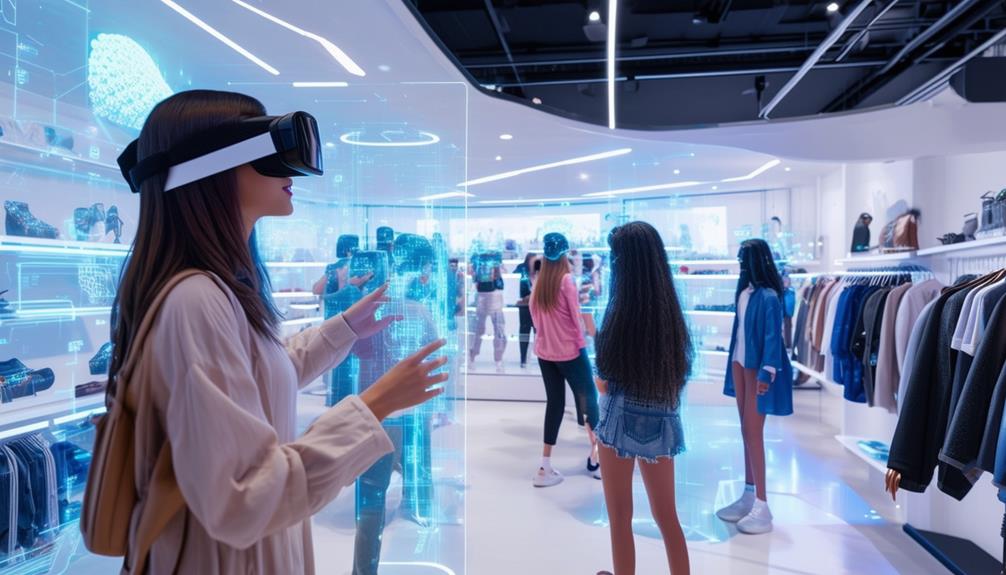
Understanding AR is crucial as it evolves and expands its applications. For example, Nike's AR feature lets customers virtually try on shoes at home, combining convenience with innovation. In marketing and advertising, AR ads have demonstrated impressive results, converting 20-80% more than traditional ads and boosting brand awareness by 70%.
Key impacts of AR include:
- Enhanced User Interaction: Seamlessly blends digital and physical realms.
- Improved Marketing Outcomes: Outperforms traditional ads significantly.
- Evolving Technology: Continuous advancements make AR increasingly adaptable.
Recognizing AR's potential allows businesses to leverage this technology for a lasting impact.
Business Use Cases
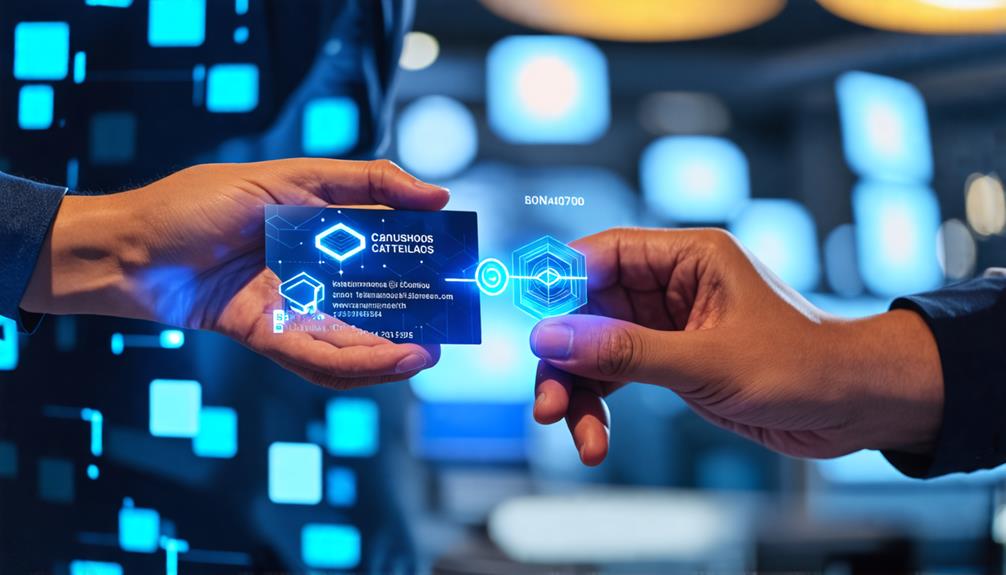
AR business cards can significantly enhance brand engagement by offering an interactive experience that captivates your audience. Imagine showcasing your product features through 3D models and virtual try-ons, making it easier for customers to understand and connect with your offerings. By integrating AR, you'll not only stand out but also improve customer retention and conversion rates.
Enhancing Brand Engagement
Incorporating augmented reality (AR) into business cards can revolutionize brand engagement by offering interactive experiences that significantly boost user engagement and retention rates. Imagine potential clients visualizing your products or services in real-time, directly from your business card. This captivating experience not only grabs their attention but also differentiates your brand from competitors.
Consider these benefits of AR business cards to enhance brand engagement:
- Interactive Storytelling: AR enables you to present detailed product information and achievements, creating compelling narratives that resonate with clients.
- Higher Conversion Rates: Research indicates that AR advertisements convert 20-80% more effectively than traditional methods, enhancing lead generation and brand awareness.
- Strong Customer Relationships: By allowing users to interact with your products in an immersive way, companies like Adidas and Sephora have strengthened customer relationships and boosted sales.
AR business cards also facilitate new networking opportunities. Users can easily access additional content like videos or 3D models, making connections more memorable and improving overall brand engagement. Adopting AR can create a lasting impression and elevate your business interactions.
Showcasing Product Features
Beyond enhancing brand engagement, AR business cards offer a powerful tool for showcasing product features, making them invaluable for business use cases. Imagine handing a potential client your business card and, with a quick scan, they are presented with an interactive 3D model of your product. This enables them to visualize and understand your offerings more effectively, creating a lasting impression.
Integrating videos into your AR business cards can elevate this further. You can provide detailed demonstrations of your product's functionalities, leading to higher engagement rates and better information retention. Retailers have reported up to a 70% increase in brand awareness through these interactive elements, which create memorable experiences for recipients.
Additionally, AR technology allows you to display real-time product information. Potential buyers can instantly access specifications and benefits, enhancing their decision-making process. This immediacy and convenience are invaluable in today's fast-paced market.
Businesses leveraging AR in their marketing strategies can generate new leads at a rate 20-80% higher than traditional methods. Clearly, showcasing product features through AR business cards isn't just innovative; it's highly effective, ensuring your brand makes a lasting impression.
Design Tips
When designing your AR business card, prioritize simplicity and avoid cluttering it with excessive text or multimedia. Emphasize interactive features that align with your brand and enhance user engagement. This strategy ensures that your card is visually appealing, easy to scan, and effectively communicates your message.
Simplify Your Design
To create an effective augmented reality (AR) business card, focus on clarity and simplicity to ensure it leaves a lasting impression. Here's how to achieve this:
- Limit Text: Prioritize essential contact information and ensure it's easily readable. Too much text can be overwhelming and detract from the AR features. Stick to the basics: your name, job title, phone number, and email.
- Utilize White Space: A clean layout with ample white space enhances visual appeal and draws attention to key design elements and AR features. This makes your card look professional and ensures users focus on what's important.
- Choose Bold Colors and Geometric Shapes: Use bold colors that align with your brand identity and geometric shapes to facilitate the scannability of AR features. This not only catches the eye but also makes it easier for users to interact with the AR triggers.
Testing your design on multiple devices is crucial. Ensure the AR activation works smoothly and all multimedia content displays correctly. By simplifying your design, you guarantee your AR business card makes a lasting impression every time.
Choose Interactive Features
Choosing the right interactive features for your AR business card can significantly enhance its impact. To make a lasting impression, consider incorporating QR codes that seamlessly direct recipients to your website or social media profiles, facilitating instant engagement and connection. This makes it easier for potential clients to learn more about you.
Utilize augmented reality to showcase interactive videos or 3D models of your products, providing a memorable, hands-on experience that sets you apart from the competition. Introducing foldable designs or pull tabs can reveal additional information or surprise elements, enriching the tactile experience and making the card more engaging.
Ensure that any interactive elements are easy to use and navigate. Overwhelming the recipient can detract from the effectiveness of your card, so keep it simple yet captivating. Thoroughly test the functionality of your AR features before distribution to ensure a smooth user experience. Remember, 82% of users expect flawless performance from interactive technologies, so meeting this expectation is crucial to making a lasting impression. By thoughtfully selecting and implementing interactive features, you can create an unforgettable AR business card.
Platforms and Resources
Creating augmented reality business cards can significantly enhance your marketing efforts by capturing potential customers' attention with interactive features. Here are some platforms and resources to consider:
- AirCards: This platform provides app-less AR marketing solutions for seamless user experiences. They offer custom asset design and cloud hosting, ensuring your AR business card is unique and easily accessible. Pricing is available by quotation, catering to tailored needs.
- Poplar.studio: Poplar.studio offers accessible AR services with affordable plans, making it ideal for AR newcomers. They provide a free membership, allowing you to create engaging AR content without an initial financial commitment. This is a great way to test your audience's response.
- Layar: Layar is a web-based tool supporting flexible AR campaigns, with pricing starting at $15.90. They offer a 30-day free trial to explore their features before committing. Layar is user-friendly, suitable for both beginners and experts.
Using these platforms can transform a simple business card into a powerful marketing tool, making a lasting impression.
Related posts